



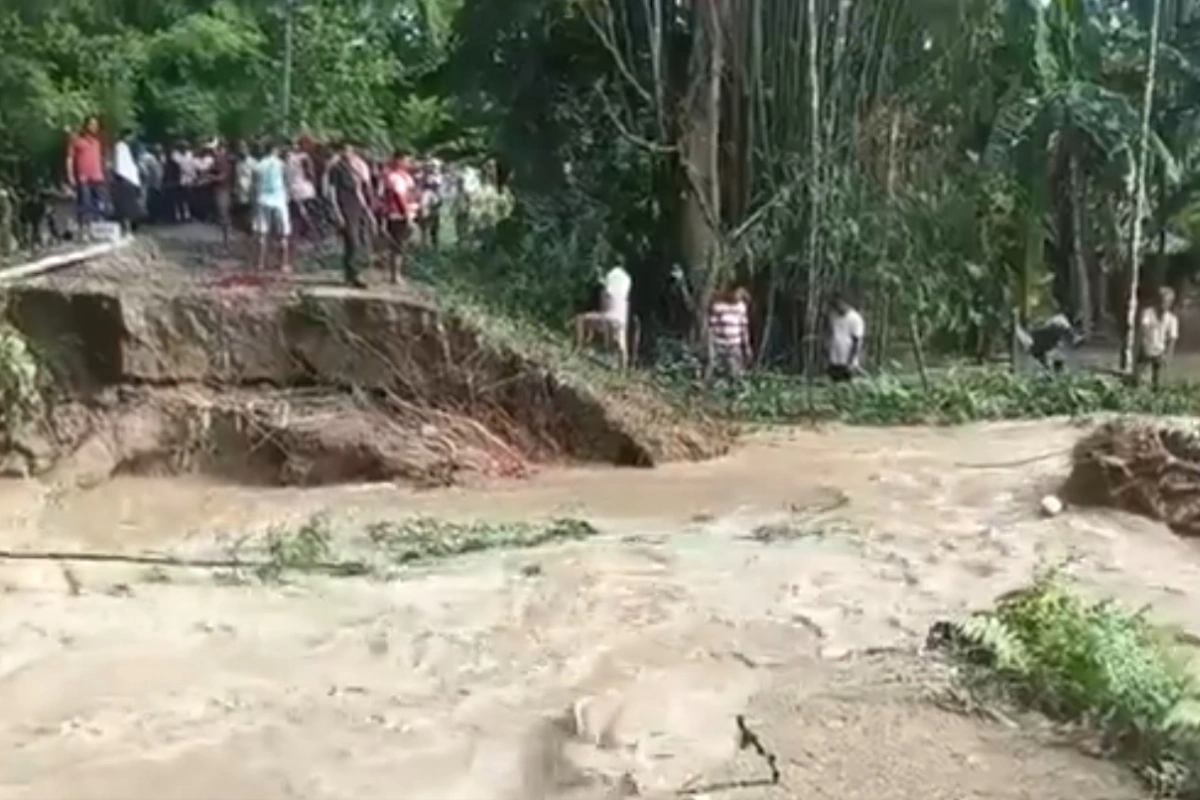
GUWAHATI: The flood situation across several parts of Assam deteriorated further on Thursday, August 6, with fresh embankment breaches, rising river levels and severe erosion inundating villages, damaging farmland and forcing thousands of families to seek shelter in safer areas.
ALSO READ: Gaurav Gogoi Questions Delay in Flood Alerts Despite ISRO's Near-Real-Time Monitoring
In Darrang, the situation worsened after a breach in the Noa river embankment inundated several villages, including Ahaka, Mathanga and Bengabara. More than 3,600 families were reportedly affected by the sudden influx of floodwater, with many residents taking refuge on raised embankments.
The district administration and disaster management authorities remained on alert as rescue and relief operations continued. In Mathanga, villagers and National Disaster Response Force (NDRF) personnel rescued an elderly couple who had been stranded amid deep floodwaters.
The situation was also critical in Sipajhar, where the overflowing Kulshi river submerged large areas of agricultural land. Several revenue villages, including Kulshi-Naharbari, Kapili Satra and Besimari, were affected, leaving several families stranded.
In Golaghat district, the Kaliyani river triggered extensive erosion in the Bakial region of Numaligarh, with houses reportedly collapsing into the river along with hundreds of trees. Residents of Shyamgaon, near the Karbi Anglong border, also faced heightened risks as the river rose sharply.
Videos from the area showed residents attempting to cross the swollen river amid strong currents, while continuing erosion threatened homes and large stretches of land.
Meanwhile, water levels of the Doyang river rose rapidly in the Merapani area of Golaghat's Kachamari sector. The rise reportedly followed the opening of four radial gates at the Doyang Hydroelectric Project in neighbouring Nagaland.
In Teok, areas that had only recently recovered from flooding were inundated again following heavy rainfall and a rise in the Teok river. Several families who had returned home from relief camps and temporary shelters along the national highway were forced to evacuate again.


