



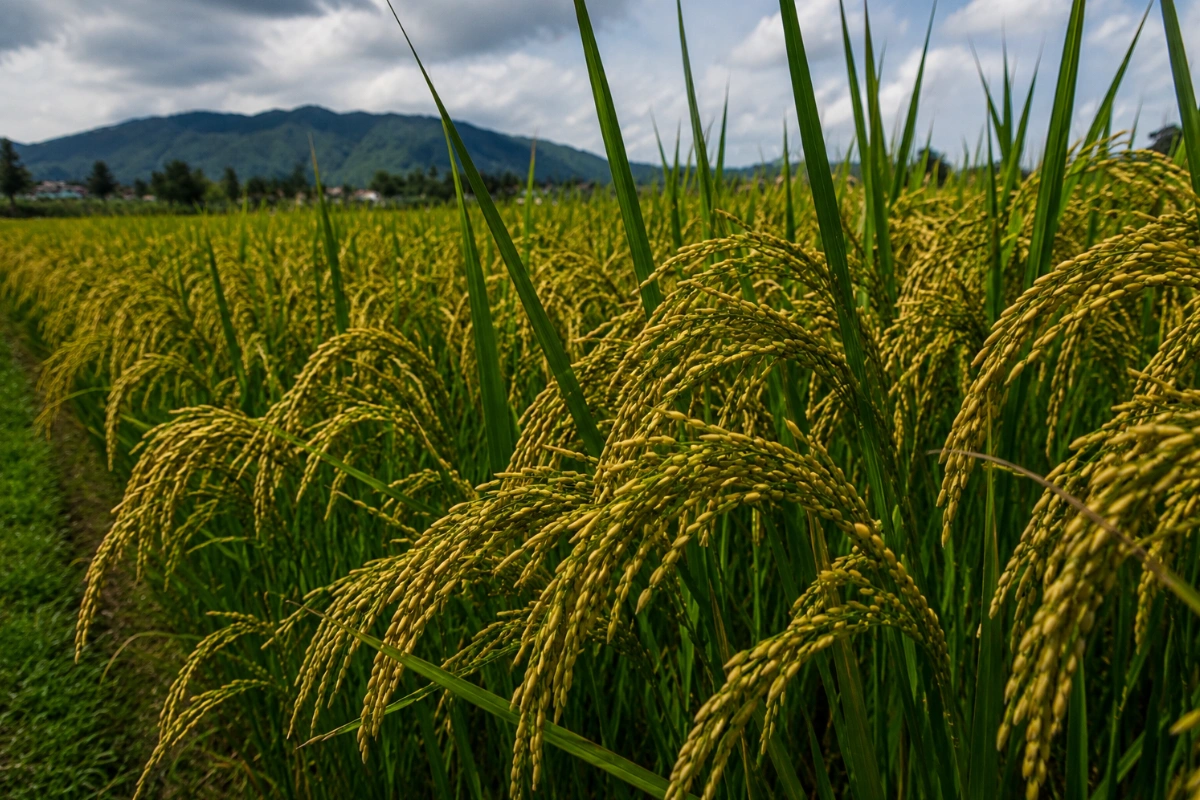
GUWAHATI: A wild rice habitat in Assam's Sonitpur district has been declared a Biodiversity Heritage Site, marking a major milestone in the conservation of India's genetic resources for climate-resilient agriculture.
ALSO READ: 135th Durand Cup to Kick Off on July 25; Guwahati Among Five Host Cities
The recognition comes under the National Rainfed Area Authority's (NRAA) project titled "In-situ Conservation and Management of Wild Rice (Oryza rufipogon) in Sonitpur District of Assam," which has been implemented since 2022 by the ICAR–National Bureau of Plant Genetic Resources (ICAR-NBPGR), New Delhi, in collaboration with the Assam State Biodiversity Board.
A team of scientists from ICAR-NBPGR recently met NRAA Chief Executive Officer Dr. Chandra Shekhar Kumar, IAS, and briefed him on the project's progress in the exploration, conservation and characterisation of wild rice germplasm.
During the meeting, the scientists informed that the Borjuli site in Sonitpur district has been officially notified as a Biodiversity Heritage Site by the National Biodiversity Authority. The designation is expected to strengthen the conservation of India's wild rice diversity while supporting research on climate-resilient agriculture.
Commending the work carried out under the project, Dr. Kumar said wild rice species are a valuable source of genetic traits that can help develop climate-resilient, high-yielding and nutritionally superior rice varieties.
He stressed the need to replicate similar conservation initiatives for other crop wild relatives across the country to improve the resilience and sustainability of Indian agriculture while enhancing long-term food security.
The meeting was facilitated by Dr. Pankaj Kumar Shah, Director (Agriculture and Horticulture), NRAA, and Dr. Anil Kumar Mishra, Technical Expert (Watershed Management), NRAA.
The Centre-backed conservation initiative is aimed at preserving India's rich genetic diversity in crop species while promoting sustainable agricultural development in the face of climate change.


