
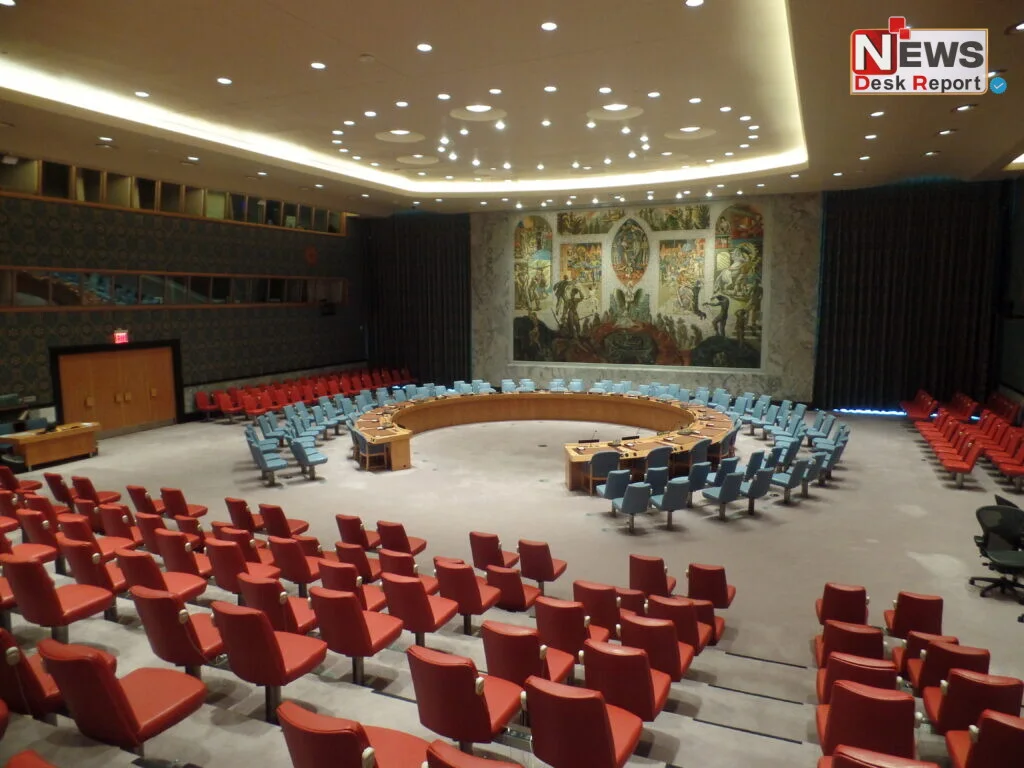
File photograph: UN Security Council chamber, July 18, 2016. Photo: Thomas Park / Wikimedia Commons, CC BY-SA 4.0. Resized and branded by NDR; the adapted image retains this licence. Not the November 2026 debate.

NEW DELHI, November 25: India has called for human judgement and accountability to remain central when artificial intelligence and autonomous systems are used in conflict. Its statement at the United Nations Security Council also warned that unequal access to emerging technologies could deepen the divide between developed countries and the Global South.
The Permanent Mission of India’s statement dated November 24 records Ambassador Harish Parvathaneni’s intervention at a debate on conflict resolution amid rapid technological change. Akashvani reported the intervention on November 25.
Technology’s uses and risks
The envoy identified early warning, situational awareness, mediation and peacekeeping as areas where technology could help. He linked responsible deployment to respect for sovereignty and international law, including protection of civilians and humanitarian personnel.
On lethal autonomous weapons, the statement placed India’s engagement within the Convention on Certain Conventional Weapons framework. It maintained that responsibility for using such systems must rest with humans. The intervention did not announce a new international weapons treaty.
A role for developing countries
India also raised risks from terrorist misuse of AI and from incomplete or manipulated data. It argued that developing countries should have a say in how technologies are developed, regulated and deployed, rather than participate only as consumers.
The position brings security and access into the same discussion: technological capability can assist decisions, but the statement places judgement and responsibility with people. Follow our National news coverage for further verified policy developments.