
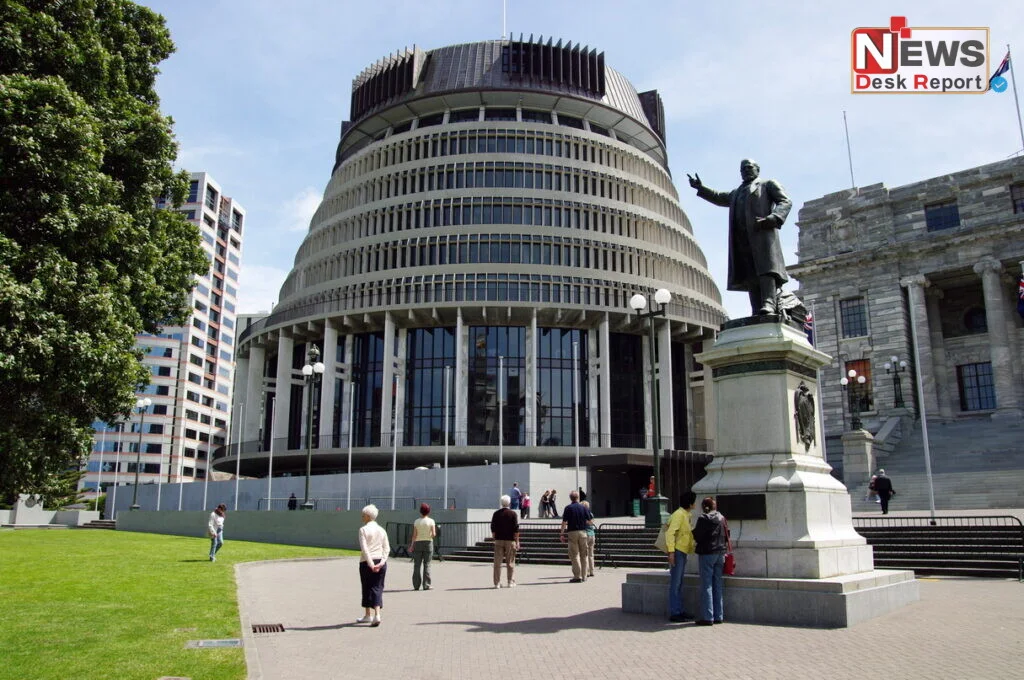
File photo: The Beehive in Wellington, 17 November 2009; not the 2026 vote count or government-formation talks. Photo: User Bgabel at Wikivoyage shared / Wikimedia Commons, CC BY-SA 3.0. NDR resize and branding; adapted image under the same licence.

WELLINGTON, November 27: New Zealand’s National-led governing bloc has fallen short of a parliamentary majority in the official election count released on Friday. National, ACT and New Zealand First together hold 65 of 130 seats, leaving government formation dependent on further support.
The Electoral Commission’s official-count table gives National 40 seats, Labour 36, the Greens 17, ACT 13, New Zealand First 12, Opportunity seven and Te Pāti Māori five. A majority of the 130-seat chamber requires 66.
Opportunity’s seats matter to the next government
The combined Labour, Green and Te Pāti Māori tally is 58. Adding Opportunity’s seven would bring that grouping to 65, also below an outright majority. These calculations describe the published seat distribution; they do not establish that a coalition agreement has been reached.
The Spinoff’s reporting on the result says National lost two seats compared with election night, while the Greens gained one. It places Opportunity at the centre of negotiations over how the next administration could be supported.
Party votes and seats tell different stories
Labour received 29.88% of party votes against National’s 28.35%, the commission’s table shows. National nevertheless has the larger seat total. New Zealand’s system combines electorate and list seats, making the parliamentary balance distinct from the party-vote ranking.
The published count follows the November 7 election. The results website expressly distinguishes its figures from the formal declaration, which is made through a notice in the New Zealand Gazette.
The current count is therefore the basis for assessing the seat arithmetic, rather than proof that a new government has already been formed. Follow our International coverage for further developments.