
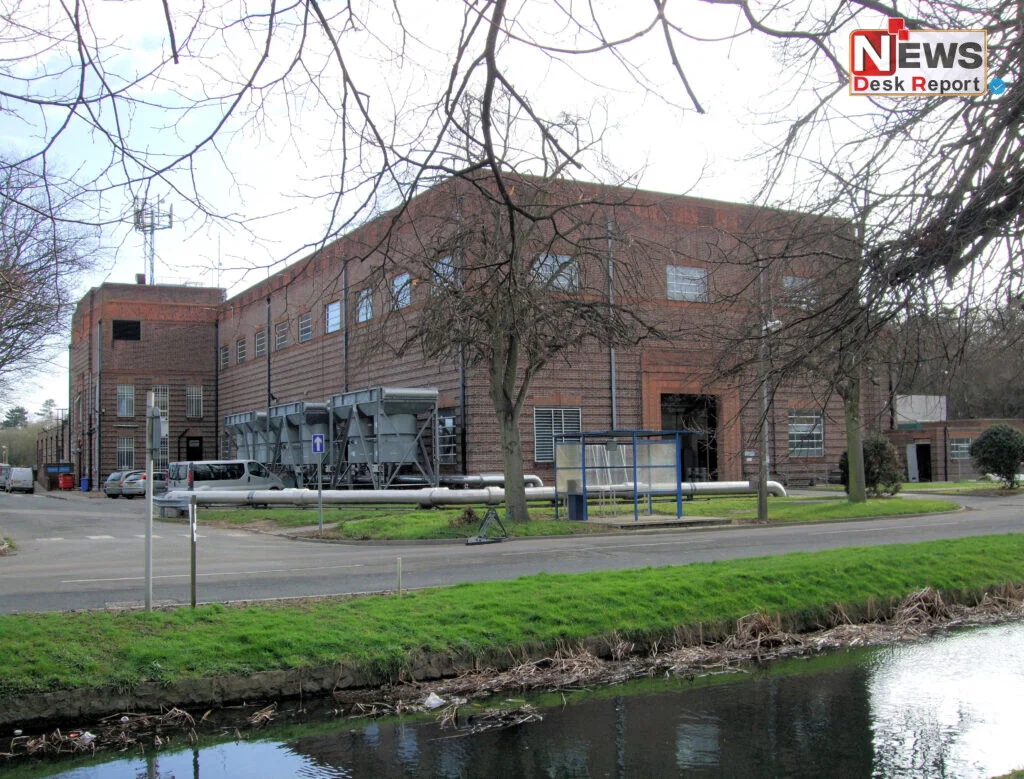
File photograph: Mogden Sewage Treatment Works, Isleworth, London, 22 January 2012; not the CBI conference or a current pollution incident. Photo: Jim Linwood / Wikimedia Commons, CC BY 2.0; resized and branded by NDR.

Britain’s plans for greater public control of water and energy utilities are under scrutiny as business leaders gather at the Confederation of British Industry’s annual conference in London on November 23. The central question is how ministers intend to strengthen accountability while retaining private investment in essential services.
The CBI’s official conference programme confirms the November 23 event at the QEII Centre and lists First Secretary of State Louise Haigh among its speakers. Reuters’ November 23 report, citing her office ahead of the conference, says her planned message seeks a partnership with private capital based on clear expectations and a fair investment return.
Public control can take different forms
The prepared position reported by Reuters rejects wholesale nationalisation, while questioning whether effective monopolies provide genuine competition. CBI chief executive Rain Newton-Smith has sought reassurance that the government’s approach will continue to accommodate private capital.
The distinction matters because stronger regulation, a public shareholding and complete public ownership are different policy choices. An argument for more public influence does not by itself establish that an industry has been nationalised, or that household tariffs have changed.
What the government has already proposed
In its September 29 water-sector announcement, the government proposed removing restrictions on its ownership of shares in major water and sewerage companies in England. It described existing company-specific limits as between 1% and 3%, and said continued private investment remained important. The proposed change applies to England.
A separate November 4 announcement on the Energy Independence Bill set out plans for stronger consumer protection, oversight of energy brokers, community stakes in renewable projects and faster grid connections. Those are the government’s announced legislative proposals, not evidence that every measure is already in operation.
For households and businesses, the practical tests will be the final legal powers, investment arrangements, service performance and bill outcomes. The November 23 conference brings those questions before business leaders; the earlier policy announcements supply the background to today’s debate.
Follow further world-policy reporting in News Desk Report’s International section.