
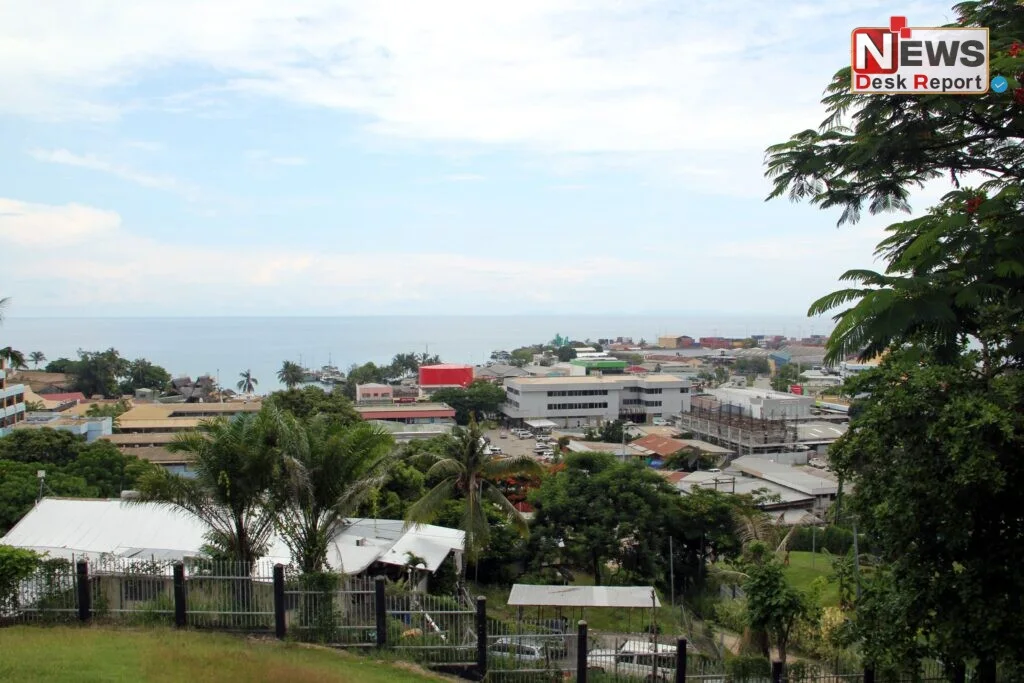
File photo: Honiara, Solomon Islands, 25 January 2017; not the Canberra signing. Photo: Kahunapule Michael Johnson / Wikimedia Commons, CC BY-SA 2.0. NDR resize and branding; adapted image under the same licence.

CANBERRA, November 25: Australia and Solomon Islands signed a treaty on Wednesday linking security cooperation with development assistance, education and labour mobility. Prime Ministers Anthony Albanese and Matthew Wale signed the agreement in Canberra, according to their joint statement.
The signing is a new step following the lead-up to Wale’s Canberra visit. It establishes a published framework against which the two governments’ implementation can now be assessed.
Security partnership and infrastructure safeguards
The treaty text recognises Australia as Solomon Islands’ primary security partner while grounding cooperation in sovereign equality. It provides for a Solomon Islands-led police partnership supported by Australia.
Solomon Islands undertakes not to permit a foreign military or security base on its territory. Sensitive infrastructure—including airports, ports, energy, digital and telecommunications facilities—is to remain free from militarisation, foreign interference and unauthorised access.
The text prioritises security cooperation from Pacific Islands Forum members and includes safeguards for dealings with other partners where Forum members cannot meet a security need.
Education, work and development commitments
The leaders said Australia would support Solomon Islands’ free-education policy, provide budget support and increase investment in sustainable infrastructure, including roads and renewable energy.
A PALM Plus approach would expand participation in the Pacific Australia Labour Mobility scheme, with new opportunities in early childhood and aged care, more locations and skills training. Improved visa arrangements are to include longer stays, extended validity and facilitation in Honiara. The statement does not itself provide an application opening date for these changes.
Signing and entry into force are separate
Article 9 says the treaty enters into force when the last diplomatic notification confirming completion of the parties’ requirements is received. Wednesday’s signature should therefore be distinguished from confirmation that this process has finished.
An Iumi Committee will oversee implementation. The treaty also calls for a jointly developed financing and implementation plan, making subsequent arrangements important to the delivery of the commitments.