


GUWAHATI: Assam Chief Secretary Ravi Kota on Tuesday, July 22, chaired a high-level review meeting on the prevailing flood situation and directed all departments to expedite relief, rescue, restoration and rehabilitation efforts in the worst-affected districts. He stressed the need to ensure uninterrupted assistance to marooned families and the early restoration of critical infrastructure.
ALSO READ: Guwahati's Nilachal Flyover Service Lane to Remain Closed on July 23 Due to Drainage Improvement Works
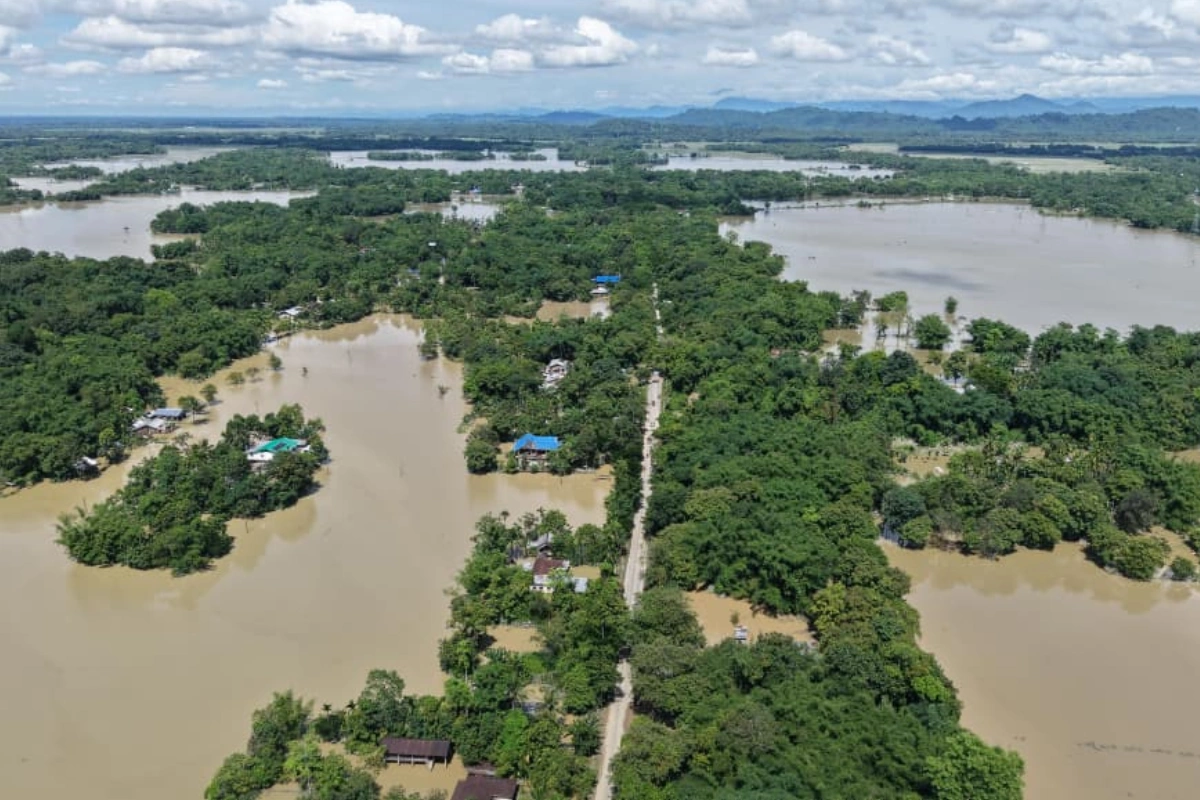
The meeting reviewed the flood situation in Charaideo, Sivasagar, Jorhat and Golaghat, the districts worst affected by the current wave of flooding.
Officials informed the meeting that, as of midnight on July 21, floods had affected 16 districts, inundating 872 villages and impacting more than 5.64 lakh people. Relief operations are being carried out through 71 relief camps and 202 relief distribution centres, while the State Disaster Response Force (SDRF), National Disaster Response Force (NDRF) and district administrations continue round-the-clock rescue and evacuation operations.
Reviewing the response of various departments, Kota directed the Food, Civil Supplies and Consumer Affairs Department to ensure the timely distribution of foodgrains and packed food kits to people in areas where relief camps could not be set up.
The Power Department was instructed to prioritise the restoration of electricity immediately after floodwaters recede. The Health and Family Welfare Department was asked to expand medical relief, sanitation measures, disease surveillance and the operation of medical camps in the affected areas.
The Public Health Engineering Department was directed to restore safe drinking water through pumping operations and the repair of damaged water supply systems. The Animal Husbandry and Veterinary Department was instructed to assess livestock losses and provide veterinary assistance to affected farmers.
Kota also asked the Public Works (Roads) Department to prioritise desiltation, debris clearance and the restoration of damaged roads, bridges and other critical infrastructure. The Water Resources Department was directed to intensify dewatering operations and clear drainage channels to facilitate restoration work.
The Telecom Department was instructed to expedite the restoration of communication networks, while the Northeast Frontier Railway (NFR) was asked to assess damage to railway infrastructure and facilitate the movement of relief materials, including through railway trollies wherever required to reach marooned villages.
The Panchayat and Rural Development Department was directed to strengthen village-level coordination for relief, sanitation, debris clearance and restoration activities. The Agriculture Department was asked to conduct crop damage assessments and ensure the timely distribution of short-duration crop varieties and other agricultural inputs to affected farmers.
The meeting also reviewed several ongoing relief measures in the affected districts.
These include arrangements for supplying more than four lakh bottled drinking water units, nearly two lakh biscuit packets and around 40,000 milk packets for infants and children through the Chief Minister's Relief Fund. Distribution is being coordinated by the district administrations of Kamrup Metro, Dibrugarh and Tinsukia.
More than 50 country boats from Tinsukia, Dhemaji, Dibrugarh and Lakhimpur have been deployed in shallow-water areas where SDRF and NDRF boats cannot operate, ensuring continued access to marooned villages.
The meeting was also informed about the first deployment of payload drones developed by local start-ups from IIT Guwahati. The drones, capable of carrying payloads of up to 5 kg over a distance of 3 km, are being used to strengthen last-mile delivery of relief materials.
In addition, the Indian Air Force and Army helicopters have carried out eight airdrop sorties to deliver relief materials to inaccessible locations. The Northeast Frontier Railway is also using railway trollies to transport essential supplies to flood-affected people taking shelter along railway tracks in areas that remain cut off.
The Chief Secretary directed officials to ensure uninterrupted supplies of food, drinking water, medicines and other essential items to marooned habitations, particularly in Sivasagar district, where conventional access remains difficult. He said boats should continue to be used extensively, with aerial sorties undertaken wherever necessary.
Describing the floods as unprecedented in the affected districts, Kota instructed all departments to carry out comprehensive damage assessments, maintain close inter-departmental coordination, ensure continuous field presence and accelerate rescue, relief, restoration and rehabilitation efforts until every affected family is reached, critical infrastructure is restored and normalcy returns.


