
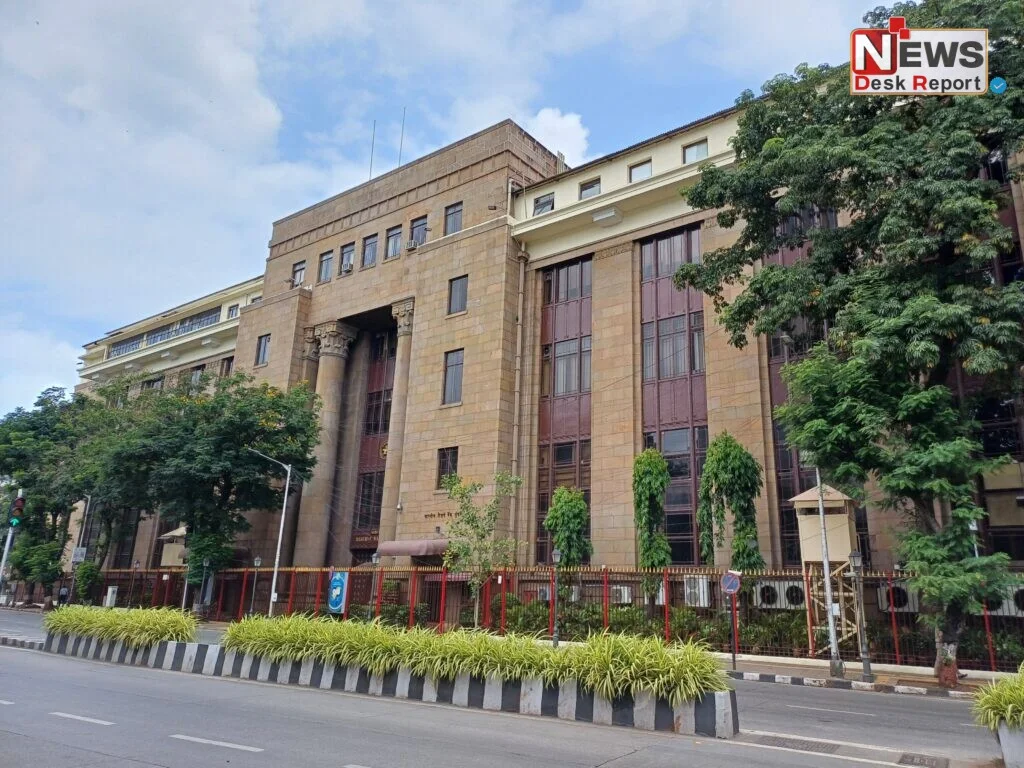
File photo: RBI headquarters, Mumbai, September 2024; not the announcement. Photo: DesiBoy101 / Wikimedia Commons, CC BY 4.0; resized and branded by NDR.

NEW DELHI, November 28: Banks will have a uniform procedure for temporarily restricting withdrawals from highly suspicious accounts under final Reserve Bank of India directions issued on November 27. The rules take effect on July 1, 2027, although a bank may adopt the procedure earlier.
The RBI announcement follows consultation on a draft released on September 11. It links the changes to suspected money-mule activity and cyber-enabled financial fraud, while stating that genuine customers should be protected from inconvenience.
What a debit hold means
The commercial-bank directions define a debit hold as preventing debits from an account or from an amount placed on hold. A money-mule account can be used, knowingly or unknowingly, to receive or move another person’s criminal proceeds.
Banks must use objective parameters to identify highly suspicious transactions or accounts. A hold requires a high degree of suspicion and appropriately senior approval; mechanically blocking the whole account is to be avoided.
Customer notice and review deadlines
Under the new procedure, a commercial bank communicating electronically must notify the customer promptly if it has a mobile number or email address on record. Otherwise, it must give notice by the end of the next working day. The bank’s notice must explain the reason for a hold, how it can be removed and whom to contact. It must seek the customer’s explanation and any supporting documents within seven calendar days from the date of the hold.
The bank must assess an explanation promptly and decide within seven calendar days of receiving it. It can lift the hold if satisfied, or continue it and refer the matter to the jurisdictional police authority with reasons.
What happens after a police referral?
The 30 calendar days run from the date the bank refers the matter to the authority. On day 31, the bank must remove the hold if no competent authority has issued a lawful direction specifically requiring it to continue and the bank is satisfied with its enhanced review of the account. If the review is unsatisfactory, the hold continues under the rules on inoperative accounts. The bank must tell the customer its decision.
For a complaint about the procedure, customers can find the designated officer’s contact details on the bank’s website or at a branch. The bank must resolve these complaints within 30 calendar days.
Separate amendments cover commercial banks, small finance banks, payments banks, local area banks, regional rural banks and urban co-operative banks. More public-service reporting is available in NDR’s National section.