

US flight departures were allowed to resume after a nationwide ground stop caused by air traffic control communications problems on Friday, 13 November, but airlines faced a substantial recovery operation as Saturday morning began in India.
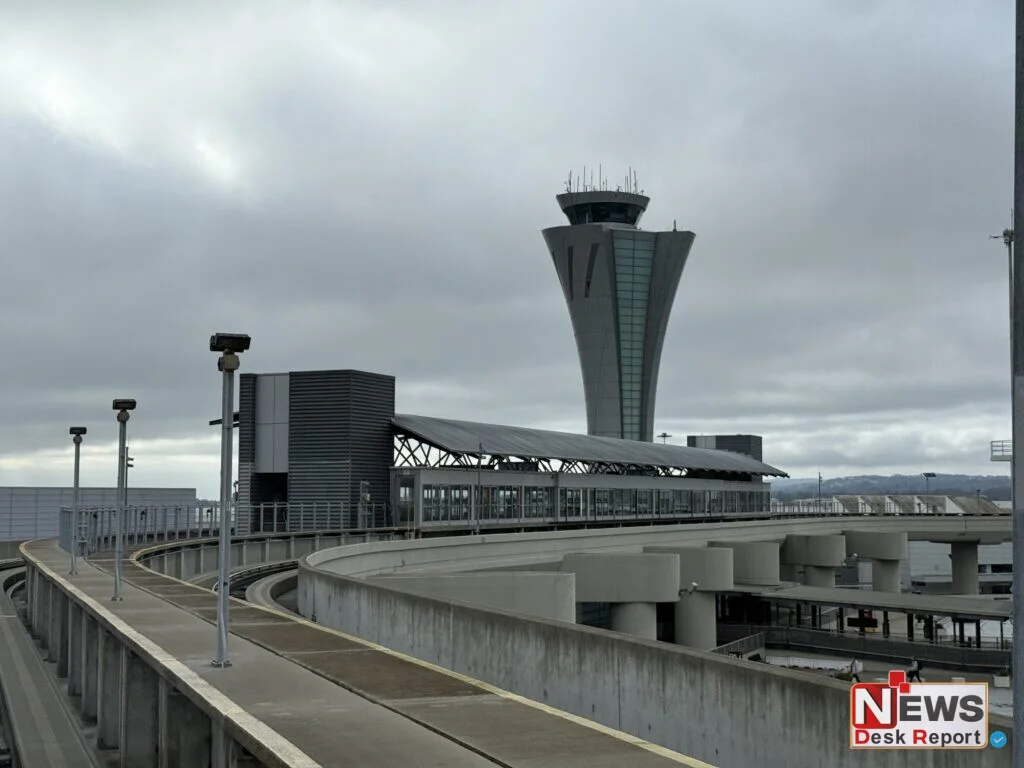
San Francisco International Airport confirmed in an official update at 5.36 pm Pacific Time on Friday—7.06 am IST on Saturday, 14 November—that the nationwide stop had ended. The airport asked passengers to check with their airlines for the latest flight information.

What authorities have confirmed
In its initial 13 November statement, the Federal Aviation Administration (FAA) said communication issues affecting multiple Air Route Traffic Control Centers had prompted the stop. It described its information as preliminary and said technicians were investigating.
Transportation Secretary Sean Duffy told a White House briefing that radar and communications instability had begun at 3.36 pm Eastern Time, equivalent to 2.06 am IST on 14 November. ABC News reported his account that overloaded routers and inconsistent data had led officials to halt departures. That explanation was an official’s account during the response, rather than a completed technical investigation.
The disruption lasted about four hours. NPR reported, citing FlightAware, that more than 8,000 flights had been delayed and 7,000 cancelled by 9 pm Eastern Time on Friday, or 7.30 am IST on Saturday. Those totals describe that reporting cutoff and are not a live count.
Reopening airspace does not complete airline recovery
Duffy warned that restoring departures would take time. Passengers therefore need to distinguish an airport or airspace reopening from confirmation that their own flight is operating. The airline’s current flight-status notice remains the practical point of reference before travelling to an airport.
During the initial restriction, SFO’s advisory said aircraft already en route to the airport could still land while departures were halted. Its later update recorded the end of the nationwide stop. These notices describe successive stages of the same disruption, not simultaneous restrictions.
Cancellation refunds and other assistance are separate questions
The US Department of Transportation’s refund guidance says passengers are entitled to a ticket refund when an airline cancels a flight, regardless of the reason, if they choose not to travel or accept the alternatives offered. A system outage does not automatically remove that refund entitlement.
The department also provides for refunds after qualifying significant delays or schedule changes when the traveller declines the changed journey and alternatives. Its late-arrival thresholds are three hours for domestic itineraries and six hours for international itineraries.
A ticket refund is different from assistance with meals, hotels or other expenses. The department links some airline commitments on those services to disruptions within the carrier’s control. Travellers should check their airline’s applicable policy and the terms of any rebooking or waiver.
Cause remains under scrutiny
Homeland Security Secretary Markwayne Mullin said officials had seen no evidence of a cyberattack, according to NPR’s account of the briefing. That statement should not be confused with a final finding on every technical cause of the outage.
For passengers travelling between India and the United States, notices may use Eastern or Pacific Time while their itinerary displays local airport times. Checking the date as well as the hour helps avoid confusion across the overnight time difference.
Follow our International coverage for further verified developments.