
NEW DELHI: Vehicle software, connected transport and energy security are on the programme for Saturday, 14 November, at APAC 23, the Asia Pacific Automotive Engineering Conference at Yashobhoomi in New Delhi.
The official conference agenda lists a supply-chain and energy-security session from 11 am to 12.30 pm, followed by a discussion on mobility beyond 2030 from 1.30 pm to 3 pm. These are scheduled sessions, rather than announcements of completed projects or product launches.

Semiconductors and electric-vehicle capabilities
The morning programme places semiconductor supply, electrified powertrains and research capabilities alongside energy transition. Listed presentation topics include a mobility-focused semiconductor ecosystem, artificial-intelligence-supported research and development, and academia’s role in electric vehicles.
That combination makes the discussion relevant beyond car assembly: the published agenda links the technologies inside vehicles with the skills and supply networks needed to develop them.
Software and connectivity in the afternoon
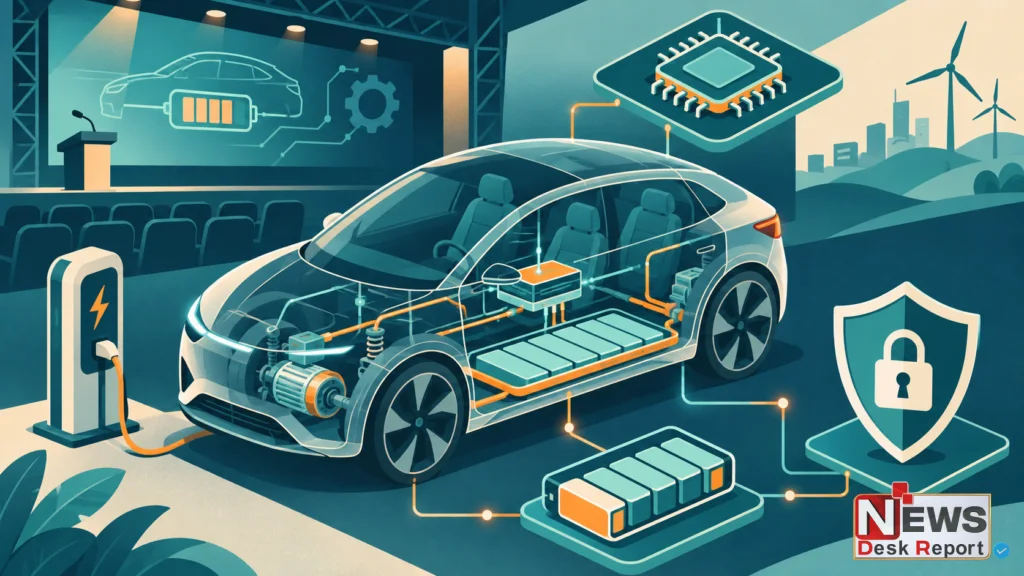
The afternoon session is scheduled to examine how artificial intelligence, 5G and 6G connectivity, and software-defined vehicles could shape future mobility. Its listed topics also cover in-car technology, the relationship between hardware and software, and the Internet of Things.
A software-defined vehicle uses software as a central part of controlling and developing vehicle functions. The conference’s technical tracks separately cover vehicle cybersecurity, software compliance and connected mobility.
What the conference programme confirms
SAEINDIA’s event website dates the conference to 13–14 November. The Heavy Industries Ministry’s advance announcement describes an expected programme of more than 150 technical presentations and over 80 exhibitors; those are announced plans, not independently verified attendance totals.
The published timetable places the valedictory session between 3 pm and 4 pm on Saturday. Any eventual conclusions or policy announcements will require separate confirmation.
Read more in our Technical coverage.