
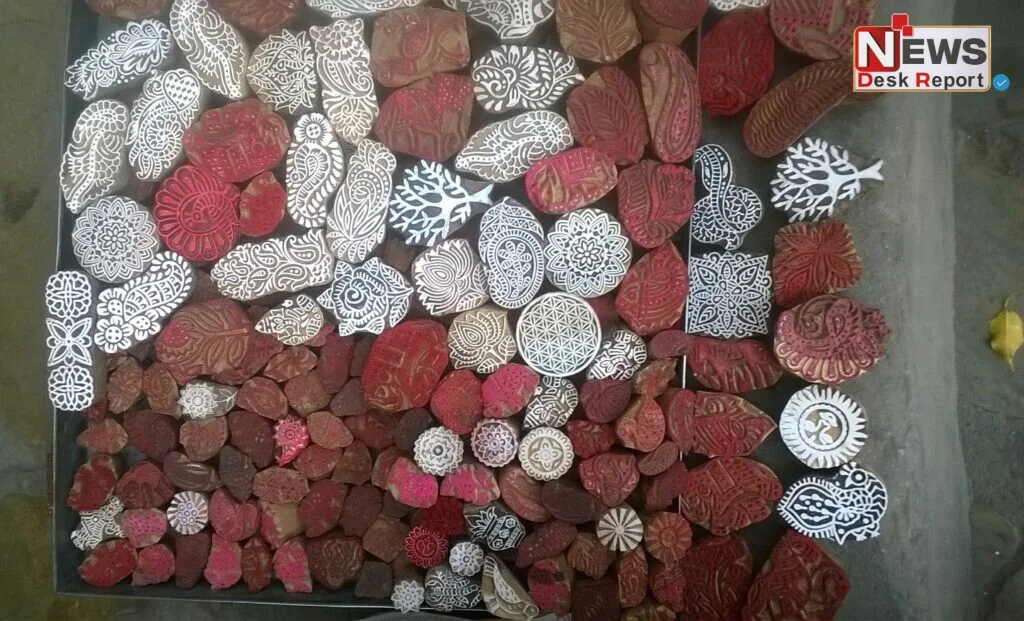
File photo: textile-printing woodblocks in Jaipur, February 2017; not the exporter workshop. Photo: Silverrays / Wikimedia Commons, CC BY-SA 4.0. NDR resizing and branding; adapted image under the same licence.

NEW DELHI, November 28: Exporters and small businesses in Jaipur and Dehradun were the focus of Commerce Ministry outreach on Friday, with sessions on using India’s free trade agreements and export-support mechanisms. The ministry published details of the November 27 events on Saturday morning.
The official account says the Jaipur session was organised with the Federation of Indian Export Organisations, the Directorate General of Foreign Trade (DGFT) and the Rajasthan government. A separate State-level workshop in Dehradun involved DGFT and Uttarakhand’s Industries Department.
Moving from agreements to export orders
In Jaipur, Commerce Secretary Rajesh Agrawal urged businesses to identify opportunities in partner markets and develop overseas supply chains. Textiles, handicrafts, gems and jewellery, furniture and minerals were among the Rajasthan sectors discussed.
The session also covered support under the Export Promotion Mission, including export credit, exhibitions, testing and certification, overseas warehousing and logistics. Exporters raised questions during an open-house discussion.
Rules of origin and sector-specific support
The Dehradun programme included technical sessions on tariff concessions, rules of origin and the Districts as Export Hubs initiative. Agriculture, processed foods, handicrafts, services and engineering were among the sectors covered.
Rules of origin determine whether a product qualifies as originating in an agreement partner. A trade agreement’s existence therefore does not mean that every shipment automatically receives a lower tariff; product coverage and applicable conditions matter.
How the tariff changes for whole cumin
The ministry cited Rajasthan’s whole cumin seeds as an example. Under the India–UAE trade agreement, the UAE customs duty on qualifying whole cumin seeds from India fell from 5 per cent to zero. For a producer group considering a UAE order, the first question is whether its shipment meets the agreement’s origin requirements.
Exporters can use the Directorate General of Foreign Trade’s Trade Connect certificate-of-origin service. The directorate’s guidance explains how the agreement selected determines the origin criteria used for certification.
Testing and certification are also relevant to spice producers in Assam. In September, the state Cabinet approved a proposed spice-testing laboratory in Guwahati to support export certification.