


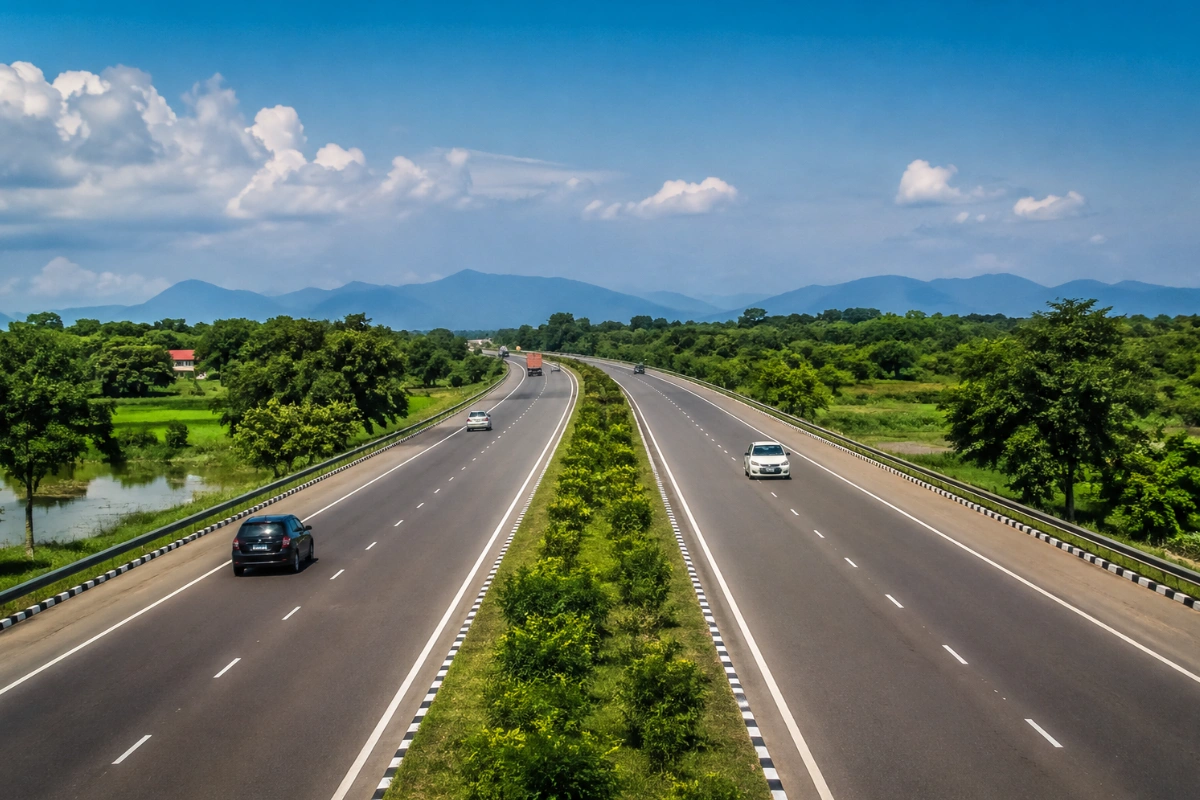
GUWAHATI: The Cabinet Committee on Economic Affairs (CCEA), chaired by Prime Minister Narendra Modi, has approved the construction of the 135.871-km, four-lane access-controlled Guwahati–Tezpur corridor on National Highway-15 in Assam on August 6. The project will be developed under the Build-Operate-Transfer (BOT) Toll model at an estimated cost of Rs 8,970.20 crore.
ALSO READ: Assam CM Says Donate Flood Relief Through Government, Not Personal Drives
The proposed corridor is expected to significantly improve road connectivity between Guwahati and Tezpur while easing traffic congestion on the existing NH-27 (East-West Corridor) along the southern bank of the Brahmaputra River.
A key feature of the project is the development of a 4.9-km Emergency Landing Facility (ELF) on the Tezpur Bypass, planned in coordination with the Indian Air Force (IAF). The corridor will also include five major bypasses spanning 58.7 km to divert traffic away from densely populated areas, including Baihata Chariali, Sipajhar, Kharupetia, Dekiajuli and Tezpur.
The infrastructure package includes the construction of 15 major bridges, 30 minor bridges, 19 flyovers, 46 underpasses, an elephant underpass on the Tezpur Bypass, and around 210 km of service roads. These facilities are aimed at ensuring smooth traffic movement while maintaining safe cross-connectivity on the access-controlled highway.
According to the government, the new corridor is expected to double average travel speeds and cut travel time by nearly half. It is also expected to improve road safety, reduce fuel consumption and vehicle operating costs, and support socio-economic growth across the region.
The project will strengthen connectivity between Assam and Arunachal Pradesh and provide improved access to several key economic and social hubs. These include eight PM Gati Shakti economic nodes (industrial parks), two aspirational districts, Darrang and Udalguri, three major tourist destinations, Maa Kamakhya Temple, Kaziranga National Park and Orang National Park, and seven logistics hubs comprising three major railway stations, two airports and two inland waterway terminals.
Officials said the corridor is expected to facilitate faster movement of passengers and goods while supporting regional development and improving transport infrastructure in Northeast India.


