


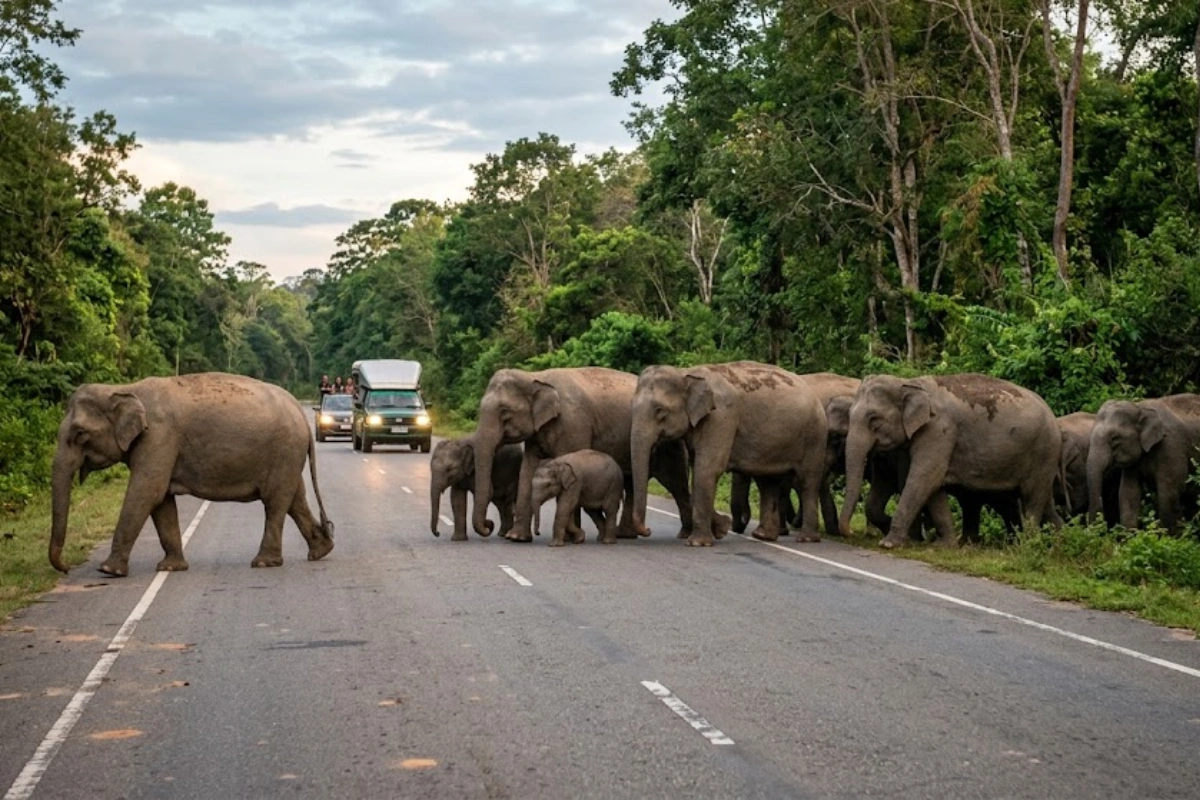
GUWAHATI: The Supreme Court on Monday, August 17, directed the Ministry of Environment, Forests and Climate Change (MoEFCC) to conduct a nationwide survey to check if any state has constructed obstacles or created blockades in elephant corridors, calling such actions unacceptable.
ALSO READ: Jai Hind Club to Make Ram Mandir Themed Durga Puja Pandal in Guwahati's Pandu
Hearing an application highlighting the blockade of wildlife corridors across several states, a three-judge bench presided by Chief Justice of India Surya Kant, alongside Justices Joymalya Bagchi and V. Mohana, emphasised that no state can justify erecting barriers along these natural migratory paths.
The Chief Justice observed that elephant herds naturally travel long distances and firmly stated that agricultural damage cannot be used as an excuse to place obstacles in their way.
"We are very clear that there cannot be obstacles in the way of wildlife," observed the CJI during the hearing. "Elephant herds have a practice of travelling long distances. No State can say that just because crops are getting destroyed, there have to be obstacles in their path."
Along with ordering the removal of physical barriers, the top court issued a strict ban on using coercive methods to chase away elephants, specifically barring the use of fireballs, mashaals (torches), and other harsh measures.
The bench directed state authorities to implement these orders immediately to protect wildlife from harm. The court noted that while the MoEFCC already has mandatory guidelines to maintain seamless elephant corridors across state lines, local factors have continually led to these passages being impeded or blocked.
The ministry has been given six weeks to submit a fresh, comprehensive survey report to the apex court. The report must detail the current status of elephant corridors nationwide, outline the specific steps taken to clear existing obstructions, and confirm compliance regarding the complete prohibition of fireballs, mashaals, and coercive tactics against wildlife.


