


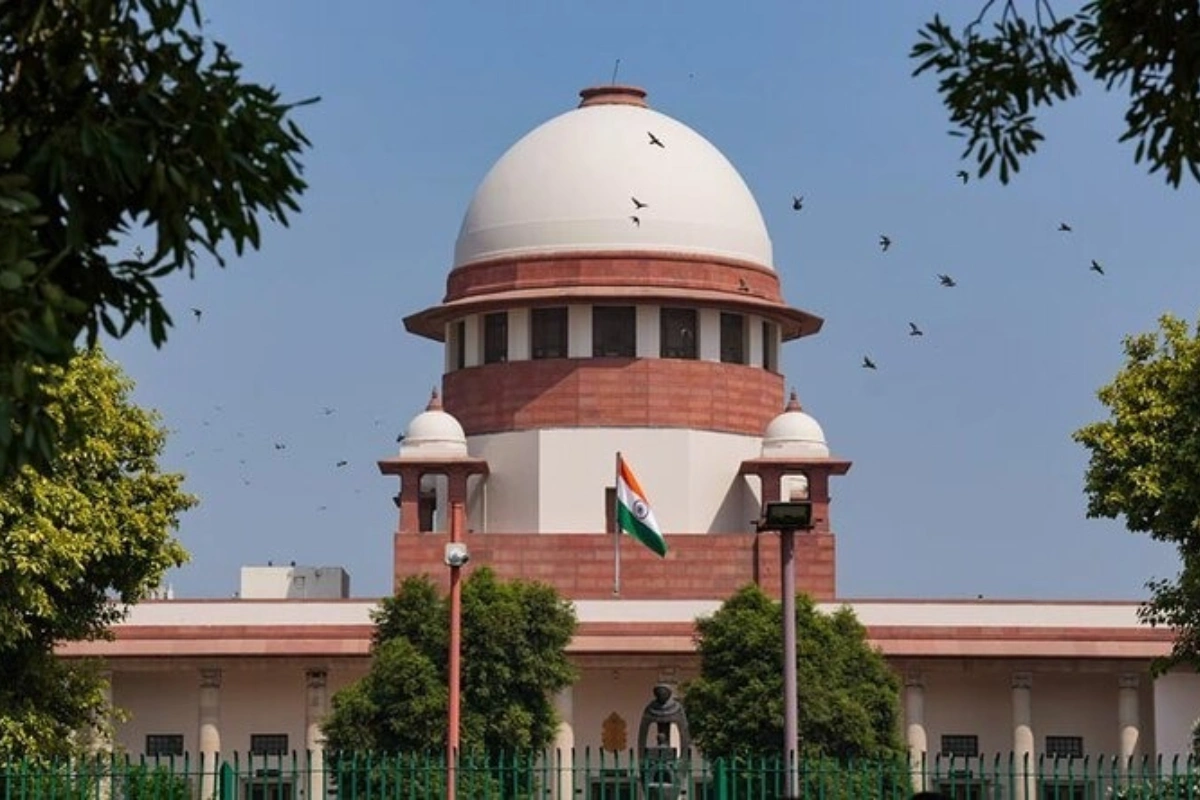
GUWAHATI: The Supreme Court on Monday, July 27, observed that police cannot resort to a lathi-charge merely because people are protesting, stressing that the right to peaceful and lawful protest is guaranteed under the Constitution.
ALSO READ: Power Supply Gradually Restored in More Flood-Hit Areas of Sivasagar as Water Recedes: Assam CM
A bench comprising Chief Justice of India Surya Kant and Justices Joymalya Bagchi and V. Mohana made the observations while hearing a batch of petitions alleging excessive use of police force against students participating in nationwide protests over examination paper leaks.
The court said allegations of police excess should be independently examined and underscored the need for a uniform protocol for handling demonstrations across the country.
"Right to peaceful, lawful protest is absolutely guaranteed under the Constitution. So long as it is peaceful agitation, merely because there is agitation, there can't be excess… If there is excess committed, it should be independently examined. It's not only a case of Delhi. Uniformity in protocol is required.
Merely because there is agitation doesn't mean lathi-charge. Discipline is integral to the democratic process," the Chief Justice orally observed.
The bench also said it was equally concerned about injuries suffered by protesters and police personnel during demonstrations.
Justice Joymalya Bagchi observed that injuries to both police personnel and protesters were a matter of concern and suggested that states should ensure adequate protective equipment is provided to police to handle such situations.
The observations came as multiple petitions related to protests over alleged examination paper leaks, including claims of excessive police action during the July 20 "Sansad Chalo" march and subsequent incidents in Bihar, were mentioned before the court.
The Supreme Court said all petitions concerning the issue would be heard together on Tuesday.
The Chief Justice also emphasised the need for a standard operating protocol for dealing with protests.
"There has to be a protocol in place. Everyone has a right to protest so long as it is with due permission and at designated places. But if some anti-social elements have done anything, that can also be looked into," he said.
The hearing assumes significance as it comes days after Union Education Minister Dharmendra Pradhan resigned following weeks of nationwide protests over the alleged examination paper leak, while the Centre has also moved to introduce a tougher anti-paper leak law in Parliament.
Separately, the Delhi High Court has directed authorities to preserve CCTV footage, videography and other records related to the police action while hearing challenges to the crackdown.
The petitions also cite subsequent protests in Bihar, where demonstrations were held in solidarity with the Delhi agitation. According to submissions before the court, three protesters were injured after police opened fire during violent protests in Siwan on Saturday, while police claimed the firing followed stone-pelting in which several personnel were injured. Similar incidents were also reported from Jehanabad.


