



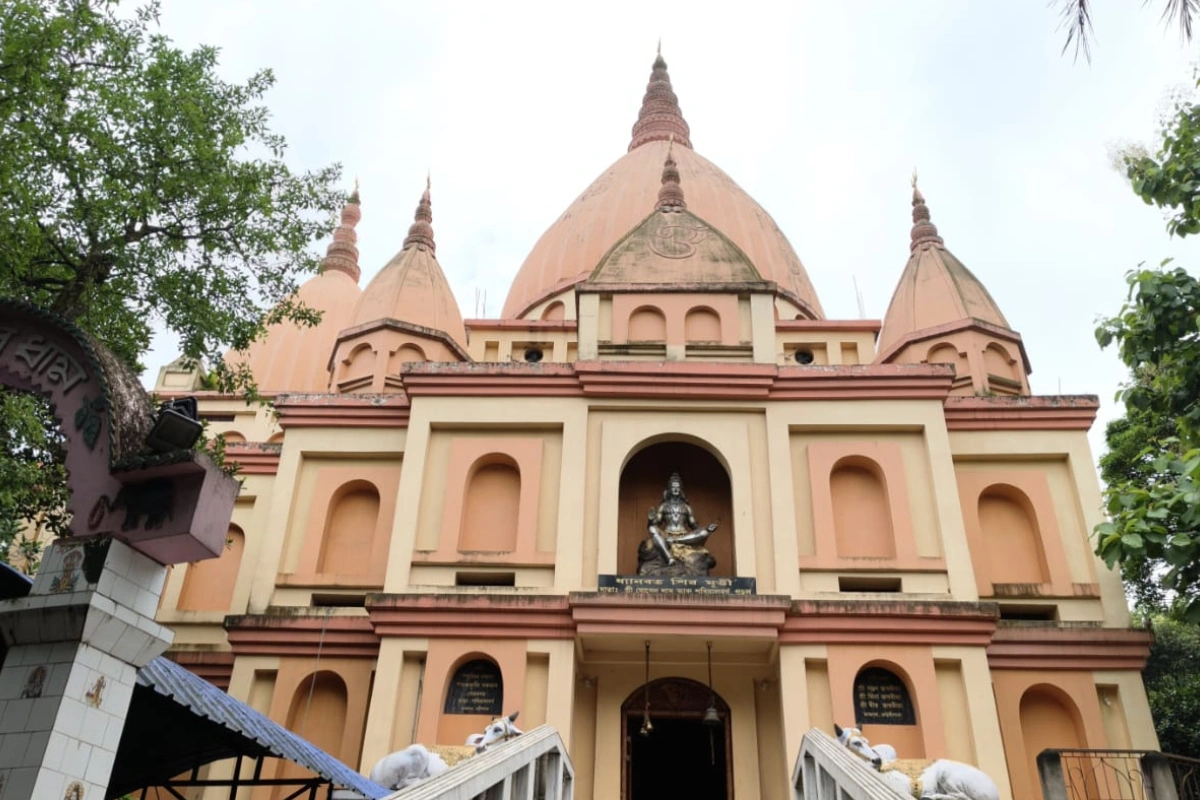
With the spiritual aura of Guwahati drawing thousands of devotees every year, the revered Lankeswar Temple stands as one of Assam’s most significant shrines dedicated to Lord Shiva. Located near Jalukbari on the banks of the mighty Brahmaputra River, the temple is accessed through around 452 marble steps. Beyond being a place of worship, it is a site deeply rooted in history, mythology, and faith.
ALSO READ: Opinion | Anatomy Of a Protest
The temple comes alive during the holy month of Sawan, when thousands of devotees visit to offer prayers and perform rituals dedicated to Lord Shiva. The atmosphere resonates with devotion as worshippers pour water and milk over the Shivling and offer bel leaves, accompanied by the continuous chanting of “Om Namah Shivaya.” The serene surroundings of the Brahmaputra further enhance the spiritual experience for visitors.
Speaking about the temple’s significance, local temple committee member Atul Patowary shared insights into its rich past and mythological importance. According to him, Hindu mythology states that Ravana, the mighty king of Lanka and a devoted follower of Lord Shiva, is believed to have worshipped Lord Shiva at this very location. This belief is said to have given the temple its name, “Lankeswar,” connecting it with ancient mythological traditions and adding to its spiritual significance.
Patowary further explained that the temple has remained an important centre of devotion for people in the region for generations. “Devotees visit this temple throughout the year to seek divine blessings. During Sawan and Maha Shivaratri, the number of visitors increases significantly, turning the temple into a vibrant centre of worship and community gathering,” he said.
Regarded as one of the oldest Shiva temples in Guwahati, the exact date of establishment of Lankeswar Temple remains unknown, as there are no clear historical records documenting its origin. Many locals believe that sincere prayers offered at the temple are fulfilled, strengthening its reputation as a place of unwavering faith. Devotees also believe that those who visit the shrine with devotion may receive blessings for stability and prosperity in life, including career opportunities.
According to Patowary, the temple did not have appointed pandits in its early years. It was only after nearly 150 years that an official temple committee was formed. He also recalled that, in earlier times, devotees believed that Lord Shiva would guide them in matters such as thefts in their homes. People would visit the temple seeking divine intervention, believing that the truth would eventually be revealed. Such beliefs, passed down through generations, continue to contribute to the temple’s cultural and spiritual significance.
Despite its importance, the temple maintains a simple and humble structure. Situated amid lush greenery in the hills, it offers a breathtaking view of Guwahati city and the Brahmaputra River. Away from the rush of urban life, the peaceful surroundings allow visitors to experience a sense of devotion, tranquillity, and inner reflection.
Today, Lankeswar Temple continues to serve as a vibrant spiritual centre, attracting pilgrims, locals, and visitors from different places. Whether seeking blessings, exploring mythology, or looking for a moment of peace, devotees leave the shrine with a renewed sense of connection and serenity.
In a city known for its sacred landmarks, Lankeswar Temple continues to stand as a quiet yet powerful symbol of faith, where mythology, belief, and devotion flow endlessly, much like the river that surrounds it.


