



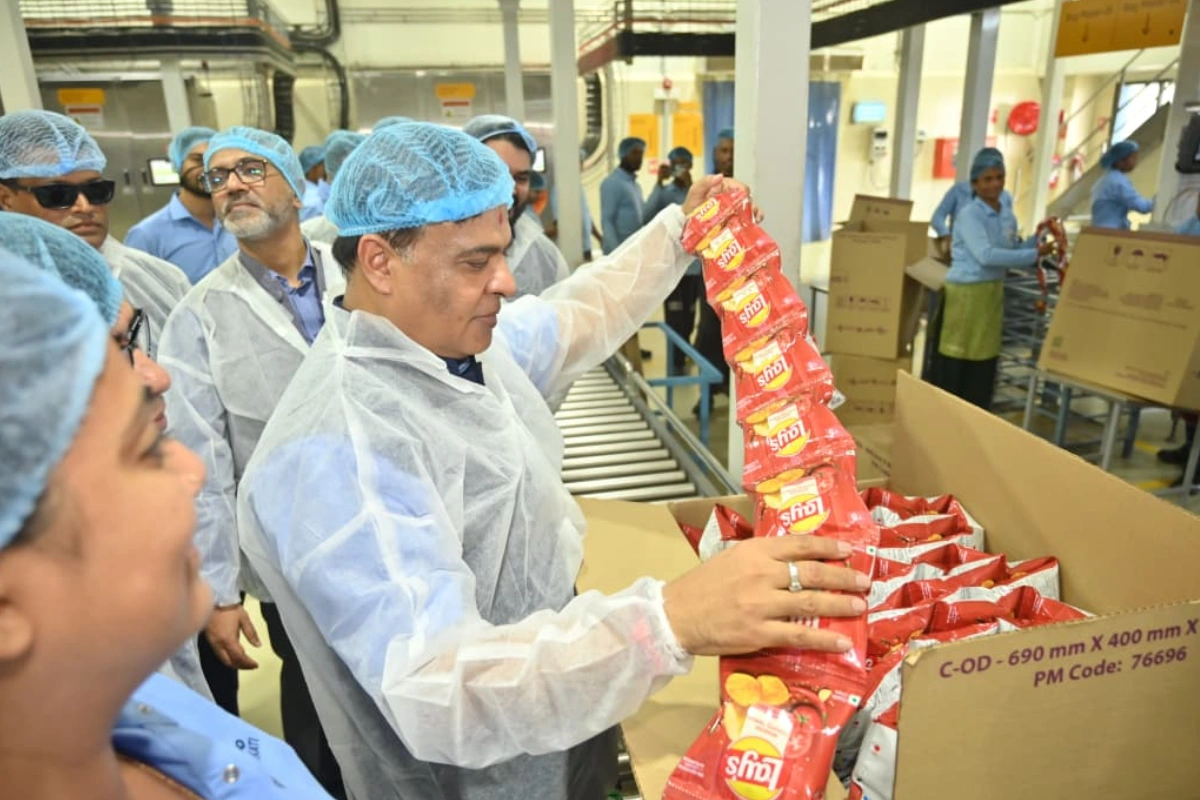
GUWAHATI: Assam Chief Minister Himanta Biswa Sarma on Thursday, September 10, urged farmers in Nalbari, Kamrup and Darrang to cultivate potatoes locally for PepsiCo’s newly inaugurated factory in Nalbari, about 65km northwest of Guwahati, stressing that the industry should not have to depend on potatoes from other states.
ALSO READ: Assam: BJP Names Ex-Nagaon DC Debasish Sarma as Candidate for Nagaon Bypoll
Speaking at the inauguration of the PepsiCo factory in Nalbari, Sarma said the objective should be to ensure that potatoes required by the factory are produced by indigenous farmers of Assam.
“If we don't farm potatoes for this factory, the factory still needs to run. To keep the factory running, where will the potatoes have to be brought from? They will have to bring potatoes from West Bengal or Gujarat,” Sarma said.
“It would be a matter of shame if we import potatoes for PepsiCo from other states”, Sarma said.
He said the government aims to create a market for farmers by facilitating the purchase of around 70,000 metric tonnes of potatoes for the factory.
The Chief Minister further said the Agriculture Department would work with farmers to promote potato cultivation and protect them against crop losses caused by floods and excessive rainfall.
He said potato cultivation would be brought under the Crop Insurance Scheme so that farmers could receive compensation in case of crop damage.
Sarma also said the Assam government, State Bank of India and PepsiCo were working towards signing an MoU to facilitate farmers in purchasing seeds through Kisan Credit Cards (KCC).
“We are also contemplating whether we can extend some additional assistance directly from the government's side,” he said.
The Chief Minister said around 5,000 farmers and their families could benefit from the factory, pointing out that the number of people working directly inside the factory could be significantly lower.
“While 700 or 500 people may work inside the factory, around 5,000 families will benefit from it,” Sarma said.


