


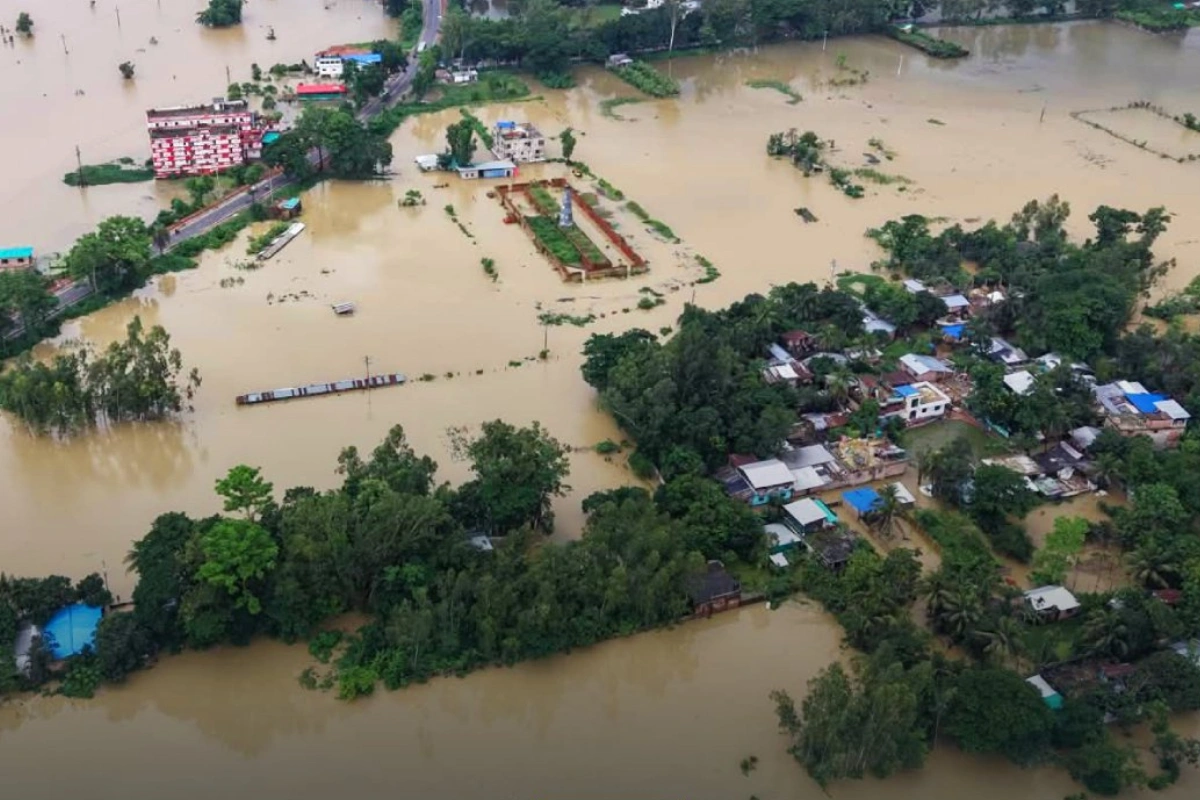
GUWAHATI: Floods and landslides triggered by days of torrential monsoon rain have claimed the lives of at least 51 people in southeastern Bangladesh, leaving more than a million people stranded as authorities race to deliver relief to devastated communities.
ALSO READ: Raijor Dal MLAs Stage Assembly Protest Against Arrest of Pranab Doley and Aditya Rabha
The disaster management ministry said flooding across seven districts: Chattogram, Cox’s Bazar, Bandarban, Rangamati, Khagrachhari, Moulvibazar and Habiganj — has disrupted daily life, isolated thousands of families and submerged homes.
Many residents have been unable to cook for days after floodwaters inundated their houses, while thick layers of mud have damaged kitchens and living spaces. Power outages and shortages of food and clean drinking water have further worsened conditions for affected families.
Thousands of families are relying on emergency relief and dry food such as flattened rice, puffed rice and biscuits that do not require cooking. However, washed-out roads and damaged bridges have made it difficult for rescue teams and aid workers to reach several of the worst-hit communities.
Army and navy personnel are using boats to deliver food, drinking water, medicines and other essential supplies to isolated areas, while the government has intensified relief operations and urged residents in flooded homes to move to nearby shelters.
The heavy rain also triggered landslides in Rohingya refugee camps in Cox’s Bazar earlier this week, where 16 refugees, including women and children, lost their lives. More than one million Rohingya refugees live in the camps, where makeshift shelters on steep, deforested hillsides remain highly vulnerable during the monsoon season.
Bangladesh is one of the world's most disaster-prone countries, with seasonal monsoon rains regularly causing floods, river erosion and landslides. Scientists say climate change is making extreme rainfall more frequent and intense, increasing the scale and severity of such disasters.


