


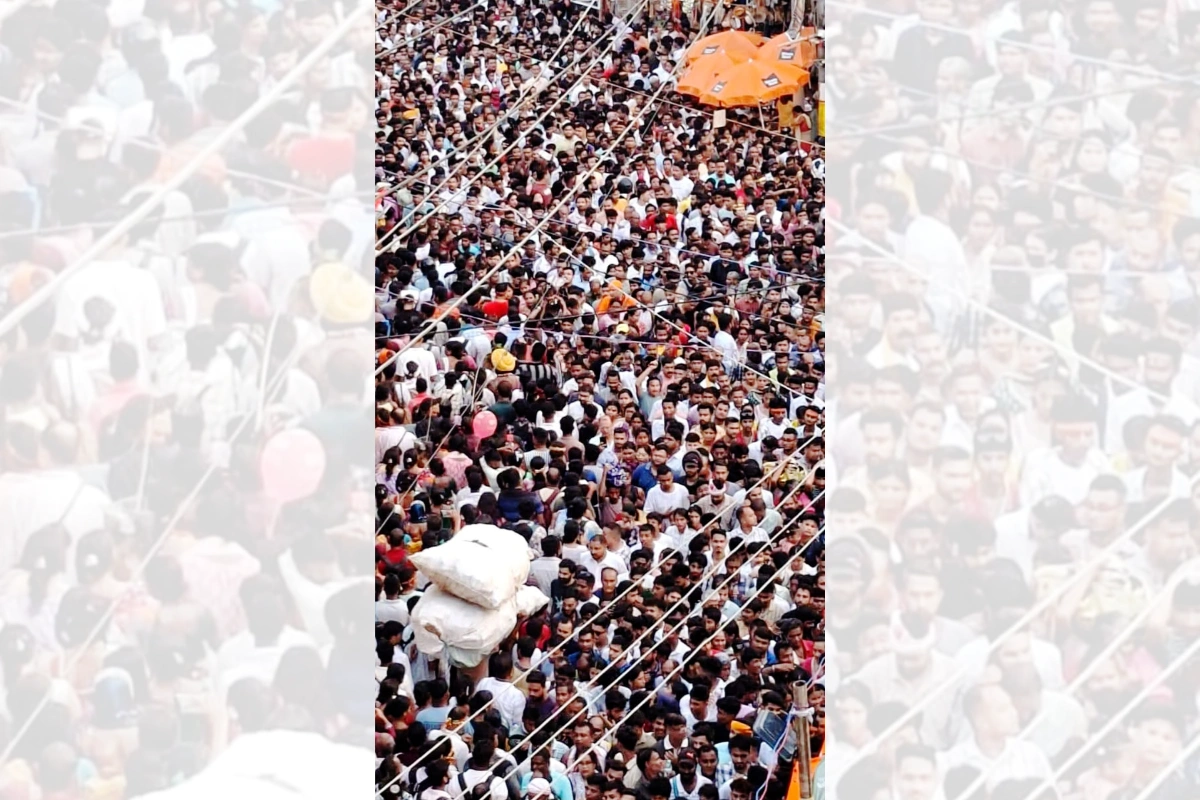
GUWAHATI: As lakhs of devotees, sadhus and pilgrims converged on Nilachal Hill for the annual Ambubachi Mela, what was meant to be a spiritual journey often turned into a test of endurance amid traffic paralysis, overcrowding and apparent administrative shortcomings.
ALSO READ: Proposal for Vegetarian-Only Meals in Kolkata Schools Sparks Mixed Response
Authorities had claimed to be "fully prepared" for the mega congregation, with estimates suggesting more than eight lakh visitors would arrive during the four-day festival. Traffic diversions, crowd-control plans and security arrangements were announced well in advance. Yet, on the ground, thousands of devotees reported hours-long waits, severe congestion and confusion over movement routes.
The roads leading to Kamakhya temple and adjoining areas witnessed massive pressure as streams of pilgrims continued to pour into the city. Despite traffic restrictions and diversion plans, bottlenecks were visible across key corridors, leaving commuters and devotees stranded for hours. Police were forced to regulate entry in batches as crowd density surged on the temple hill.
The scale of the gathering was hardly unexpected. Government agencies and temple authorities had repeatedly highlighted the anticipated rush and claimed extensive preparations were underway. Yet, the sheer volume of devotees appeared to overwhelm available infrastructure.
Adding to the challenge was the unprecedented popularity of Ambubachi on social media, which has drawn increasing numbers of tourists and first-time visitors in recent years. Reports had already warned that larger crowds were expected because of the festival's growing online visibility.
For many pilgrims, the biggest complaint was not the crowd itself but the absence of efficient crowd flow mechanisms. Long queues snaked through access routes while elderly devotees, women and children struggled in packed holding areas. Online discussions and local feedback reflected frustration over crowd management and visitor experience during peak hours.
Questions are now being raised over whether the city's infrastructure is keeping pace with the rapidly expanding scale of Ambubachi. If authorities knew that lakhs of devotees were expected and had weeks of preparation time, why were devotees still left battling traffic snarls, overcrowded routes and logistical confusion?
Ambubachi remains one of the most significant spiritual gatherings in eastern India, drawing people from across the country in an extraordinary display of faith. But faith alone cannot manage a crowd. As the festival grows bigger every year, the administration faces a pressing challenge: ensuring that devotion is not overshadowed by disorder.
For thousands who climbed Nilachal Hill this year, the memory of Ambubachi may not just be about divine blessings—it may also be about hours spent stuck in traffic, endless queues and a management system struggling to keep pace with the crowds.


