



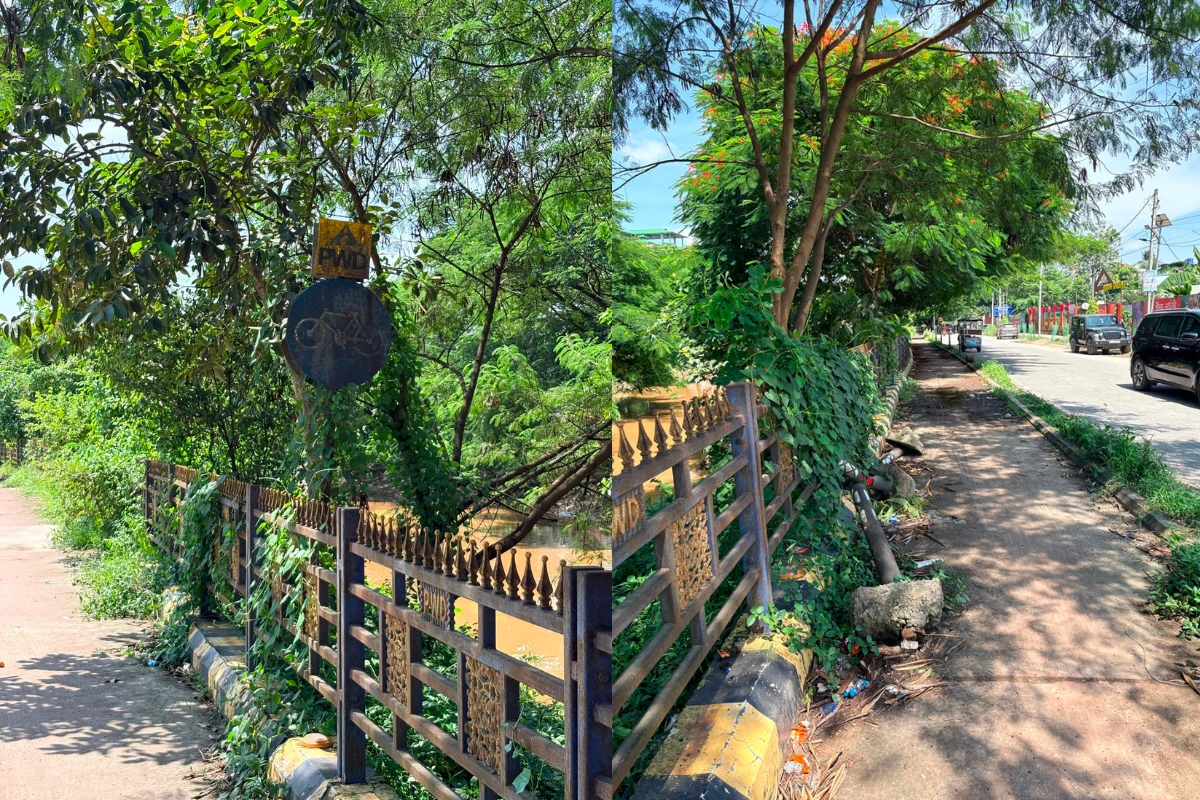
₹1.88-Crore Cycle Track on Guwahati’s Kanaklata Path Lies in Deplorable Condition
A 1.5-km stretch of cycle track on Guwahati’s Kanaklata Path, connecting Dakhingaon and Saukuchi and built at a cost of around ₹1.88 crore, continues to remain in a deteriorating condition, with residents and local shopkeepers raising concerns over its maintenance and lack of regular upkeep.
ALSO READ: Guwahati Builds Big, But Its Roads Still Struggle Every Monsoon
The cycle track was developed by the Public Works Department (PWD) as an effort to provide dedicated infrastructure for cyclists in the city. However, several years after its construction, the track is struggling to serve its intended purpose, with locals saying that it is rarely used by cyclists and has gradually fallen into disrepair.
The issue has once again brought attention to the condition of public infrastructure created with government funds, particularly facilities that require regular maintenance after their construction.
A local shopkeeper said that the track is rarely used by cyclists and that there has been little visible effort to maintain it.
“I rarely see people using this as a cycle track. It is also in a very deteriorating condition. The authorities never visit to clean or repair this cycle track,” the shopkeeper said.
The condition of the track has also become a concern for people who use the stretch for walking and other everyday activities.
A resident said the cycle track was a good initiative by the government but alleged that the lack of maintenance has affected its usefulness.
“Such a beautiful initiative taken up by the government, but look at the condition now. It is left in a dilapidated condition. If repaired and kept in good condition, it would definitely be a good initiative,” the resident said.
The concern is not limited to the appearance or usability of the track. A student using the area also pointed to a recent incident involving an electric pole.
“A few days back, an electric pole was falling on this cycle track, so we had to keep it aside so that people could at least walk freely,” the student said.
According to the student, the incident created an obstruction on the track, and people had to move the pole aside to keep the passage clear.
Another resident said the authorities should take steps to restore the cycle track rather than allowing the infrastructure to deteriorate further.
“Authorities should repair this cycle track and make it a better one. Public money should not go to waste. If they have built it, they should also repair it,” the resident said.
Responding to the condition of the cycle track, the PWD cited changes following the delimitation process in Assam.
According to the department, the delimitation process resulted in changes to the constituencies in Guwahati. Following these changes, the cycle track was handed over to PWD Dispur by another branch of the department.
The department said that after receiving the cycle track, there is currently no scheme under which it can undertake work on the stretch.
The absence of a scheme means that, at present, there is no identified programme under which repair or other major work can be carried out on the cycle track.
The PWD, however, said that it has taken a recent step to improve the surroundings of the track.
“A few days back, we planted saplings to make the cycle track area greener,” the PWD said.
While planting saplings may improve the surrounding area, residents say that the immediate concern remains the condition of the cycle track itself. They want the authorities to focus on repairing and maintaining the existing infrastructure so that it can be used for the purpose for which it was created.
The cycle track was conceived as an infrastructure facility aimed at encouraging cycling and providing a dedicated space for cyclists. Such infrastructure is intended to make cycling safer and more accessible while also providing an alternative mode of transport within the city.
However, the current condition of the track raises questions about what happens to such infrastructure once the construction work is completed.
For a facility to remain useful, regular cleaning, repairs and maintenance are essential. In the case of the cycle track, locals now say that the lack of upkeep has gradually reduced its usefulness.
The issue is therefore no longer only about a cycle track. It also raises a broader question about the maintenance of public infrastructure after its construction.
Government projects require continued attention to remain functional. Without regular upkeep, even infrastructure created with the intention of serving the public can gradually lose its usefulness.
In the case of the cycle track, the PWD has now acknowledged that the track is under the responsibility of PWD Dispur but said that there is currently no scheme to undertake work on it.
For now, the department has taken up plantation along the area, while residents continue to seek repairs and better maintenance of the track.
With locals questioning its present condition and the PWD saying that no scheme is currently available for repair work, the ₹1.88-crore cycle track remains caught between its original purpose and its present reality.
The demand from residents is that the facility should not simply remain an infrastructure project on paper. If it was built to promote cycling and serve the public, they want it restored, maintained and made usable again.


