


Guwahati’s realty dream turns into a debt trap as unsold flats, rising costs push sector into recession
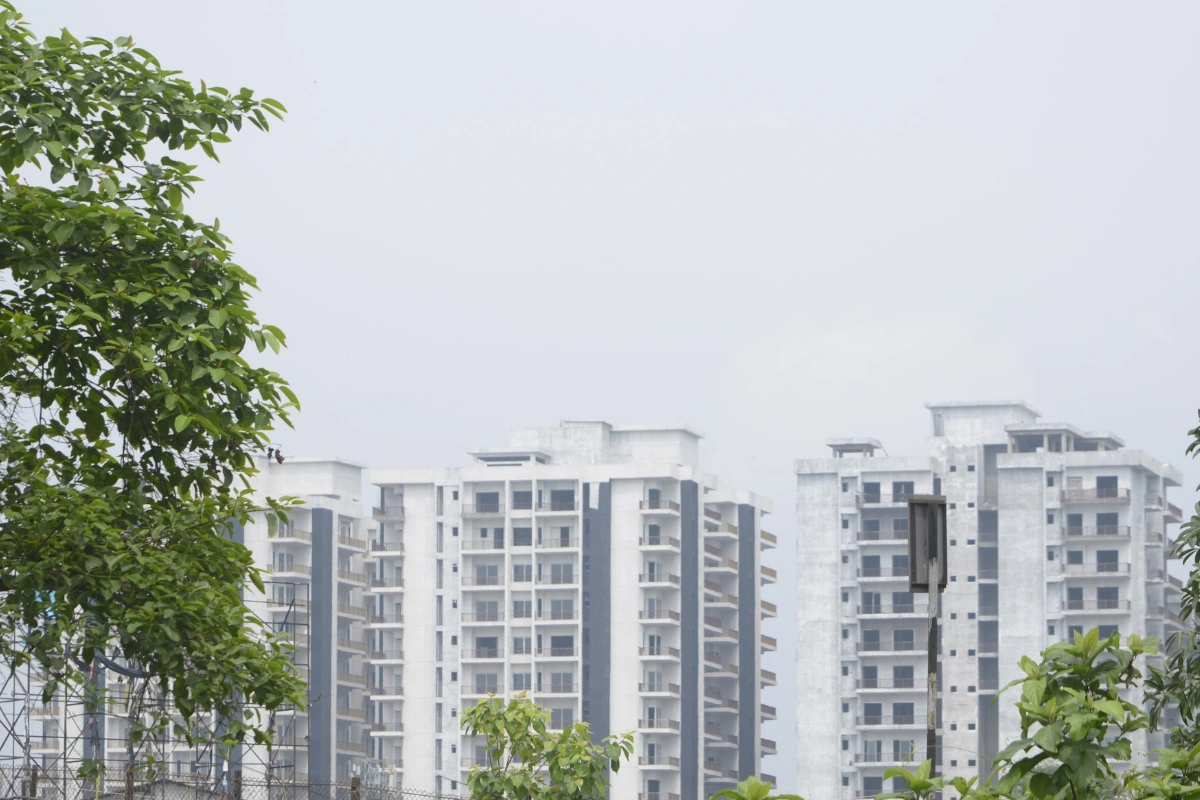
Guwahati’s once-booming real estate industry is now staring at an uncomfortable reality: the city is building more homes than its economy can absorb. Across the rapidly expanding urban landscape, newly constructed apartment blocks stand with shuttered windows, unsold flats remain locked months after completion, construction projects miss deadlines and developers struggle to keep money moving. Behind the concrete skyline is a sector increasingly squeezed by falling liquidity, soaring construction costs and a buyer who is simply no longer willing, or able, to pay whatever price developers demand.
ALSO READ: Guwahati Fare Dispute Grows as Riders Seek Transparency, Drivers Demand Better Pay
The slowdown is no longer being described merely as a temporary correction. Industry representatives themselves are using a far more serious word, recession.
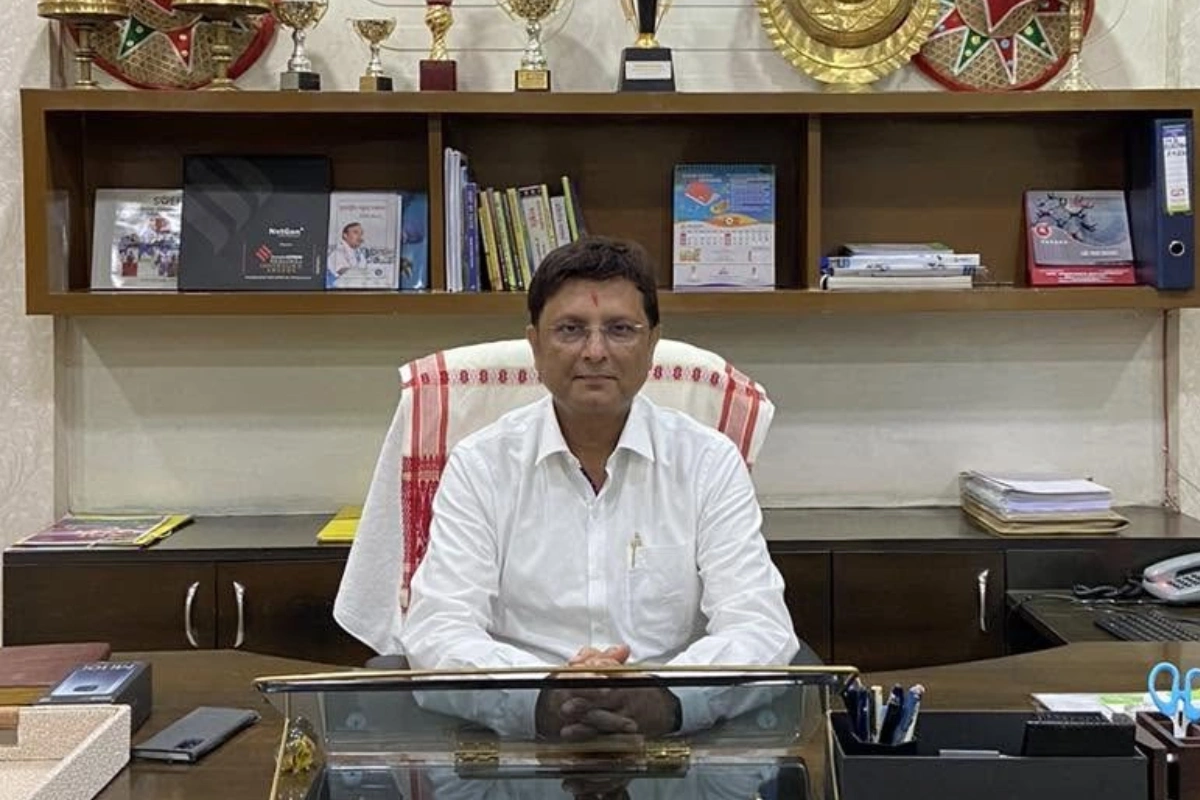
“Yes indeed, at present we are facing a recession,” said PK Sharma, president of the Assam Real Estate and Infrastructure Developers Association (AREIDA), bluntly acknowledging the difficult conditions confronting the sector.
The admission comes at a time when Guwahati continues to witness frenetic construction in several parts of the city. Areas such as Lalmati, Khanapara, Boragaon, Jalukbari, Gorchuk and Lokhra have seen apartment complexes rise rapidly over the years. But the question now is not whether Guwahati is building. It is whether there are enough buyers with enough purchasing power to absorb what is being built.
City-based architect and member of the Association of Architects, Assam, Ranel Das, said the slowdown was evident, although he described it as a consequence of a deeper economic mismatch.
“Yes, it's true to a certain extent. The market is slow,” Das said. “Products are more than the consumer. Also, the pricing has become unreachable for the real customers.”
That mismatch may be at the heart of Guwahati’s real estate problem. Developers are facing higher costs, but buyers are facing stagnant or disproportionately lower incomes. The result is a market where both sides are trapped: builders cannot significantly reduce prices without taking a hit, while prospective buyers cannot stretch their finances indefinitely to purchase increasingly expensive homes.
“Unproportionate income in relation to cost is a major factor,” Das said.
According to him, another problem is that developers are increasingly offering high-specification projects modelled on larger metropolitan markets without necessarily having the economic ecosystem that supports such prices.
“Builders are proposing products with high specification in parallel to big cities where money flow is more,” Das said. “Jobs are high-value jobs there. Without industrial growth, real estate suffers.”
That observation goes beyond the immediate problems of builders. It exposes the structural weakness of Guwahati’s property economy. Real estate cannot remain permanently detached from the purchasing power of the city’s population. Apartments can be constructed, marketed and advertised as premium products, but if salaries, business earnings and household savings do not rise at the same pace, demand eventually hits a wall.
And that wall now appears to be getting harder.
For years, Guwahati’s real estate boom was fuelled by a straightforward belief: land values would keep rising, the city would keep expanding and owning property would remain one of the safest investments.
Between 2010 and 2020, the city underwent a dramatic transformation. Multi-storey apartment complexes emerged across neighbourhoods that had once been regarded as peripheral. Six Mile, Khanapara, VIP Road, Panjabari, Gorchuk and several other areas became major residential destinations.
The city’s growth as the commercial and administrative centre of the Northeast further strengthened that optimism. Young professionals, government employees, bank workers, private-sector employees and students moving into Guwahati created a seemingly dependable pool of housing demand. Easier access to housing finance added another layer of confidence.
Developers responded aggressively.
Land was acquired. Projects were launched. Towers went up. Commercial complexes appeared alongside residential buildings. Investors bought apartments hoping to earn rental income or capital appreciation.
Property dealers prospered from repeated transactions.
But the equation has changed.
Construction costs have climbed sharply, with cement, steel, labour, transportation and other inputs becoming increasingly expensive. Developers who began projects when costs were lower now have to complete them at considerably higher expenditure. Yet passing the entire increase to consumers is proving difficult because the consumer's capacity to pay has not risen correspondingly.
“The market is slow” therefore means much more than fewer property registrations. It means money is moving more slowly through an ecosystem that depends on continuous circulation.
A senior member of AREIDA, speaking on condition of anonymity, said the liquidity crisis affecting the wider economy was having a direct impact on property investment.
“This is solely because most of the businessmen have not received their bills from the government,” he said. “There’s a vast void in liquidity and the plans which were noble have gone for a toss. At present there is a crisis and recession in the real estate sector is quite visible.”
This liquidity issue could have a cascading effect.
For years, contractors and business groups executing government infrastructure projects have often used their earnings to invest in land, housing and commercial property. When government payments are delayed, the financial cycle does not simply stop at the contractor’s office. It affects suppliers, labourers, subcontractors, property purchases and investment decisions.
A contractor waiting for a government bill cannot invest in a new apartment. A supplier waiting for payment cannot expand. A businessman uncertain about his cash flow postpones a property purchase. A developer waiting for sales proceeds cannot comfortably finance the next stage of construction.
The money cycle slows, and eventually begins to seize.
That is increasingly visible in the city’s housing market.
A local property broker said buyers have become significantly more cautious.
“Earlier, people used to book flats during the early stage of construction because they expected property prices to rise,” he said. “Now many buyers prefer ready-to-move flats and even then they take time before making a decision.”
That change in behaviour is particularly damaging for developers because pre-launch and under-construction sales have traditionally helped finance ongoing projects. If buyers are unwilling to commit their money before seeing a completed building, developers are forced to carry construction costs for longer periods.
For builders already struggling with expensive raw materials and limited liquidity, that can become a dangerous equation.
The situation also has a legal dimension.
A source from the Real Estate Regulatory Authority said many flat buyers are filing cases against builders over delayed delivery of apartments.
That means the slowdown is not merely about unsold inventory. Delays in construction are adding another layer of distrust between consumers and developers.
For a homebuyer paying monthly loan instalments, a delayed project can become a financial nightmare. The buyer may be paying rent while simultaneously servicing a housing loan for an apartment that has not been delivered. The longer the project remains incomplete, the greater the financial pressure.
And when buyers lose confidence in developers, future sales can suffer further.
There is a vicious cycle at work: weak sales create cash-flow problems; cash-flow problems delay projects; delayed projects undermine consumer confidence; declining confidence makes buyers more cautious; cautious buyers reduce sales even further.
Meanwhile, completed apartments are also not necessarily finding occupants.
For investors who purchased properties specifically for rental income, this is another source of anxiety. A vacant apartment produces no rental income but continues to generate maintenance costs, loan obligations and other expenses.
The growing supply of rental housing is also forcing landlords to compete among themselves. With multiple vacant apartments available, tenants have more negotiating power. Owners may have to lower rents or offer incentives, reducing the returns that originally justified their investment.
The irony is stark: Guwahati may have more housing stock, but affordability remains a problem for many residents.
There is housing, but not necessarily housing that people can afford.
There are buyers, but not necessarily buyers who can pay the prices being quoted.
There are developers, but not necessarily developers with sufficient liquidity to withstand prolonged periods of slow sales.
And there are projects, but not necessarily projects being delivered on schedule.
The slowdown is also beginning to affect those at the bottom of the construction chain.
Construction workers, small contractors and suppliers depend heavily on continuous building activity. When projects are slowed or halted, employment becomes less predictable. Workers who previously moved from one project to another can find themselves without steady work.
Some labourers are reportedly looking towards other cities for opportunities.
This is why the real estate slowdown should not be treated as an isolated industry problem. Construction is connected to cement and steel, transport, electrical work, plumbing, carpentry, paint, tiles, furniture, finance, brokerage, legal services and thousands of workers.
When real estate contracts, the impact travels outward.
Yet there is another uncomfortable question that Guwahati must confront: was the boom itself built on assumptions that could not last?
Developers launched multiple projects during years of optimism. Buyers expected appreciation. Investors expected rentals. Banks expected loan repayments. Businesses expected rising property values.
But demand cannot be created indefinitely simply by constructing more supply.
Das’s observation that “products are more than the consumer” captures the fundamental problem.
The city’s real estate sector may have mistaken urban expansion for unlimited purchasing power.
Guwahati is certainly growing. Population movement from other parts of Assam and neighbouring states continues. The city remains the region’s major centre for education, healthcare, commerce, administration and employment. In the long term, that should support housing demand.
But long-term demand cannot rescue a developer facing a cash-flow crisis today.
The market may eventually recover, but recovery will require more than promotional discounts.
Some developers are already experimenting with flexible payment schemes, discounted booking prices and smaller apartments. Such measures may help attract middle-income buyers, but industry observers argue that the deeper issue is affordability.
The real estate sector cannot sustainably recover unless the broader economy generates more high-quality employment and stronger household incomes.
As Das put it, “Without industrial growth, real estate suffers.”
That may be the most important warning emerging from the current crisis.
For years, Guwahati’s property boom was treated almost as evidence of economic growth. But construction activity alone does not necessarily represent a healthy economy. A city can build thousands of apartments while its productive economy remains comparatively weak. It can create impressive skylines without creating enough high-value jobs to support premium housing.
The present slowdown is exposing that contradiction.
AREIDA’s Sharma has acknowledged the recession. Developers are under financial pressure. Buyers are delaying decisions. Projects are facing delays. Regulatory complaints are increasing. Unsold inventory is accumulating. Rental returns are weakening. Construction workers are feeling the squeeze.
The immediate temptation will be to offer another round of incentives, launch another scheme or announce another construction project.
But Guwahati may need something more fundamental: an economy capable of supporting the property market it has built.
“Once the economic cycle improves, the sector will also recover,” the senior AREIDA representative said, pointing to the interconnected nature of construction and the wider economy.
For now, however, Guwahati’s empty apartments tell a different story.
They are not merely unfinished chapters in the city’s urbanisation story. They are evidence of a market caught between aspiration and affordability, between rising construction costs and slowing purchasing power, between abundant supply and inadequate demand.
The cranes may still be visible across the skyline, but the sound of construction no longer tells the whole story.
Behind the concrete towers lies a more troubling question: who can actually afford to live in them?
Until that question is answered, Guwahati’s real estate boom may remain less a symbol of prosperity and more a warning about what happens when construction races far ahead of the economy that is supposed to sustain it.


