



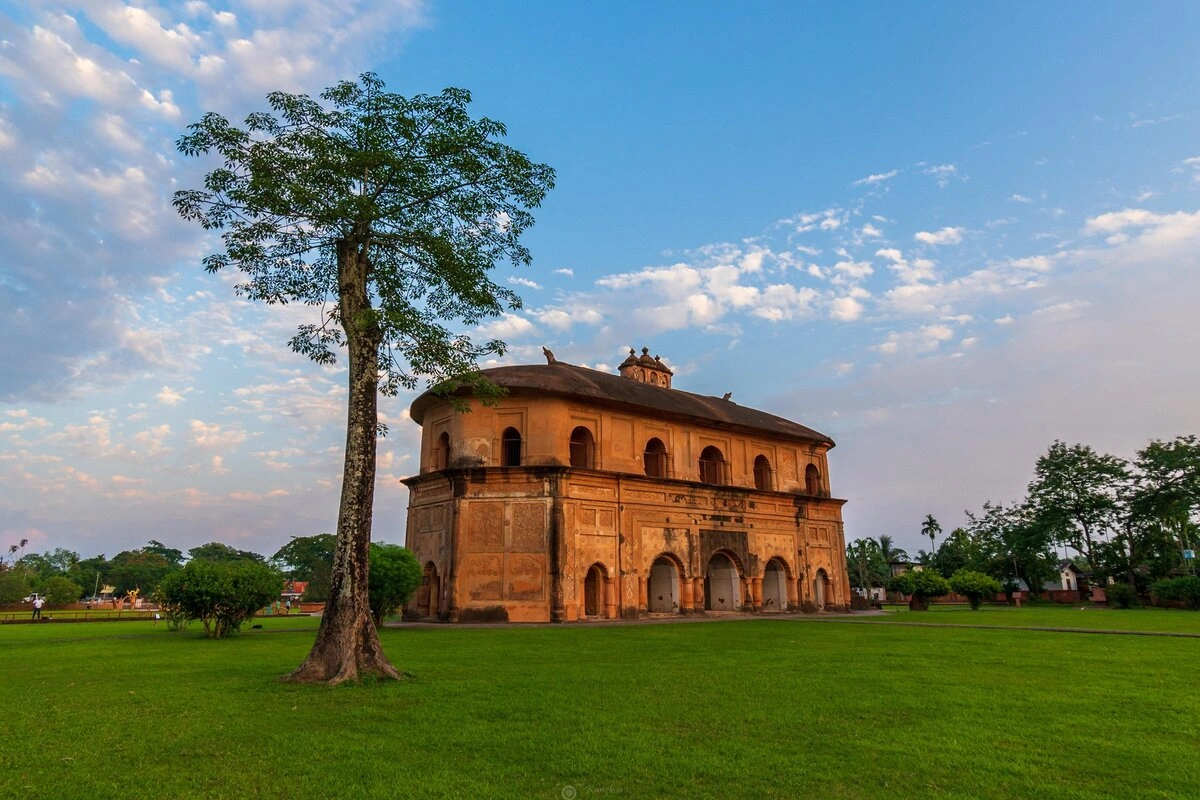
GUWAHATI: The Rangpur-Sivasagar Historical Ensemble in Assam’s Sivasagar district has been added to UNESCO’s World Heritage Tentative List, marking a significant recognition of the state’s Ahom-era cultural and architectural heritage.
ALSO READ: Bike Rider Killed After Truck Rams Him on NH27 Service Lane in Guwahati's Garchuk
The announcement was made by the Permanent Delegation of India to UNESCO in Paris on September 4. Three other Indian sites such as the Colonial Penal Settlement of Andaman Islands, Nicobarese Cultural Continuity in the Central Group of Nicobar Islands, and the Painted Haveli Towns of Shekhawati, were also added to the list.
With the latest additions, the number of Indian properties on UNESCO’s World Heritage Tentative List has risen to 73. Of these, 53 are under the Cultural category, three under the Mixed category and 17 under the Natural category.
The Rangpur-Sivasagar Historical Ensemble is located around 360 km northeast of Guwahati and represents one of the most significant urban and cultural landscapes associated with the Ahom dynasty, which ruled the Upper Brahmaputra Valley for nearly 600 years.
The ensemble consists of two principal areas- Rangpur and Sivasagar. Rangpur, also known as Che Muan or the “city of amusement”, was a pre-modern urban settlement established by Ahom king Swargadeo Rudra Singha in 1704.
The wider landscape includes a network of wetlands, rivers and elevated areas, along with palatial complexes, fortified structures, ceremonial spaces, large water reservoirs, temples and historic road networks.
A major feature of the ensemble is the group of temples constructed along the banks of large tanks. The three principal temple clusters are the Joysagar Group of Temples, Gaurisagar Group of Temples and Sivasagar Group of Temples.
The heritage landscape also includes several prominent Ahom-era structures, including Talatal Ghar (Kreng Ghar), Rang Ghar, Fakuwa Doul, Pohugarh and the Namdang Stone Bridge.
The ensemble also reflects the region’s historical importance as it developed along old overland trade routes connecting Northeast India with wider economic networks in East and Southeast Asia.
The addition to the Tentative List is an important step in the process of seeking World Heritage status. Inclusion in the Tentative List is a mandatory requirement before a property can be considered for inscription on UNESCO’s World Heritage List.
The Permanent Delegation of India to UNESCO credited the Archaeological Survey of India (ASI) for its work in securing the inclusion of the four properties.


