



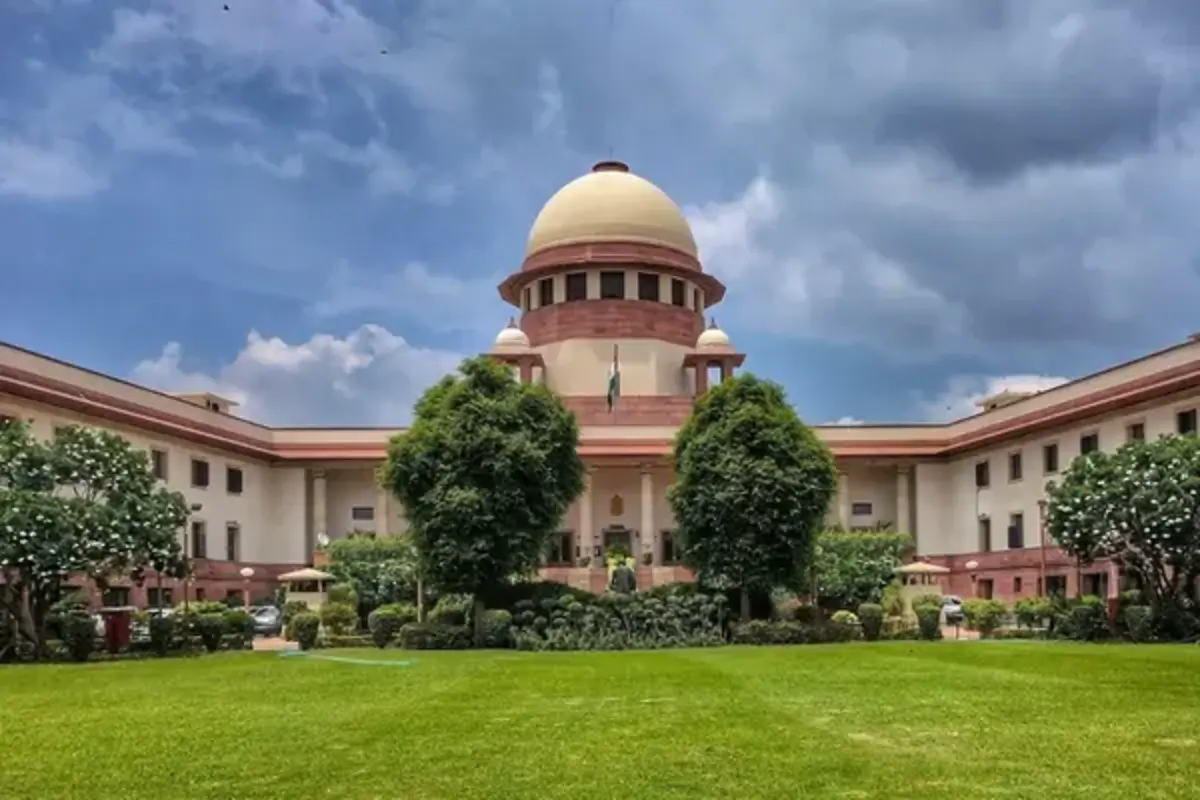
GUWAHATI: The Supreme Court on Tuesday, August 18, dismissed a petition seeking to abolish hanging as the method of executing death row convicts and replace it with alternative methods such as intravenous lethal injection.
ALSO READ: Census 2027 Self-Enumeration Phase Ends in Assam, Over 11.64 Lakh Households Submit Details
A bench of Justice Vikram Nath and Justice Sandeep Mehta also refused to refer the issue to a larger bench for reconsideration of a 1983 three-judge bench judgment that upheld the constitutional validity of execution by hanging.
“We are not persuaded that a case has been made out for referring the decision of the three-judge bench to a larger bench for reconsideration of the constitutional validity of Sections 354 of the CrPC/393(5) of the BNSS,” the bench said.
The petition, filed by senior advocate Rishi Malhotra, challenged the legal provision prescribing hanging as the method of executing a death sentence. Section 354(5) of the Code of Criminal Procedure provides that a person sentenced to death shall be “hanged by the neck till he is dead”.
Malhotra argued that hanging is cruel and barbaric and that the constitutional right to life also encompasses the right to die with dignity. The petition also pointed out that several countries have moved away from hanging and adopted other methods of execution.
However, the Supreme Court said it found no merit in the plea and dismissed it.
At the same time, the court clarified that its decision does not permanently close the door on future constitutional scrutiny of the issue.
The bench said that if compelling scientific, medical or empirical evidence emerges showing that the factual and scientific basis of the earlier judgment in Deena v Union of India has been materially displaced by subsequent developments, the constitutional question could be examined again.
“The dismissal of the present petition must not be understood as foreclosing future constitutional scrutiny should compelling scientific, medical or empirical evidence emerge demonstrating that the factual and scientific basis on which the decision in Deena proceeded has been materially displaced by subsequent developments,” the court said.
The bench observed that constitutional interpretation is organic and must remain responsive to developments in constitutional doctrine as well as advances in scientific knowledge.
The court also noted that the Central government remains free to examine the issue further from a scientific perspective.


