



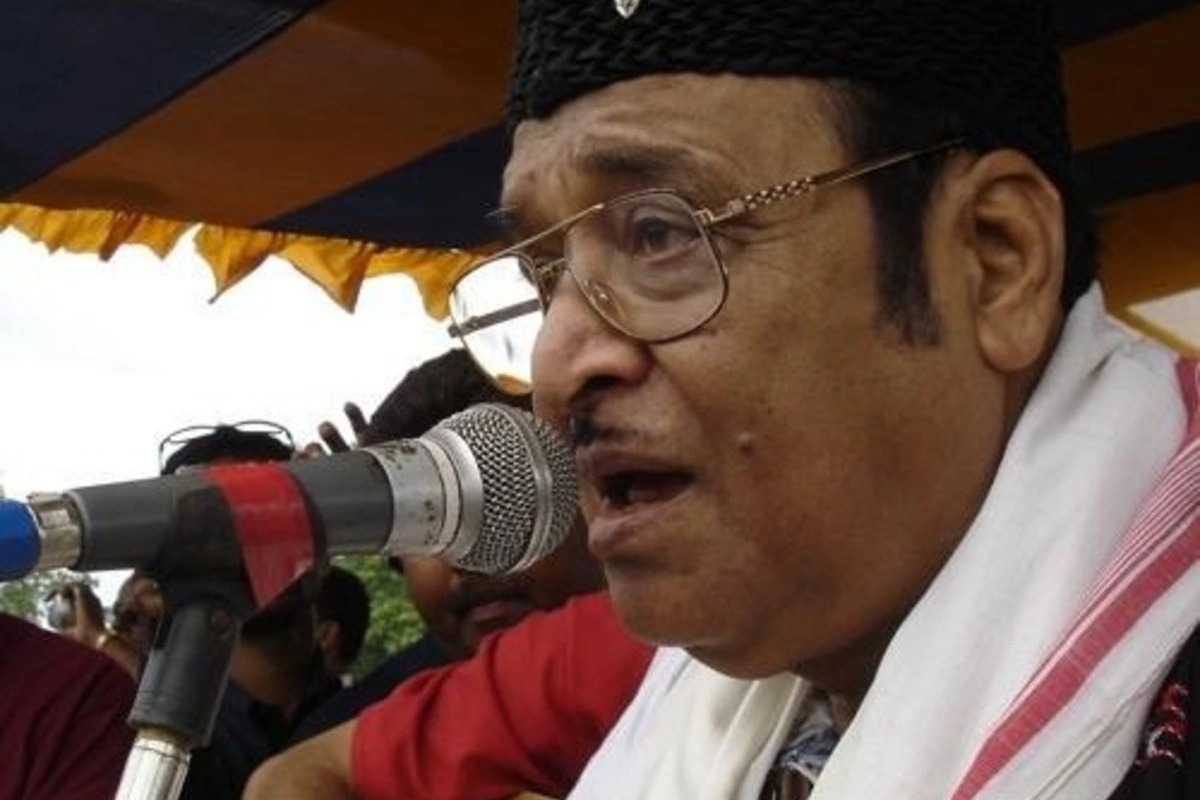
GUWAHATI: A century after his birth, Dr Bhupen Hazarika's voice, music and ideas continue to shape Assam's cultural identity and resonate far beyond the Northeast. Born in Sadiya on September 8, 1926, Hazarika became one of India's most influential cultural figures, leaving an enduring mark on music, cinema, literature and public life.
ALSO READ: Assam: Nagaon Lok Sabha Bypoll on October 6, Counting on October 9
As his birth centenary is being observed in 2026, the legacy of the legendary singer, composer, lyricist, filmmaker and writer is being remembered as a powerful expression of Assam's culture as well as a broader message of humanity, equality, peace and unity.
The President of India has described the centenary celebrations as embodying the "melodies and the spirit of national unity", underlining the continuing national significance of Hazarika's contribution to Indian culture.
Hazarika's influence extended well beyond music. Through his songs and creative work, he drew deeply from the folk traditions of Assam while addressing themes that crossed regional and linguistic boundaries. His work helped introduce Assamese music and cultural traditions to audiences across India and abroad.
His artistic journey began at a remarkably young age. Raised in a family with strong musical influences, Hazarika was introduced to Assamese folk traditions by his mother, Shantipriya Hazarika. He began singing and writing songs as a child and entered Assamese cinema in 1939 with his appearance in Indramalati.
Alongside his artistic pursuits, Hazarika pursued an academic career. He completed his bachelor's degree from Banaras Hindu University in 1944 and earned a master's degree in Political Science in 1946.
He later travelled to the United States, where he studied at Columbia University and earned a PhD in Mass Communication. His exposure to different cultures and social ideas during his time abroad contributed to his wider intellectual and creative outlook.
After returning to India, Hazarika emerged as a major force in Assamese cultural life. His work combined the musical traditions of Assam with contemporary social themes, giving his songs a distinctive ability to connect local cultural experiences with universal human concerns.
His contribution also extended into Indian cinema. In 1975, he won the National Film Award for Best Music Direction for Chameli Memsaab, further establishing his standing as a major figure in Indian film music.
Over the years, Hazarika received several of the country's highest civilian and artistic honours. He was awarded the Padma Shri in 1977, the Sangeet Natak Akademi Award in 1987 and the Dadasaheb Phalke Award in 1992. He received the Padma Bhushan in 2001.
The Sangeet Natak Akademi elected him a Fellow in 2008.
In 2019, Hazarika was posthumously awarded the Bharat Ratna, India's highest civilian honour.
Hazarika died on November 5, 2011, but his artistic legacy has continued through his songs, films and writings. His distinctive voice and storytelling have kept Assamese cultural traditions connected with audiences across India and internationally.
For Assam, Hazarika remains more than a celebrated musician. His body of work has become an enduring expression of the region's culture and identity, while his songs continue to carry messages that speak to audiences beyond geographical and linguistic boundaries.
As India marks 100 years since his birth, the journey of the boy from Sadiya who grew into a nationally revered cultural icon stands as a lasting story of music, art, identity and a voice that became a legacy.
Dr Bhupen Hazarika (1926–2011)
A voice that became a legacy.


