



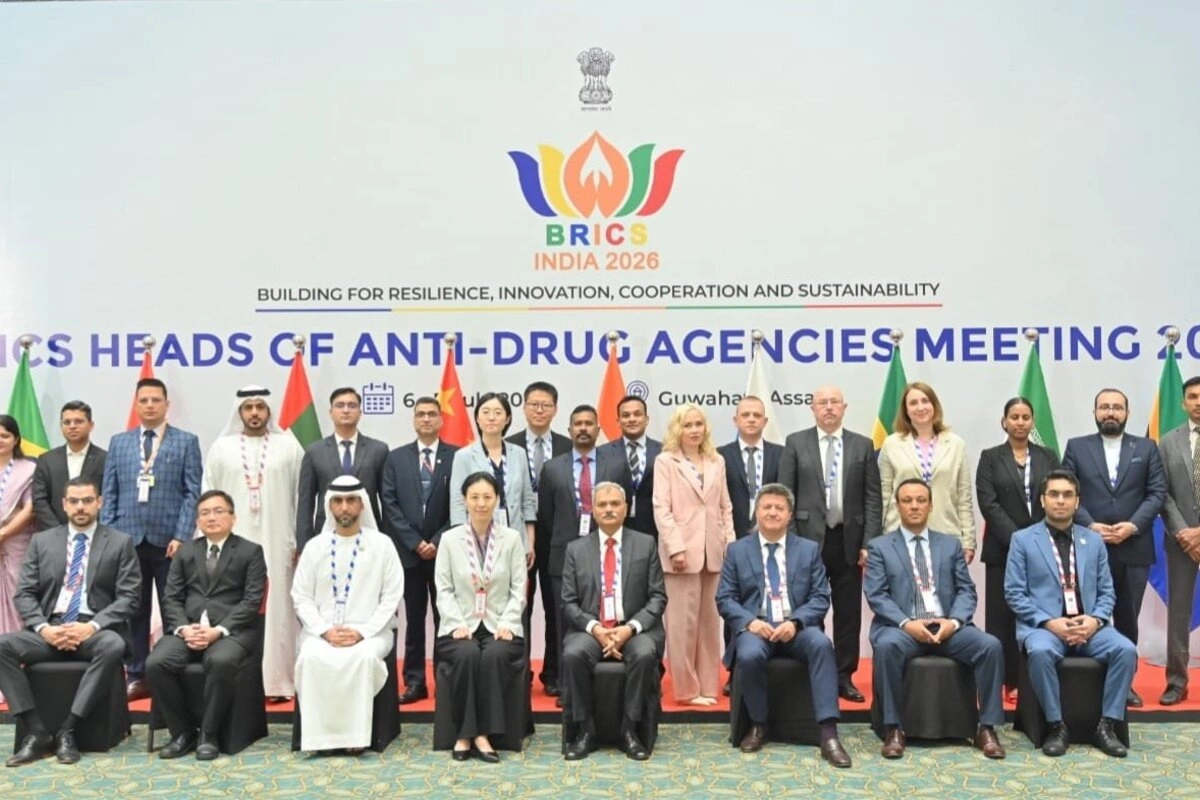
GUWAHATI: The BRICS nations on Tuesday, July 7, adopted the Guwahati Declaration, reaffirming their commitment to strengthening international cooperation to combat illicit drug trafficking and related transnational organised crime.
ALSO READ: Assam Assembly Raises Concerns Over Dysfunctional JJM Projects, Arsenic-Contaminated Water
The declaration was adopted at the conclusion of the two-day BRICS Heads of Anti-Drug Agencies Meeting held in Guwahati, where member nations agreed to enhance the timely exchange of information, intelligence and best practices in line with national laws and international obligations.
The declaration also emphasised the use of innovative technologies, digital tools and data-driven approaches to strengthen law enforcement and regulatory efforts against global drug trafficking networks.
The participating countries expressed concern over the evolving nature of illicit drug trafficking, particularly the growing threat posed by synthetic drugs, New Psychoactive Substances (NPS), diversion of precursor chemicals, misuse of emerging technologies and virtual assets, and the exploitation of maritime routes and digital platforms by transnational criminal organisations.
The member nations also stressed the need to strengthen initiatives aimed at reducing drug demand, promoting healthy lifestyles, and protecting vulnerable groups, especially children and youth, through evidence-based and people-centric approaches.
Leading the Indian delegation, Director General of the Narcotics Control Bureau (NCB), Anurag Garg, called for stronger cooperation among BRICS anti-drug agencies through faster intelligence sharing and coordinated action against international drug syndicates.
Highlighting India's anti-drug strategy, Garg said the country has adopted a Zero-Tolerance Policy against Drugs along with a Three-Year Roadmap (2026–2029) based on a network-centric approach. The strategy focuses on dismantling organised drug trafficking networks, preventing drug abuse through awareness campaigns, and strengthening treatment, de-addiction and rehabilitation measures.
In his concluding remarks, Garg said the increasingly interconnected and borderless nature of modern drug trafficking requires anti-drug agencies to work collectively. He proposed the creation of a BRICS Virtual Working Group and enhanced cross-border training initiatives to improve cooperation among member countries.
India's BRICS Chairmanship in 2026 is being held under the theme "Building for Resilience, Innovation, Cooperation and Sustainability." The Guwahati meeting brought together representatives from Brazil, China, Ethiopia, India, Indonesia, Iran, Russia and the United Arab Emirates to strengthen collective efforts against global drug trafficking.


