



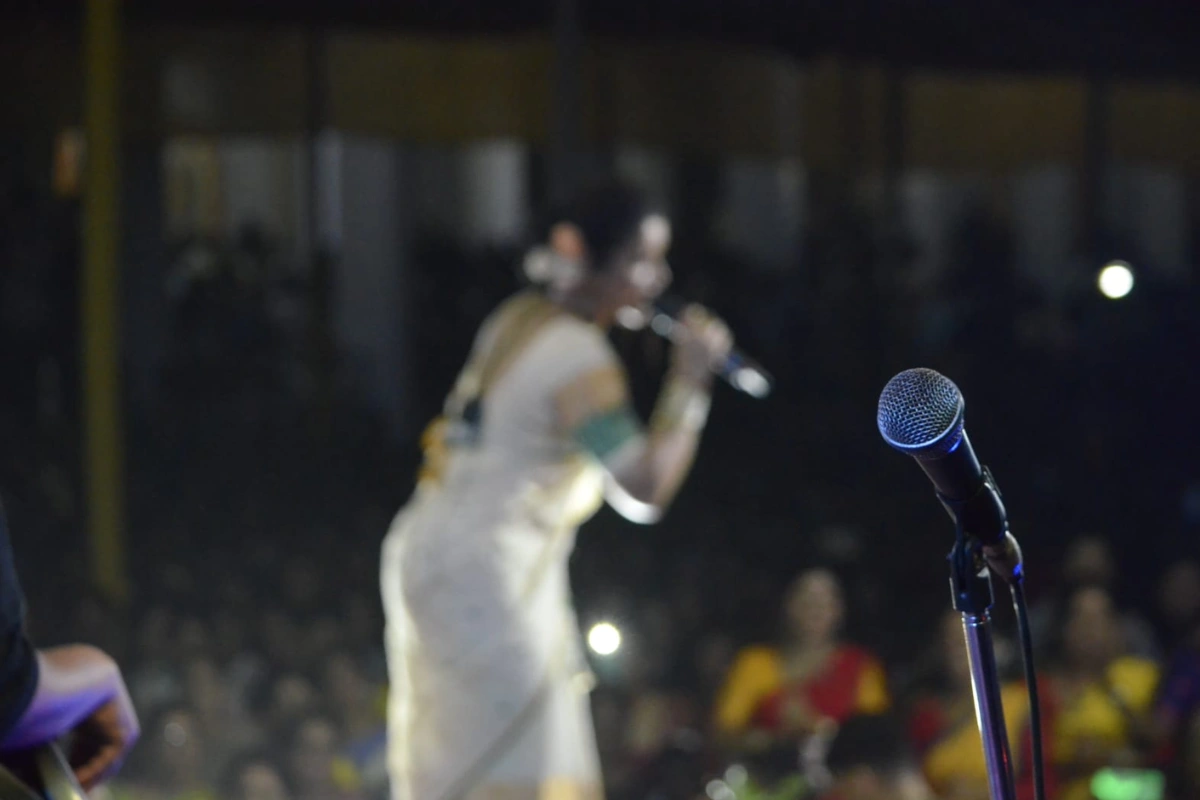
Many amateur and struggling artists in Guwahati continue to balance passion with practical realities
Art is often described as something created by the people, for the people, a reflection of society, its emotions, stories and culture. But while artists continue to create for audiences, an important question remains: can the people creating that art actually build a stable and dignified life through it?
ALSO READ: 6G Is The Future, But Guwahati Still Struggles With 4G
In Guwahati, artists across theatre, music, cinema and other cultural fields say the answer is far from simple. Despite the city’s vibrant cultural landscape and a growing number of performances and creative projects, many artists continue to struggle with irregular work, low and delayed payments, limited ticket sales and the absence of a structured system to protect their livelihoods.
For several artists, pursuing their passion does not necessarily mean being able to depend on it financially. Many are compelled to take up other jobs or work across multiple creative fields simply to meet their everyday expenses. For those who have spent years building their careers, the uncertainty raises a larger question about how much value society places on the labour that goes into creating and sustaining culture.
For theatre artist Dhiraj Kumar, financial uncertainty is one of the biggest challenges faced by artists in Assam.
Speaking about the situation, Kumar said that anyone trying to pursue a career as an artist in Guwahati or Assam needs another source of income, as earnings from artistic work alone are often not enough to run a family.
According to him, while the introduction of ticketed shows has created a system where audiences pay to watch performances, there is still a section of the audience that is reluctant to spend money on theatre.
He said artists invest not only their talent but also their time, money and energy in putting up a production. However, convincing audiences to pay for performances continues to remain a challenge.
The issue, artists say, goes beyond the success or failure of an individual show. It reflects a larger question about how society values cultural labour and whether creative work is treated as a profession that deserves adequate financial compensation.
The same concern is visible in the live music scene as well.
A musician from Guwahati, who wished to remain anonymous, said the live music culture in the city has been declining and musicians often have to struggle even for payments after performing.
According to the musician, although artists remain passionate about their work, the lack of financial stability forces many to divide their time between music and other occupations.
“Even though we are passionate about our art, we do not always get enough time to pursue it because we also have to do other work,” the musician said.
The musician also pointed to the difficulty of attracting paying audiences to live performances. According to him, there are instances where people ask artists for free passes but hesitate to buy tickets for the same shows.
He said the contradiction becomes more visible when people are willing to spend thousands of rupees on passes or tickets for large commercial concerts, while local artists often struggle to bring audiences to ticketed shows.
For artists, the concern is not simply about selling a certain number of tickets. It is also about whether the public is willing to recognise the time, training, preparation and financial investment that goes into creating a performance.
“We are working for the people, and if they do not respond to us, what will we do?” the musician questioned.
While audience support remains a major concern, artists working in cinema and theatre point towards another structural problem, the absence of dependable payment and employment system.
Pallab Medhi, an art director and actor, has worked across different areas of the entertainment industry. His work has included projects as an art director, assistant art director and production controller, apart from his involvement in theatre.
According to Medhi, work in the sector remains highly uncertain. There can be periods when artists and technicians receive projects one after another, but sometimes there is no work and to sustain during such a period they have to do something else.
“If we talk about cinema, I have been associated with the art department for several years. I have worked as an art director, assistant art director and also as a production controller in a few projects. Before 2020, I was also involved in theatre, mainly working on set design", he added.
"The biggest problem in our field is uncertainty. Sometimes we have to work continuously, but sometimes there is no work for days or even months. To survive, we often have to take up whatever work comes our way. And even after working in this industry for around 10 years, it still feels like we are struggling", Medhi said.
Payment is another major issue. There is still no proper system of contracts in many projects. A lot of work is done based on verbal commitments, because of which payments sometimes remain pending for months, and many people end up losing a lot of money.
There is also no proper minimum wage or payment structure. Someone may be paid ₹500 for a job while someone else may get ₹2,000 for similar work. Even after completing a project, the uncertainty over when the payment will be cleared remains."
However, another artist Nirmali Das, who is a reciter and an actor said, "The financial reality is not necessarily the same for every artist. While established artists with years of experience, a strong body of work and wider recognition may have greater opportunities and better-paying projects, it is the emerging, amateur and struggling artists who often find it harder to sustain themselves through art. For those still trying to establish themselves, opportunities can be irregular and competition for projects remains high. Many have to accept smaller payments, work on short-term projects or depend on other sources of income while continuing to pursue their artistic careers."
She further explained that the difference between an established artist and someone trying to make a name for themselves can therefore be significant. Recognition can bring more opportunities, stronger professional networks and greater bargaining power, while newcomers often have little leverage when negotiating payments or working conditions.
This creates another layer to the larger question of making a living from culture in Guwahati. The city may provide space for established artists to build sustainable careers, but for those at the beginning of their journey, staying in the profession can require considerable financial compromise and personal sacrifice.
For now, many amateur and struggling artists in Guwahati continue to balance passion with practicality. They perform, rehearse, work on film sets, take up other jobs and wait for payments, often without knowing when the next opportunity will come. For some, pursuing art means making compromises in other areas of life simply to remain connected to the profession they have chosen.
The situation, however, is not the same for everyone. Established artists with years of experience, recognition and professional networks may have access to better opportunities and more consistent work. But for those still trying to find their place, every project, every performance and every payment can determine whether they can continue in the field or are forced to look elsewhere for a livelihood.
This creates a visible gap within the cultural community itself. While some artists may have managed to turn their creative work into a sustainable profession, many others remain at a stage where passion is the primary reason they continue, even when the financial returns are uncertain. The question is whether the people who create that culture are being given enough space, support and financial security to make a life from it.
Can an amateur artist afford to remain an artist until they become established? Can passion survive when the rent, food and other responsibilities cannot be paid with applause? And if culture is truly created by the people, for the people who is responsible for ensuring that the people creating it can live a decent life through it?


