


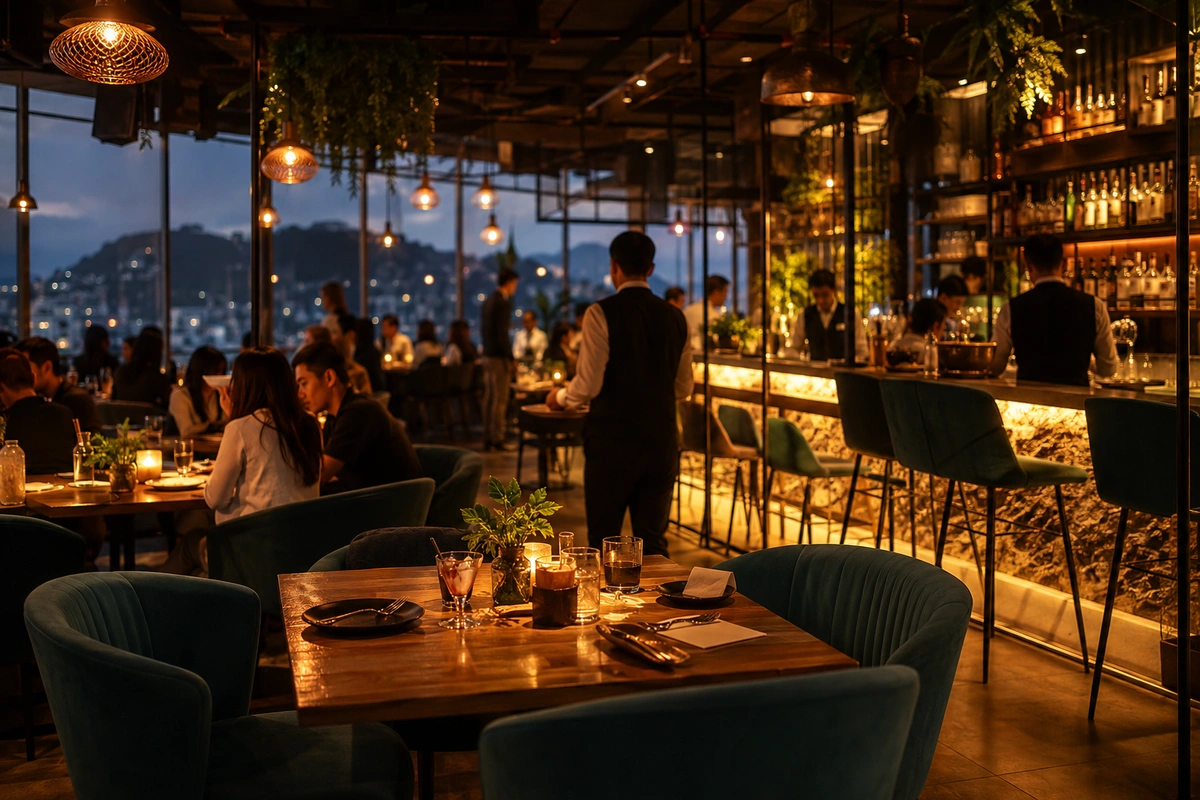
Guwahati is opening cafés, restaurants and bars at a pace that would make one think the city is on the verge of becoming the hospitality capital of the country. Every other week, there seems to be a new launch somewhere — a rooftop bar, a “premium” restaurant, a themed café or another aesthetically designed outlet promising an “experience”. From Beltola and Zoo Road to Six Mile, GS Road and Uzan Bazar, the city is in the middle of a hospitality boom.
But behind the launch-week buzz, influencer reels and glossy interiors lies a far less glamorous reality. Guwahati does not need more cafés, restaurants and bars in the way they are currently opening. What it needs are better-run, better-trained and better-thought-out establishments.
Because the problem is no longer just about numbers. It is about whether the city’s hospitality ecosystem is actually growing at the same pace as the businesses entering it.
For all the mushrooming of cafés and restaurants over the last few years, hospitality standards in Guwahati have not risen in proportion. Yes, the décor is more ambitious, the branding glossier and the menus more “curated”. But the actual hospitality experience — the part that determines whether a customer returns — remains patchy. Too many outlets seem willing to spend heavily on interiors and fit-outs, but not nearly enough on training the people who actually run the floor.
That problem, according to Kaushik Barua, Partner at Mocha Guwahati, is central to the city’s hospitality struggles. “A lot of the new outlets have been started by first-time food entrepreneurs using restaurant consultants. Unfortunately, many of these consultants focus on getting the place started and then the owner is left to fend for themselves,” he says. Add to that the sudden surge in restaurants and the resulting demand for manpower, and many establishments end up hiring freshers because there simply are not enough trained people available.
Barua believes this is where many owners get it wrong. “These youngsters need handholding and proper training in every aspect of their workplace, and it has to be an ongoing process,” he says. Instead, what many owners do is look for shortcuts — often by poaching experienced staff from other outlets with higher salaries. “This is perhaps the most foolish thing to do, because somebody else will do the same to them. And employees who didn’t have loyalty before will also not be loyal to them.”
Then comes the other major problem: originality, or rather the lack of it.
A large number of new cafés and restaurants in Guwahati feel less like original concepts and more like variations of the same template. Similar menus. Similar coffee and mocktail offerings. Similar “global” food combinations. Similar interiors designed primarily for social media. Too often, the concept seems to begin and end with creating a visually appealing space rather than offering something distinctive enough to survive in a crowded market.
Chef Aabhishek Bedi Varma, Co-Owner of Lush The Café, is even more direct about the problem. “People just think opening and running a restaurant is easy because it’s a manpower- and infrastructure-driven industry,” he says. “There is no dearth of infrastructure, but the availability of trained manpower is nowhere close to what the industry actually needs.”
His frustration reflects a larger reality. Hospitality has become an aspirational business in Guwahati. Fancy cafés and stylish eateries create the illusion that this is an easy industry to enter and an even easier one to be seen in. But the reality is very different. Restaurants are manpower-heavy, operationally exhausting and brutally unforgiving of poor planning.
Varma’s larger point is that too many people are getting sucked into opening eateries — especially the fancier ones — because of the false impression that becoming a successful restaurateur is easier than it actually is. It is not.
Even if an outlet manages to get past the early operational chaos, it still has to deal with a market reality that many in Guwahati continue to underestimate: the customer base is limited.
Yes, the city has grown. Yes, disposable incomes have increased in many sections. Yes, people are more willing to eat out than they were a decade ago. But Guwahati is still not a city where cafés and restaurants can assume steady, heavy footfall all week long. Much of the hospitality business here remains heavily dependent on weekends. Saturdays and Sundays do the heavy lifting. The rest of the week often tells a very different story.
Weekday lunch culture is also very weak. The idea of a proper working lunch scene is still underdeveloped. Outside a few office catchments and established restaurants, many outlets struggle to generate meaningful lunch footfall. In effect, dozens of cafés, restaurants and bars are chasing the same weekend crowd.
Varun Vohra, from Hotel Palacio (Nyx and Abacus), believes Guwahati’s problem is not a lack of ambition but a lack of depth. “Guwahati doesn’t need more cafés — it needs better ones,” he says. “We’re opening outlets faster than we’re building the ecosystem to sustain them: trained staff, honest pricing, a real concept beyond a pretty wall and a reel.”
Vohra perhaps sums up the city’s hospitality problem better than anyone else. “Too many places chase influencer buzz for a launch-week crowd, then wonder why Tuesdays are empty. Footfall follows consistency, not virality.”
That line deserves to be underlined.
Because somewhere along the way, a lot of Guwahati’s hospitality businesses seem to have confused visibility with viability. Influencer marketing and food bloggers can create awareness. They can generate curiosity. Some may even get people through the door once. But they cannot build a business on their own. They cannot compensate for average food, poor service, confused pricing or the absence of a clear identity. A reel can get you attention. It cannot guarantee repeat customers.
All of this points towards one likely outcome: a correction.
In the coming months, and perhaps over the next year or two, Guwahati is likely to see a number of cafés, restaurants and bars shut down. Some quietly. Others abruptly. Not because the city is anti-business or because people do not want to dine out, but because too many outlets are entering the market without the fundamentals required to survive — trained teams, realistic pricing, a differentiated concept, patient brand-building and a proper understanding of the city’s actual consumption patterns.
Guwahati does not need more hospitality ventures for the sake of numbers. It needs businesses that understand hospitality as a serious, long-term business rather than a stylish experiment. It needs better-trained staff, sharper concepts, stronger service and owners willing to invest in systems, not just aesthetics. Until then, every new café, restaurant or bar opening in the city should not automatically be read as a sign of growth. Sometimes, it may simply be another sign of a bubble getting bigger.


