



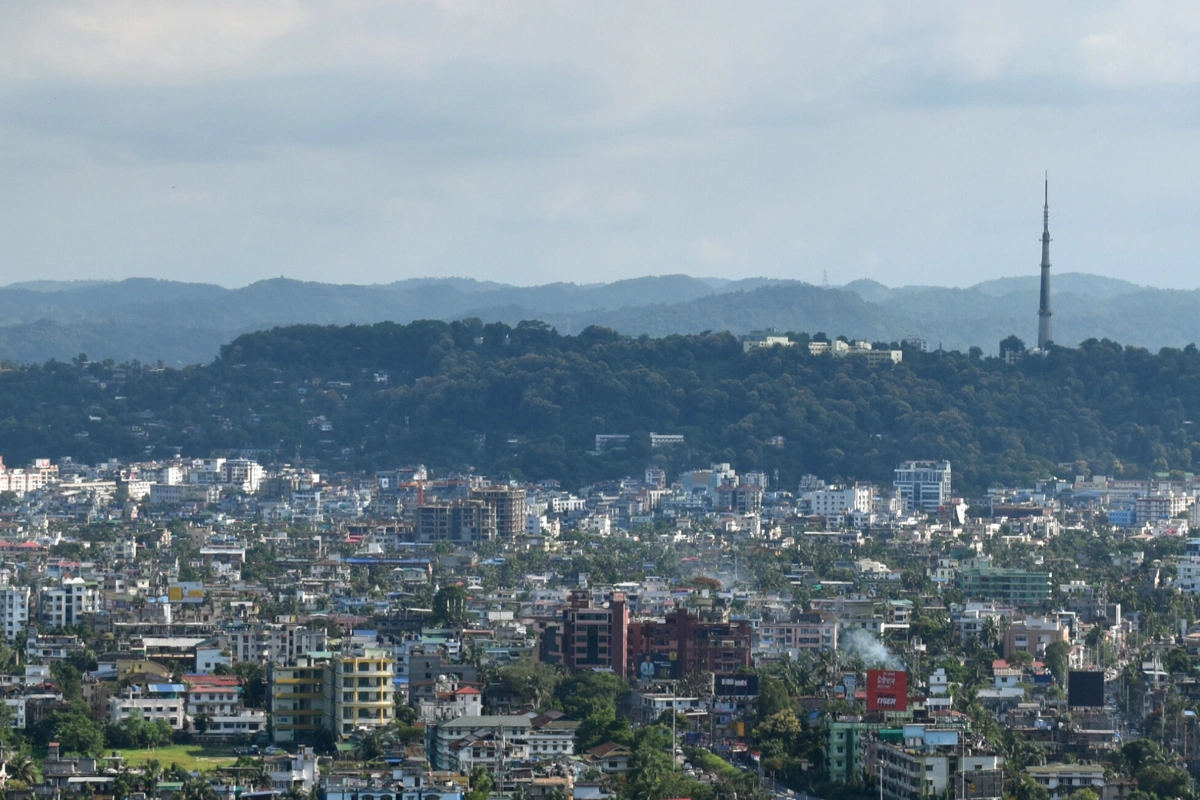
Is Guwahati still a city where ordinary people can afford land?
For thousands of middle-class families in Guwahati, the dream of owning a small plot of land is quietly slipping away.
ALSO READ: Guwahati No Longer Feels Like an Affordable City, Say Residents
In a city that once offered affordable outskirts and expanding residential neighbourhoods, land prices have surged to levels that many salaried professionals can no longer afford. What was once considered a long-term life goal has increasingly become the preserve of investors, speculators and those with deep pockets.
Across Guwahati and its surrounding areas, land prices have witnessed an unprecedented rise over the past few years. The surge has been driven by a combination of infrastructure projects, government announcements, real estate expansion and growing investor interest in the city. But as prices continue to rise, so do concerns about affordability, speculation and the role of unaccounted cash in property transactions.
“Guwahati is no longer a city for ordinary people looking to build homes. It is becoming a playground for investors and cash-rich buyers,” said a senior architect based in the city.
The shift became particularly visible after the Kamrup (Metro) District Administration revised government land valuation rates across Guwahati, Dispur, Sonapur, Chandrapur and Azara revenue circles in 2023. In several areas, official land valuations increased sharply, reflecting the growing demand for land across the city.
Yet many property observers argue that government rates tell only part of the story.
“Government valuation has now become just a reference point,” alleged a lawyer dealing with land-related disputes. “In many locations, actual market prices are several times higher than what is officially reflected.”
The transformation of Guwahati's geography has played a major role in this boom.
Major projects such as the Bharalumukh-North Guwahati bridge, the proposed Ring Road, expanding highway networks and new government establishments around Betkuchi have triggered intense land speculation.
Areas such as Betkuchi, Saukuchi, Jyotikuchi and the western fringes of the city have witnessed some of the steepest increases in recent years.
The announcement of projects like the proposed integrated directorate, Unity Mall and the new GMC office complex has further fuelled demand.
“People are purchasing land not because they want to live there immediately,” said a city-based real estate observer. “They are buying because they know prices will rise after every major infrastructure announcement.”
The phenomenon is no longer confined to Guwahati's core areas.
The land rush has spread deep into the city's periphery. From Amingaon and Baihata Chariali to Palashbari and Chhaygaon, property prices have risen dramatically within a short span of time.
A businessman with land holdings on the outskirts of Guwahati said plots that were selling for around Rs 35 lakh per bigha just three years ago are now being quoted at nearly ₹1 crore per bigha in certain locations.
“People who bought land a few years ago have suddenly become crorepatis on paper,” he said.
But behind the stories of rising asset values lies a growing affordability crisis.
“It is almost impossible for an average salaried person to buy land in Guwahati today,” said architect Ranel Das of the Architects Association, Assam. “Even people with stable government or private sector jobs struggle unless they inherit property or have access to substantial capital.”
Das recalls that one katha of land in Beltola, where he lives, cost around ₹8,000 during the 1970s. Today, similar plots can command between ₹2 crore and ₹2.5 crore.
“This kind of escalation cannot be explained by normal economic growth alone,” he said. “The authorities should closely examine the source of funds being used in major land transactions.”
That observation touches upon one of the most frequently discussed aspects of Guwahati's real estate market, the continued presence of cash transactions.
Despite digitisation efforts and reforms in land registration, lawyers and property observers allege that unofficial cash components remain common in many transactions, particularly in high-value deals.
“The government revised valuation rates partly to curb under-reporting,” said a lawyer familiar with land documentation. “But there are still allegations that a portion of the transaction value is often paid outside the official system.”
The rapid rise in land values has also strengthened the influence of brokers and middlemen across the city.
Residents involved in recent property transactions say informal networks continue to dominate negotiations, often adding substantial costs to the final deal.
“These middlemen are everywhere,” said a resident who recently purchased property. “They connect buyers and sellers, influence negotiations and often drive prices even higher.”
Alongside rising prices, lawyers report a growing number of disputes involving ownership claims, encroachments and allegations of land grabbing.
“Land-related litigation has increased significantly because the stakes are now much higher,” said a lawyer handling multiple property disputes.
Ironically, the surge in land prices has not necessarily been accompanied by corresponding improvements in urban liveability.
Several localities commanding astronomical prices continue to struggle with traffic congestion, poor drainage, flooding and inadequate civic infrastructure. Yet prices keep rising because land is increasingly viewed as an appreciating asset rather than a reflection of the quality of life offered by a locality.
“People are buying based on future expectations rather than present realities,” observed an urban development expert. “The announcement of a flyover, bridge or highway is often enough to trigger a fresh round of speculation.”
The pressure is also reshaping the city's outskirts. Agricultural land, wetlands and semi-rural landscapes are increasingly being converted into residential and commercial projects, raising concerns about environmental sustainability and future urban resilience.
At the same time, many landowners are entering into joint development agreements with builders, accelerating the construction of apartment complexes and commercial structures across the city.
While these developments have expanded Guwahati's urban footprint, experts warn that growth without adequate planning could place additional pressure on already strained infrastructure systems.
Yet demand shows little sign of slowing.
For many people across the Northeast, owning land in Guwahati remains a symbol of security, aspiration and upward mobility. As the region's largest commercial and educational hub, the city continues to attract buyers from far beyond its municipal boundaries.
The larger question, however, is whether Guwahati's growth is benefiting its residents or pricing them out.
For young professionals, first-generation earners and middle-class families, land ownership is increasingly beginning to feel out of reach. The traditional dream of building a home is being replaced by apartment loans, long commutes from distant suburbs and a growing dependence on rented accommodation.
Meanwhile, every new bridge, highway, government office or commercial project appears to trigger another round of price escalation.
And unless stronger transparency measures, better urban planning and more affordable housing interventions emerge, Guwahati risks becoming a city where land ownership remains concentrated among a privileged few while ordinary residents are pushed further and further to the margins.
The city may be expanding rapidly. The question is: expanding for whom?


