



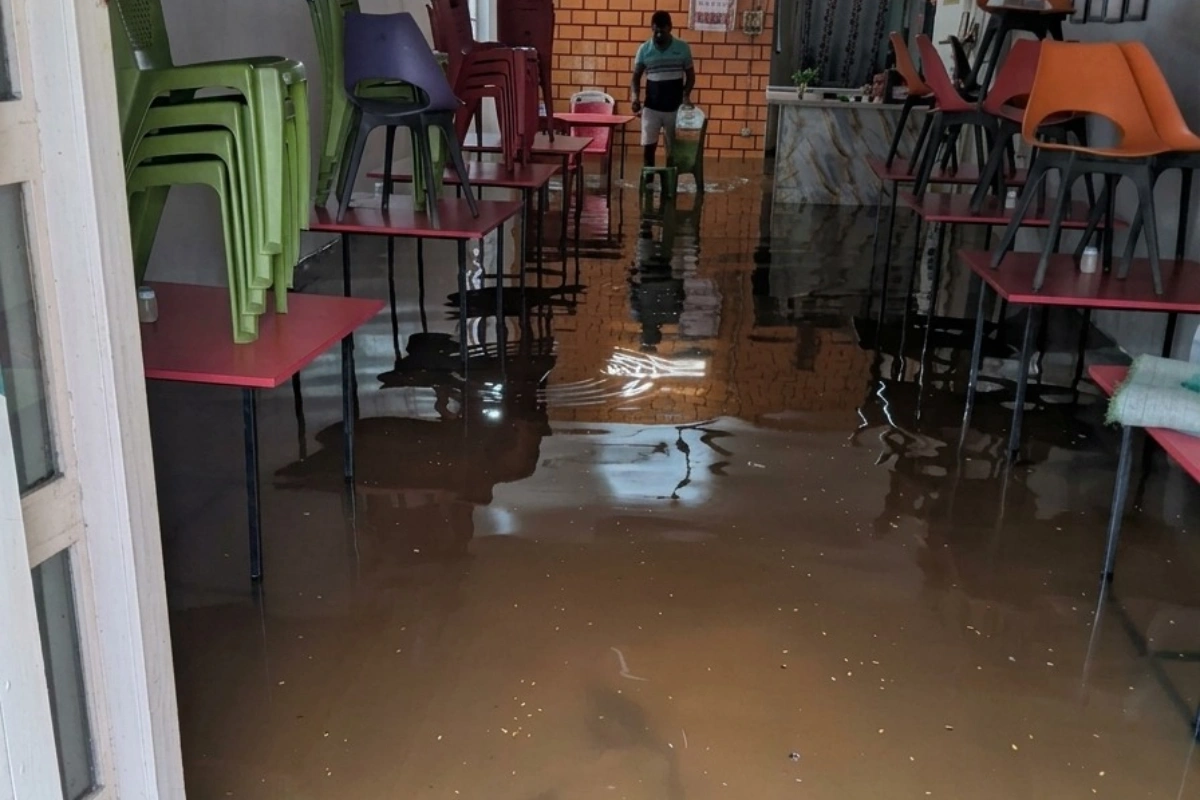
The flood impact in Sivasagar extends beyond submerged homes, affecting households, businesses, transport and essential supplies
While thousands of homes remain submerged in Sivasagar, the impact of the flood has spread far beyond areas directly affected by rising waters. Prolonged power outages, disrupted food supplies, suspended transport services and losses faced by tourism and small businesses have created a wider crisis across the district.
ALSO READ: Potholes, Waterlogging and Garbage Continue to Trouble Guwahati’s Jyotikuchi Residents
Although floodwaters of the Dikhow and Disang rivers have started receding in parts of Upper Assam, residents across Sivasagar say normal life remains severely disrupted. The situation highlights how the impact of a major disaster extends beyond flooded households, affecting communities, businesses and essential services.
According to the latest bulletins issued by the Assam State Disaster Management Authority (ASDMA), Sivasagar was the worst affected district during this year's floods, with more than 2.9 lakh people impacted at the peak of the crisis. The number later crossed 3.5 lakh as floodwaters spread to more areas.
Across six severely affected districts of Upper Assam, more than 6.5 lakh people have been impacted, over 800 villages have been inundated and more than 34,970 hectares of agricultural land have suffered damage.
The Dikhow river at Sivasagar town and the Disang river at Nanglamuraghat crossed their highest recorded flood levels during the flood period. The state's flood-related death toll has also crossed 70.
A senior official from the Sivasagar district administration acknowledged the scale of the crisis and said restoring normalcy remained a major challenge.
"The government and administration are trying their level best to bring back normalcy. Thousands of houses are still under water. The impact of a calamity of this level is felt by everyone," the official said.
While the administration continues to focus on rescue operations, relief distribution and assistance for families directly affected by flooding, residents in areas that escaped inundation say they have also faced severe disruptions.
In Betbari near the national highway, several households remained safe from floodwaters but struggled with prolonged power cuts and shortages of essential services.
"Water did not enter my home, but we are facing problems too," said a local resident. "There has been no electricity in the last ten days. We had to buy a new generator, and that too from Golaghat, because no shop was available in Sivasagar. Everyone and everything is affected."
Residents said the power crisis disrupted daily life, particularly for children, elderly people and families’ dependent on electricity for basic household needs.
"With no electricity, we don't have charge in our phones, we can't run water motors," said a woman from Betbari. "The kids are struggling in the July summer heat."
As floodwaters recede, several affected areas are now dealing with layers of mud deposits, stagnant water and foul odour, raising concerns over hygiene and public health during the recovery phase. Residents said cleaning homes and surroundings has become a major challenge, with many areas still facing waterlogging and poor sanitation conditions.
For many families, the disruption has meant more than inconvenience. The inability to operate fans, charge mobile phones or access regular household facilities has added another layer of hardship during an already difficult monsoon season.
The economic impact of the flood has also reached businesses in Sivasagar town, including establishments that escaped direct damage.
A hotel owner in Sivasagar said the flood severely affected business during what is usually a busy tourist season.
"We run a tourist stay. We expected that during the summer vacation we would be having a lot of tourists in our hotel, but due to the ongoing calamity, no tourist arrived," he said.
Sivasagar's historic Ahom-era monuments usually attract visitors during the holiday season. However, hotel owners and tourism-related businesses said travel cancellations and reduced tourist movement have caused significant losses.
The transport sector has faced similar indirect losses. A travel business owner operating buses and shared taxis between Sivasagar and neighbouring areas said his vehicles escaped damage, but operations remained suspended due to flood-related disruptions.
"I have two buses and two shared taxis operating on the Sivasagar-Nazira and Sivasagar-Demow-Moran-Dibrugarh routes," he said. "All four vehicles remained off the road and were stranded at different locations during the flood. Although my house and vehicles did not suffer any direct damage, I still faced financial losses. I still have to pay the vehicle instalments even though there has been no income during this period."
With roads submerged and several stretches affected by damage, transport operators said the loss of daily trips had directly affected their income while loan repayments and other expenses continued.
Residents have also raised concerns over food availability as supply chains remain disrupted.
A Sivasagar town resident said access to essential items had become difficult during the flood situation.
"We are facing food safety issues," she said. "The shops are closed, there are no vegetables in the market, food is limited."
Residents said road connectivity issues and damage to agricultural areas had affected the movement of essential commodities. Reduced vegetable supplies and rising prices in local markets have also added pressure on households.
Officials from ASDMA said damage to roads and embankments across affected districts disrupted relief operations and movement of goods. However, daily flood assessments continue to focus mainly on displaced populations, relief camps, river levels and immediate rescue requirements.
As of the latest assessment, 274 relief camps were operational across affected districts, providing shelter to thousands of displaced people. With several houses still under water, authorities continue to focus on emergency response and rehabilitation.
However, residents and business owners say the flood's impact extends well beyond the homes that remain under water. Prolonged power outages, suspended transport, disrupted supply chains and lost business have left many households struggling even though floodwaters never entered their properties.
As Upper Assam begins the long process of recovery, many in Sivasagar hope rehabilitation efforts will recognise that the cost of the disaster is not reflected only in submerged homes, but also in the livelihoods and daily routines that were upended long after the water rose.


