



In 2004, a Greek national football team with few global stars won the UEFA European Championship. In 2016, Leicester City lifted the Premier League trophy despite starting the season with odds of 5000-1.
Every generation of sports fans witnesses at least one event that appears to insult mathematics itself.
Data has become central to modern analysis, and betting platforms such as RajBet increasingly provide statistics, advanced metrics, and historical trends to help users make decisions.
Even so, numbers often create an illusion of certainty in a business built on uncertainty. The problem is rarely the data. The problem is how people interpret it.
Leicester City and the Season That Refused to Behave
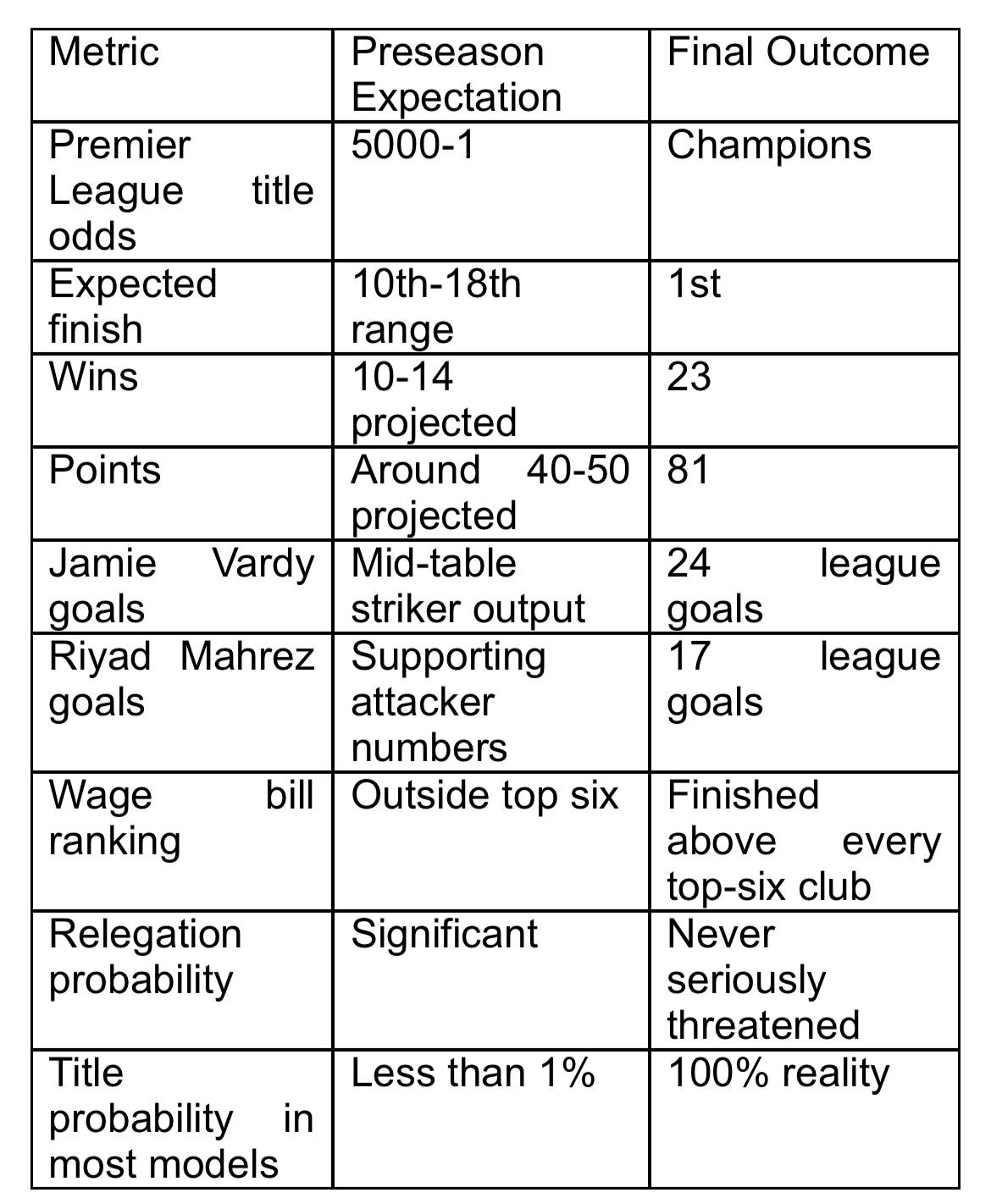
When Leicester City entered the 2015-16 Premier League season, most forecasts placed the club somewhere near the relegation battle.
The previous campaign had ended with a dramatic escape from the bottom three, the squad contained few internationally recognized stars, and the club's wage bill ranked far below England's traditional giants.
Statistical models built by bookmakers, media outlets, and independent analysts largely agreed on one thing: Leicester would struggle to compete with clubs such as Manchester City, Arsenal, Chelsea, and Manchester United over 38 matches.
By May, Leicester were champions.
How Leicester Compared With Expectations
Analysts later spent years studying that season because Leicester repeatedly exceeded expectations in areas where models usually become more accurate over time. Jamie Vardy scored at a rate rarely associated with players carrying his previous career profile.
Riyad Mahrez produced one of the most efficient attacking seasons in Europe. Kasper Schmeichel delivered crucial saves during tight matches, while Claudio Ranieri built a tactical system that maximized transition attacks against possession-heavy opponents.
What Bettors Often Miss During Extraordinary Seasons:
- Market prices are built from historical information.
- Historical information cannot fully measure confidence.
- Tactical changes sometimes create performance jumps.
- Player development is rarely linear.
- Team chemistry remains difficult to quantify.
- Goalkeeping can distort season-long projections.
- Injuries affect forecasts more than many bettors realize.
- Public opinion often moves faster than evidence.
- Rare outcomes still occur every year.
Leicester did not prove that statistics were useless. Their title run highlighted a different problem.
Many observers treated probability as a prediction rather than a range of possible outcomes, and once that misunderstanding enters the conversation, every upset begins to look like a failure of mathematics instead of an example of mathematics working exactly as intended.
The Seduction of the Winning Streak
In January 2016, Stephen Curry was shooting three-pointers from distances that still looked unreasonable to many coaches. Defenders knew what was coming, arenas expected it, television audiences waited for it, and the ball still kept dropping through the net.
Around the same period, debates about the "hot hand" returned to mainstream sports discussion. For decades, researchers argued over whether athletes genuinely become more likely to succeed after a series of successful attempts or whether fans simply notice patterns and assign meaning to randomness.
The debate remains active because sports constantly produce examples that seem to support both sides. Basketball offers hundreds of apparent hot streaks every season.
Betting markets react instantly when a player scores heavily in consecutive games, especially once social media begins circulating highlight clips. Many recreational bettors then face the same challenge: determining whether they are observing a genuine change in performance or a temporary statistical spike.
Famous Streaks That Created Betting Frenzy
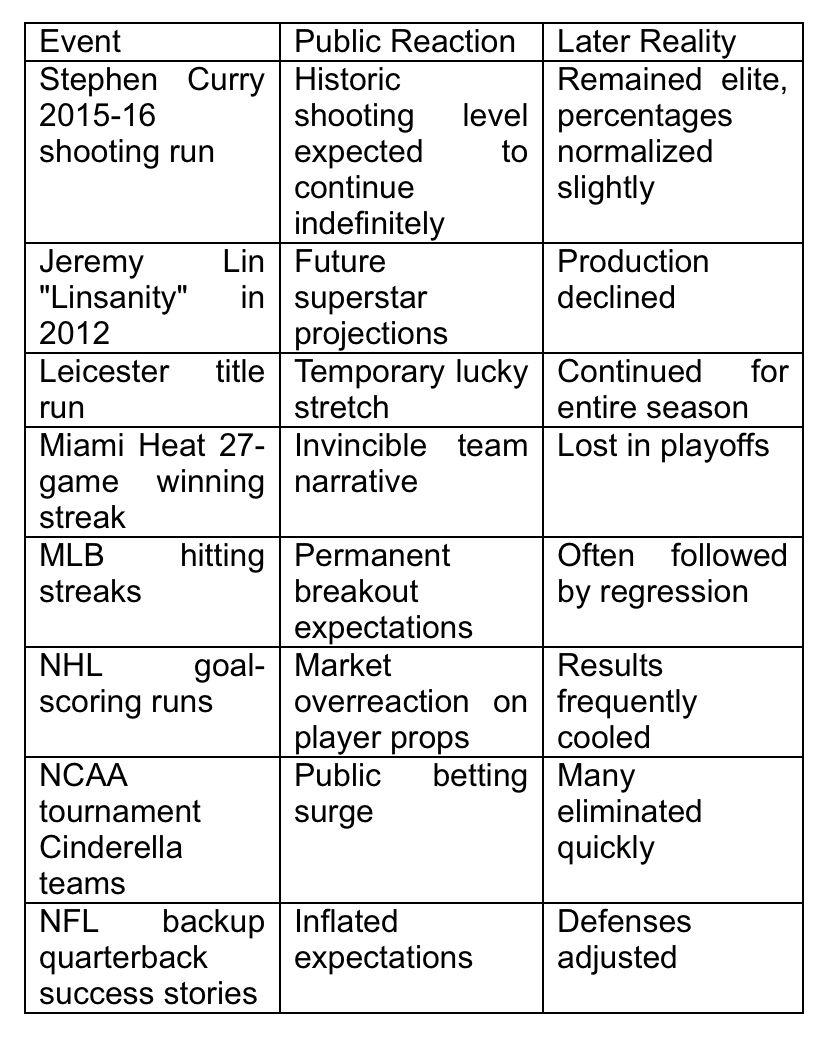
A sportsbook rarely needs to predict who will win every event. The objective is pricing probability accurately enough to balance risk. When bettors chase streaks, prices often move because public money arrives faster than objective analysis.
During major sporting events, big platforms monitor these shifts continuously because perception alone can influence market behavior, even before underlying performance changes.
Several studies conducted over the last two decades found evidence that hot-hand effects may exist under specific circumstances, particularly among elite shooters.
The conclusion disappointed people hoping for a simple answer. Human performance contains skill, confidence, fatigue, tactics, randomness, and environmental factors interacting simultaneously. Sports rarely provide clean laboratory conditions.
Questions Worth Asking Before Following a Streak
> Has the athlete's role changed recently?
> Has the quality of opposition remained consistent?
> Are shooting percentages far above career averages?
> Did injuries affect previous performances?
> Has tactical usage increased?
> Have bookmakers already adjusted prices?
> Is media coverage driving public enthusiasm?
> Would the streak look impressive over a larger sample?
> Are advanced metrics supporting recent results?
Many betting mistakes begin with a highlight reel. A spectacular sequence of goals, baskets, or victories creates a powerful impression because memorable events occupy more space in human memory than routine performances. Markets understand this tendency. Experienced bettors understand it too.
Regression Arrives Eventually
In 2022, Aaron Judge hit 62 home runs and produced one of the most productive offensive seasons in Major League Baseball history.
During the same year, countless discussions focused on whether this represented a permanent shift in performance or an extraordinary peak. Similar conversations occur every season across football, basketball, tennis, hockey, and combat sports.
Athletes occasionally reach levels that exceed even optimistic forecasts. The challenge appears once observers start treating exceptional output as the new baseline.
Regression to the mean sounds technical, yet the principle affects nearly every sport on Earth. Extremely high numbers tend to move closer to long-term averages over time because maintaining extraordinary efficiency is incredibly difficult.
Situations Where Regression Often Appears
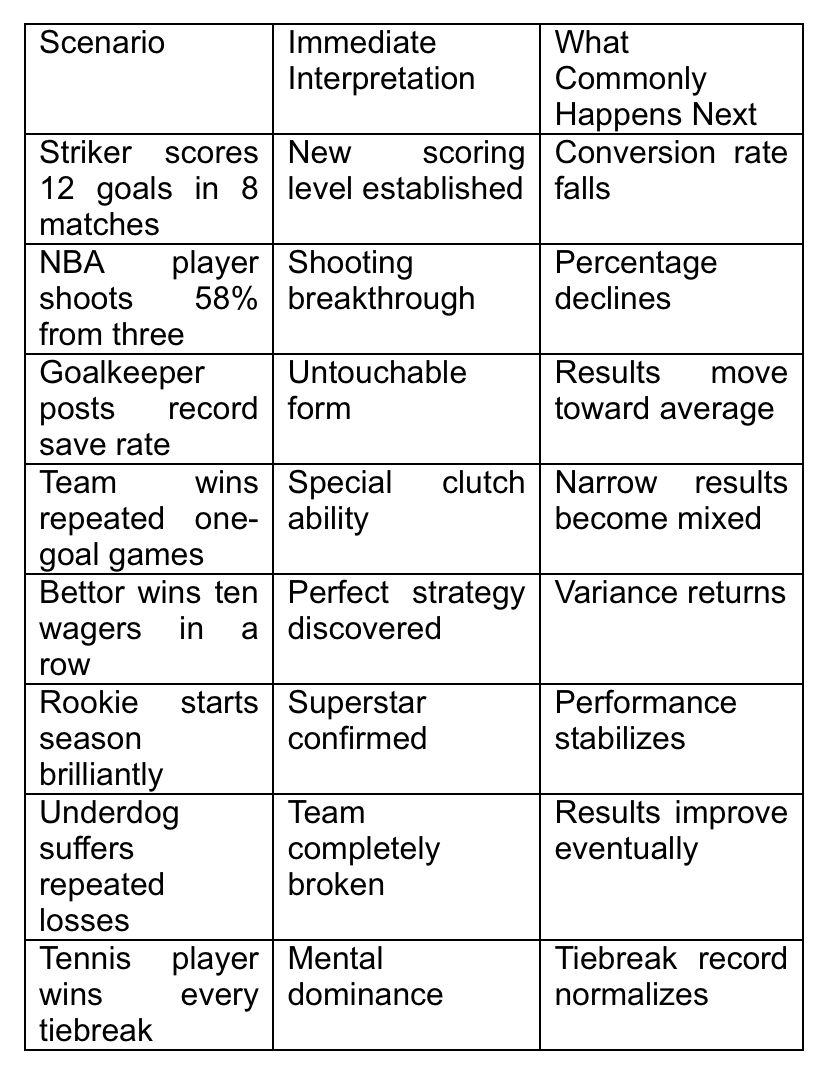
Regression often frustrates fans because it appears at the exact moment excitement reaches its highest level.
Headlines celebrate a breakthrough season, television analysts debate historical comparisons, and social media begins building legends before enough evidence exists to support them.
Numbers eventually reassert themselves, though not always on the schedule people expect.
Sports betting contains countless examples. A bettor wins twelve straight wagers and starts increasing stake sizes aggressively. A football club wins seven consecutive matches despite being outshot repeatedly.
A striker converts nearly every chance for two months. In each case, the possibility of continued success remains real. The probability of sustaining the same efficiency becomes considerably lower.
Practical Rules for Reading Statistics More Carefully
> Examine sample size before conclusions.
> Separate results from performance quality.
> Compare current numbers with career averages.
> Check whether bookmakers adjusted odds.
> Study opponent strength.
> Avoid building opinions from highlights alone.
> Review advanced metrics alongside traditional statistics.
> Accept uncertainty as part of every prediction.
> Treat probabilities as ranges, not promises.
> Remember that rare outcomes occur every season.
Sports remain fascinating because outcomes emerge from people rather than machines. Data reveals patterns, identifies inefficiencies, and improves forecasting. It cannot eliminate uncertainty, and nobody should want it to.
Some of the most memorable moments in sporting history survived precisely because reality ignored the script that statistics appeared to write.
Conclusion
Statistics have transformed the way fans watch games and the way bettors evaluate opportunities. They reveal valuable information, expose weak assumptions, and improve decision-making.
Problems emerge once numbers receive more certainty than they deserve. Leicester City, Stephen Curry, Aaron Judge, and countless other stories demonstrate the same lesson. Data remains one of the best tools available, yet every great season eventually reminds us that probability and certainty have never been the same thing.


