



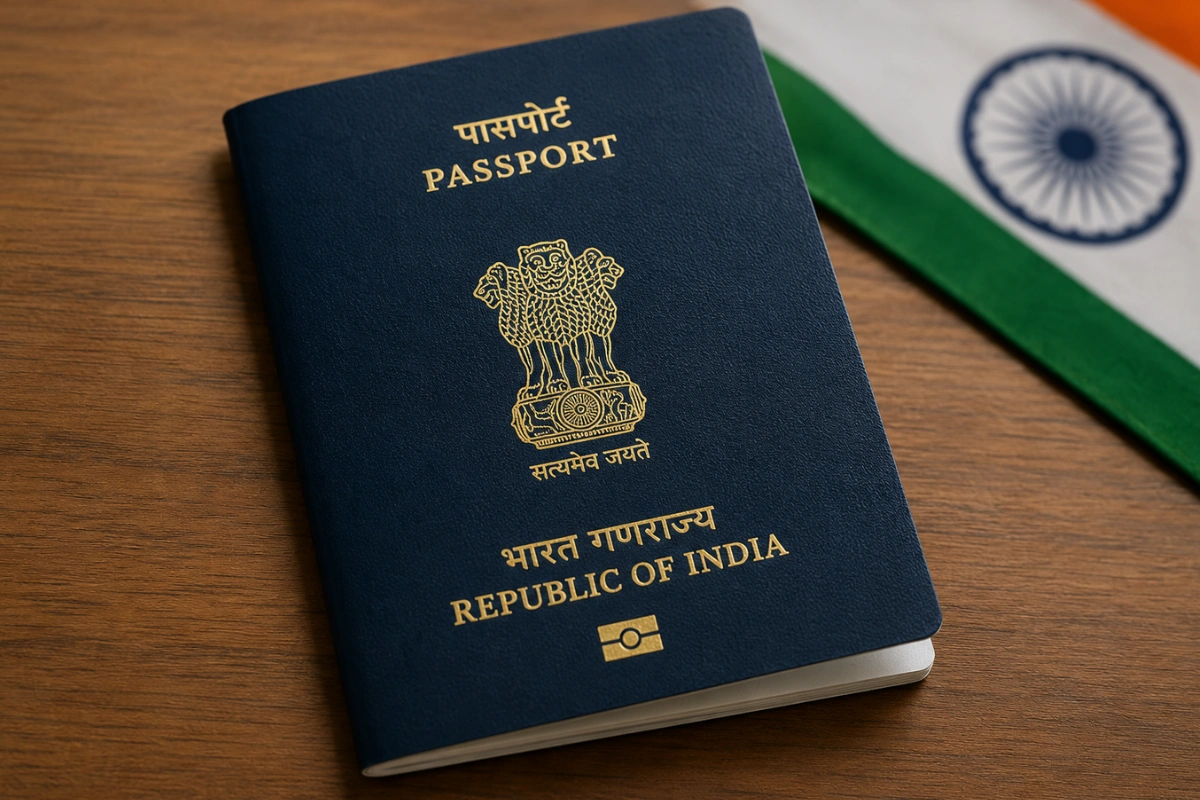
GUWAHATI: A clarification by the Ministry of External Affairs (MEA) that an Indian passport is a "travel document" and not a "citizenship document" has sparked widespread discussion on social media, with many questioning what constitutes definitive proof of Indian citizenship.
ALSO READ: Seven Rescued Golden Langurs Released into the Wild at Sikhna Jwhwlao National Park in Assam
The remarks were made by a senior MEA official during a briefing on India's expanding passport and mobility ecosystem. The official said the primary purpose of an Indian passport is to facilitate international travel and transit through foreign territories and should not be confused with documents used to establish citizenship rights.
Officials emphasised that while passports are issued to Indian citizens, their principal function is to serve as a travel and identity document abroad.
The clarification quickly triggered debate online, with users expressing confusion over what document, if any, serves as conclusive proof of citizenship in India.
"If a Passport is not proof of citizenship, then what document actually is?" one social media user asked.
Another wrote, "Could you please clarify which document is considered definitive proof of Indian citizenship? If a passport issued by the MEA is not treated as a citizenship document in certain contexts, what document officially serves that purpose?"
Legally, the MEA's position is consistent with existing law and judicial interpretations. Indian courts have repeatedly held that a passport is not conclusive proof of citizenship. In 2013, the Bombay High Court observed that citizenship is determined under the Citizenship Act, 1955, based on eligibility criteria and supporting evidence rather than possession of a single document.
A key reason is Section 20 of the Passports Act, 1967, which allows the Central Government, in specified circumstances, to issue an Indian passport to a non-citizen. As a result, possession of a passport alone does not legally establish citizenship beyond doubt.
Authorities also point out that passports obtained through false information or misrepresentation can be cancelled or revoked, reinforcing the government's position that a passport is primarily a travel document.
The discussion has also revived questions about other commonly used documents.
Aadhaar is considered an identity and residency document and can be issued to residents who meet prescribed eligibility requirements, including certain non-citizens. Earlier this year, the Supreme Court observed during proceedings related to the Special Intensive Revision (SIR) of electoral rolls that Aadhaar is not conclusive proof of citizenship.
Similarly, a PAN card serves as a tax identification document and does not establish citizenship or residency status. A Voter ID card, while issued to eligible voters, is primarily used for electoral purposes and as proof of identity and address.
In 2020, when asked in Parliament whether Aadhaar, passport, voter ID, PAN card or birth certificate could be treated as definitive proof of citizenship, the Ministry of Home Affairs did not identify any of them as a conclusive citizenship document.
As matters stand, India does not have a single national document that automatically and conclusively establishes citizenship for every citizen. Instead, citizenship is determined through a combination of legal provisions, eligibility criteria and supporting records under the Citizenship Act, 1955.


