



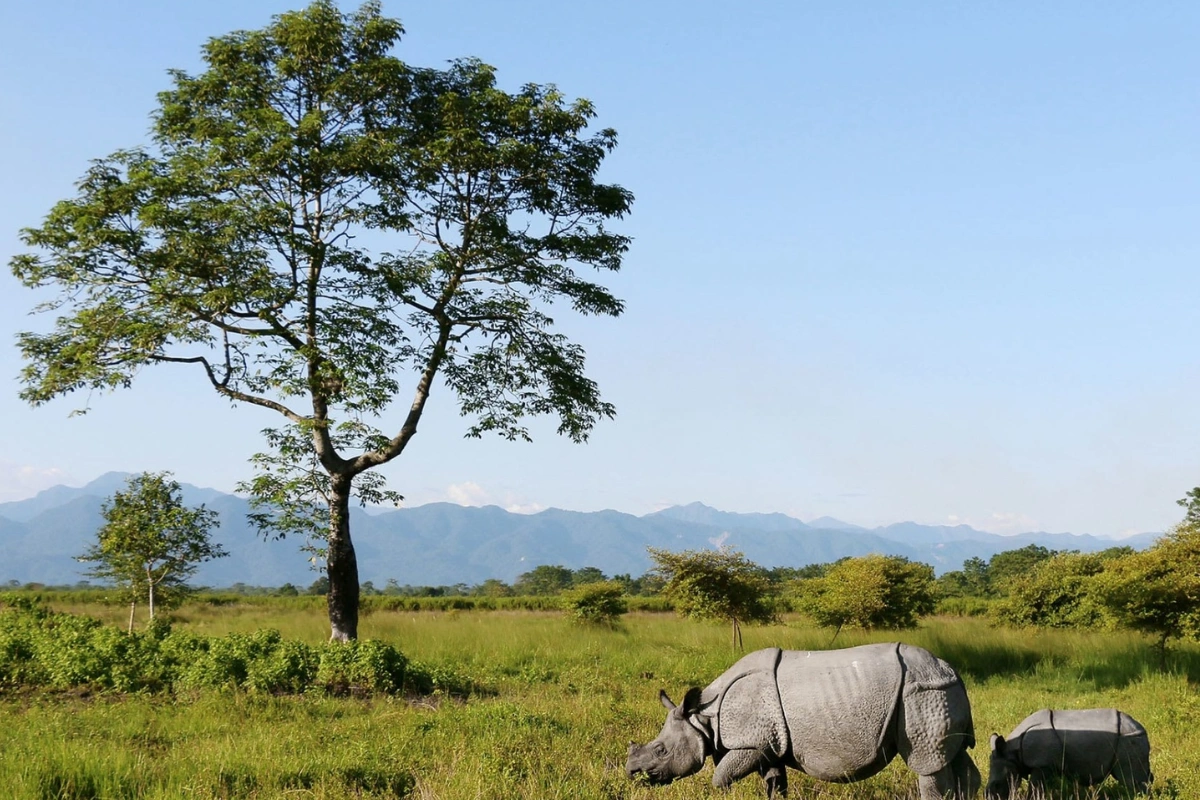
GUWAHATI: Manas National Park and Tiger Reserve on Sunday, June 7, witnessed three significant conservation milestones, underscoring its commitment to wildlife protection, habitat restoration and sustainable conservation management.
ALSO READ: Assam Cabinet Portfolios To Be Allocated on June 8, Assam CM Sarma Announces
The day was marked by the release of 15 captive-bred pygmy hogs into the wild, the inauguration of Assam's first dedicated grass nursery and the retirement and induction ceremony of camp elephants engaged in conservation activities.
In an effort to boost species recovery efforts, 15 captive-bred pygmy hogs were released into the Kuribeel grasslands of Manas National Park under the Pygmy Hog Conservation Programme (PHCP). The release is aimed at strengthening the wild population of the pygmy hog, the world's smallest and rarest wild pig, within its historical range.
In a press release the national park stated that the initiative represents another important step in the long-running efforts to secure the future of the critically endangered species through captive breeding and reintroduction programmes.
Additionally, Manas Tiger Reserve inaugurated Assam's first dedicated grass nursery at the Bansbari Range. Established across one hectare with support from the State Compensatory Afforestation Fund Management and Planning Authority (CAMPA), the nursery houses 16 species of native grasses collected from different parts of the reserve.
The nursery is expected to serve as an important source of seeds and planting material for future grassland restoration initiatives. The project assumes particular importance as Manas has lost more than 60 per cent of its historical grassland cover over the past three decades due to ecological changes and habitat degradation.
Grasslands form a critical component of the Manas ecosystem, supporting several endangered species, including the pygmy hog, hispid hare and Bengal florican. Restoration of these habitats has been identified as one of the reserve's key conservation priorities.
In a separate event, two camp elephants were formally retired from active service, while five newly trained elephants were inducted into conservation duties. The newly inducted elephants have completed three months of training under mahouts and will be deployed for tasks such as anti-poaching patrols, wildlife monitoring and habitat management within the reserve.
The reserve, a UNESCO World Heritage Site and one of Assam's premier protected areas, continues to play a crucial role in safeguarding the biodiversity of the eastern Himalayan foothills and the Brahmaputra floodplain ecosystem.


