



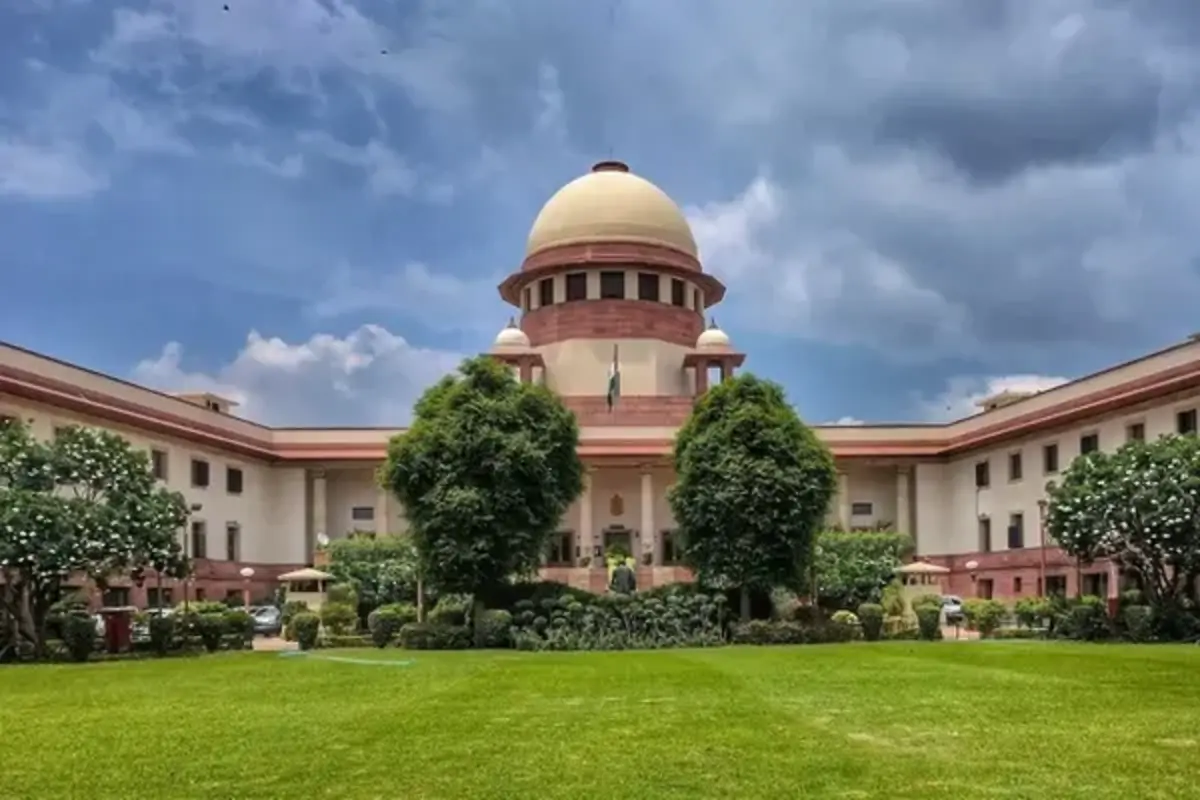
GUWAHATI: The Supreme Court has issued a comprehensive set of directions aimed at strengthening India’s fight against human trafficking and ensuring the protection and rehabilitation of survivors of sexual exploitation.
ALSO READ: Consumer Price Index for Industrial Workers Rises to 149.9 in April 2026; Inflation Hits 4.46%
The landmark directions were passed while hearing a public interest litigation (PIL) filed nearly two decades ago by NGO Prajwala, which had highlighted the large-scale trafficking of women and minors by organised criminal networks across the country.
A bench comprising Justice JB Pardiwala and Justice R Mahadevan invoked its powers under Articles 32 and 142 of the Constitution to frame an extensive “Victim Protection Plan” that will apply nationwide. The framework lays down guidelines for rescue operations, victim identification, rehabilitation, institutional coordination, and prosecution procedures.
The apex court clarified that “consent” remains the key legal factor in distinguishing trafficking from voluntary adult sex work.
The court stressed that anti-trafficking laws must not be misused to target consenting adults engaged in sex work. It directed police and rescue authorities to carry out a preliminary assessment before launching coercive rescue actions.
According to the judgment, rescue operations conducted under Sections 15 and 16 of the Immoral Traffic (Prevention) Act, 1956, should focus on identifying elements such as coercion, force, exploitation, abuse, or trafficking, instead of indiscriminately criminalising vulnerable individuals.
The bench also referred extensively to the Palermo Protocol, the international framework aimed at preventing and combating trafficking in persons, especially women and children. The court noted that trafficking involves three core components — the “action” element, the “means” element, and the “exploitation” element.
The judgment clarified that once trafficking is established through force, deception, coercion, or exploitation, the issue of consent becomes legally irrelevant.
The Supreme Court observed that human trafficking is a direct violation of Article 23 of the Constitution, which prohibits trafficking and forced labour, calling it an assault on constitutional dignity.
The bench further integrated provisions of the Juvenile Justice Act and the Protection of Children from Sexual Offences (POCSO) Act into the anti-trafficking framework. It directed stronger coordination among Child Welfare Committees, Anti-Human Trafficking Units, One Stop Centres, legal aid authorities, and state-run protection homes.
The court emphasised that rehabilitation is an essential component of the right to life under Article 21 of the Constitution and forms part of the right to live with dignity.
Under the newly framed Victim Protection Plan, authorities have been directed to ensure minimum standards in shelter homes, mental healthcare, vocational training, legal assistance, compensation, witness protection, and long-term reintegration support for survivors.
While considering broader institutional reforms, the court declined to order the creation of a separate organised crime investigative agency for trafficking-related offences.
“We believe whatever statutory framework is there today should suffice,” the bench observed.


