



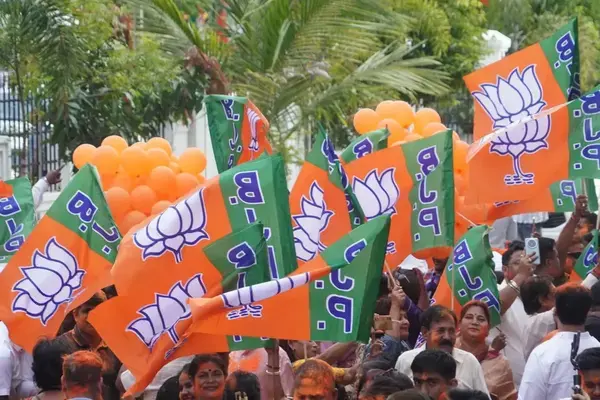
The National Democratic Alliance’s sweeping return to power in Assam has delivered not just another electoral victory, but an enormous burden of expectations. A strong mandate is often celebrated as a sign of political stability and public confidence, but it also creates unprecedented pressure on a government to perform. This time, the NDA is entering office with little room for excuses because the people have voted not merely for change, but for results. The alliance has now governed Assam for nearly a decade, and the public mood has shifted from hope to demand.
ALSO READ: Editorial | Beyond Victory: Why Assam Needs Governance, Not Vendetta Politics
Earlier, the BJP-led government could point toward the failures of previous administrations to justify delays or shortcomings. That political space has now disappeared. Today, every unresolved issue, whether it is floods in Guwahati, traffic congestion, poor drainage systems, unemployment, deteriorating urban infrastructure, or administrative inefficiency will be seen as the NDA government’s own responsibility. The scale of the mandate has made accountability unavoidable. The people have given the government extraordinary political strength, and in return they expect extraordinary governance. That expectation will define the coming years more than the election victory itself.
The government can no longer survive only on strong speeches, emotional narratives, or election machinery. Citizens will now measure success through roads that function, jobs that exist, prices that remain manageable, and public services that improve everyday life. The larger the mandate, the greater the scrutiny becomes.
One of the biggest reasons the pressure has intensified is because the BJP and its allies themselves raised the standards during the campaign. The NDA projected an image of confidence, efficiency, and decisive governance.
Development was presented not as a distant promise but as an ongoing reality that would accelerate further after the election. Massive commitments were made regarding infrastructure expansion, flood mitigation, investments, employment generation, urban reforms, and welfare delivery. Such promises naturally elevate public expectations.
People who repeatedly vote for the same government begin to expect visible transformation rather than incremental improvement. This is particularly true in urban Assam, especially Guwahati, where frustration over waterlogging, traffic chaos, hill cutting, pollution, and unplanned growth continues to rise despite years of announcements and projects. The capital city has become both the showcase and the weakness of the government.
Every monsoon that floods streets within minutes weakens the narrative of efficient governance. Every unfinished project fuels public frustration. At the same time, newly reorganised constituencies and a larger political representation in Guwahati will place additional pressure on MLAs to deliver visible improvements quickly. Citizens are increasingly impatient because they believe the government has both the authority and resources to solve these issues. The opposition may not possess the electoral numbers to challenge the NDA effectively, but public dissatisfaction itself can become a political force if governance slows down. In the age of social media and instant communication, governments are judged daily, not once in five years.
The pressure is equally intense in rural and semi-urban Assam, where the NDA has built a powerful support base through welfare schemes, direct benefit transfers, and strong political outreach. While such programs have helped the government establish trust among large sections of society, welfare politics alone cannot sustain public support indefinitely. Aspirations in Assam are rapidly changing, particularly among the youth. Young voters today seek employment opportunities, industrial growth, quality education, better healthcare, and long-term economic stability. Migration for jobs remains a serious concern, and many educated youths continue to leave the state in search of opportunities elsewhere.
The NDA government now faces the difficult challenge of converting political popularity into economic transformation. Announcements and foundation stones are no longer enough; people want functioning industries, real investments, and stable employment. Farmers expect stronger market support, small businesses want relief from economic uncertainty, and middle-class families demand better civic infrastructure despite paying high taxes.
The government also faces another hidden danger that often accompanies prolonged political dominance, complacency. When one alliance remains electorally dominant for years, administrative systems can gradually become less responsive. Bureaucratic delays, weak coordination between departments, and an attitude of political invincibility can slowly weaken governance. Assam has already witnessed repeated examples of lack of coordination between agencies on issues like floods, roads, and urban planning.
The NDA must understand that public patience does not last forever. Perhaps the greatest challenge before the NDA government is psychological rather than political. Earlier victories were powered by aspiration and the promise of a better future. This time, the government must govern under the burden of expectations created by its own success.


