



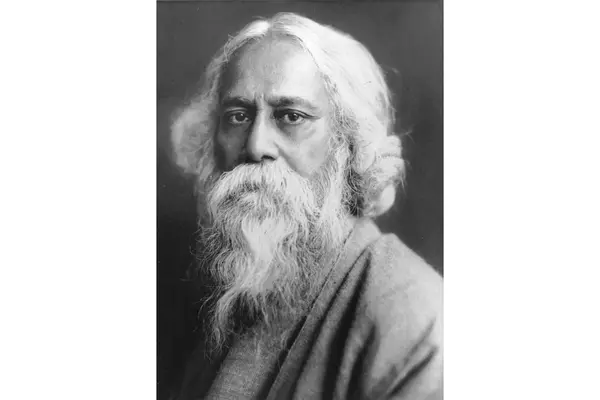
GUWAHATI: More than a century ago, Rabindranath Tagore wrote about nature, humanity, truth, grief, and courage in ways that still feel deeply personal today. His words were not only poetic, they were reflections on how people live, connect, and understand the world around them.
ALSO READ: Cyber Crimes in Assam on a Decline but Pendency Rate Remains High, Shows NCRB Data
But if Tagore were alive today, would he still recognise the world we live in?
Tagore once wrote, “Clouds come floating into my life… to add colour to my sunset sky,” and “Trees are Earth’s endless effort to speak to the listening heaven.” His writings often celebrated nature as something sacred and deeply connected to human emotions.
Yet today, the skies are increasingly hidden behind concrete buildings, trees disappear for wider roads and expanding cities, and sunsets are often viewed through phone screens rather than with our own eyes. In a fast-moving digital world, people seem more connected online than to the world around them. The silence and beauty that Tagore admired are slowly being replaced by noise, speed, and endless scrolling.
Tagore also believed deeply in humanity beyond borders. One of his most powerful thoughts was, “Patriotism cannot be our final spiritual shelter; my refuge is humanity.”
In today’s world, however, divisions seem sharper than ever. People are separated by opinions, politics, religion, and nationality within seconds, especially on social media where arguments often spread faster than understanding. Online spaces that could encourage dialogue frequently become places of hate and judgment. Tagore imagined a society where compassion mattered more than division, a vision that feels increasingly difficult, yet even more necessary today.
He also wrote, “Reach high, for stars lie hidden in you,” and “If you shut your door to all errors, truth will be shut out.” These words carried a belief in learning, growth, and human potential.
But modern culture often leaves little room for mistakes. People are judged instantly, criticised publicly, and “cancelled” within moments. The fear of being wrong sometimes becomes stronger than the courage to learn or improve. In a world obsessed with perfection and public approval, Tagore’s reminder feels important: growth cannot exist without failure, and truth cannot survive where mistakes are feared.
Tagore’s reflections on life and death were equally profound. He once wrote, “Death is not extinguishing the light; it is only putting out the lamp because the dawn has come.”
Today, however, people seem more afraid of endings than ever before. In a world where memories are permanently stored online and emotions are often hidden behind screens, grief has become quieter and more isolated. Many struggle to accept loss, change, or the idea of moving on. Tagore viewed endings not as destruction, but as transformation — a perspective that feels rare in an age deeply attached to permanence.
He also believed that dreams required courage and action. “You cannot cross the sea merely by standing and staring at the water,” he wrote, while also reminding people that “If you cry because the sun has gone out of your life, your tears will prevent you from seeing the stars.”
Yet today, many remain trapped in heartbreaks, failures, and the pressure of what they have lost. Even in a world that moves quickly, healing often feels painfully slow. People carry emotional burdens silently while trying to keep pace with modern life. Tagore’s words suggest that while grief is natural, holding onto pain forever can prevent people from embracing new beginnings.
Perhaps that is why Tagore still matters today. His writings continue to speak to modern anxieties, loneliness, division, fear, loss, and uncertainty , despite being written generations ago. The world may look very different now, shaped by technology, social media, and constant change, but human emotions remain remarkably similar.
The real question may not be whether Tagore would recognise today’s world, but whether today’s world still listens to what Tagore was trying to say.
(All views and opinions expressed in this article are the author's own)


