


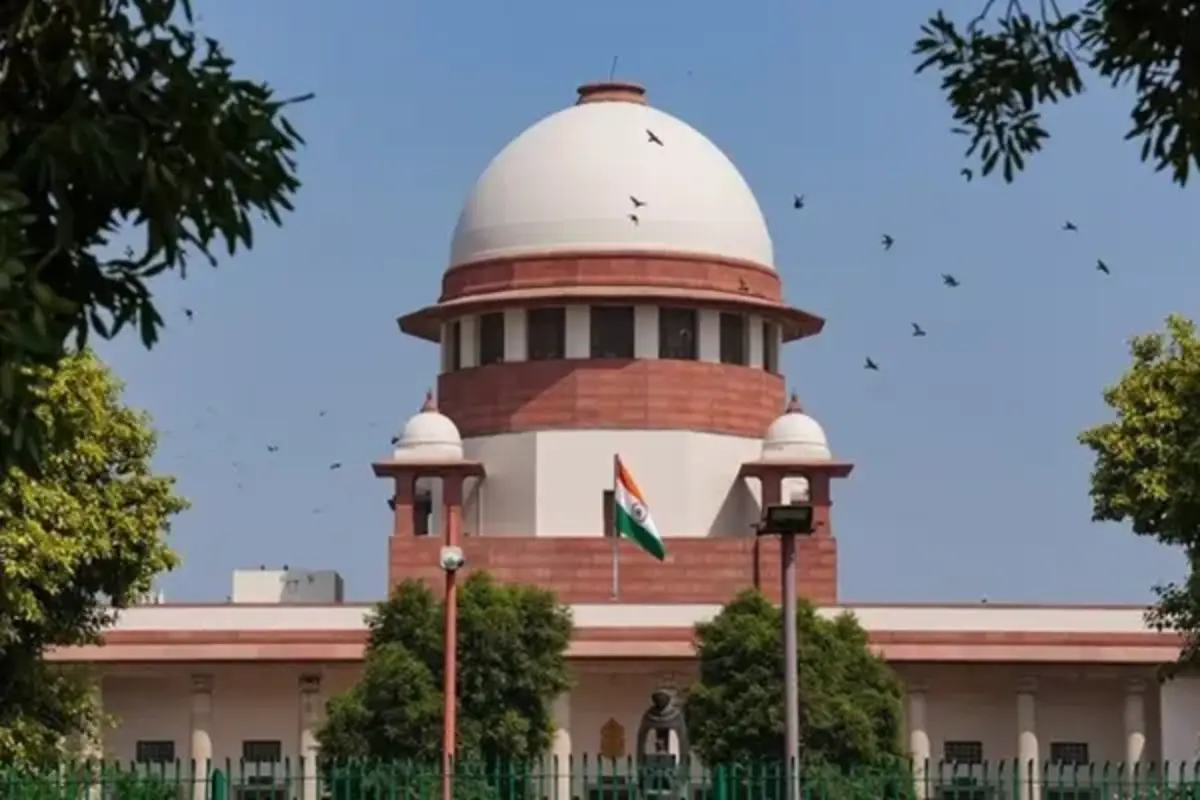
GUWAHATI: The Supreme Court on Tuesday questioned the wide disparity between the price at which manufacturers sell medicines to retailers and the maximum retail price (MRP), citing an example of a cancer medicine sold to a retailer for ₹2,700 while carrying an MRP of ₹27,000.
ALSO READ: Centre Warns Against Indiscriminate Use of Painkillers, Antibiotics
“If that is not extortion, what else it is? People sell their houses, people sell their ornaments for getting the medicines,” Justice Sandeep Mehta observed while hearing petitions seeking regulation of medicine prices along with Justice Vikram Nath.
The bench was hearing petitions filed by Kishan Chand Jain and Dr Sanjay Kulshresthra concerning the regulation of medicine prices, generic medicines, medical devices and prescription practices.
Justice Mehta said the 10-fold difference between the Price to Retailer (PTR) and MRP was a matter of concern.
“How a patient can be cheated for a medicine, which the manufacturer sells to the retailer at 2700, the MRP is printed at 27,000? Ten times!” he said.
Petitioner Kishan Chand Jain, appearing in person, submitted that the Drugs (Prices Control) Order, 2013 (DPCO) fixes ceiling prices for around 1,000 medicines listed in Schedule I, while manufacturers can fix the initial price of non-scheduled medicines without regulation. He submitted that subsequent price increases are capped at 10%.
Jain submitted that around 82% of medicines by number and 83% by value are non-scheduled, with around 60,000 brands in the market, while price fixation covers fewer than 5,000. He cited examples of medicines with an MRP of ₹73 and a PTR of ₹22.75, and another with an MRP of ₹61 and a PTR of ₹9.65.
He also alleged that the National Pharmaceutical Pricing Authority (NPPA) has data on PTR but does not publish it.
Justice Nath observed that a patient or attendant buying medicines in an emergency may not have time to check price lists.
Referring to Rasuvas, a statin costing around ₹240, Justice Mehta pointed out that its combination with aspirin, which is scheduled, costs around ₹70.
“So a combination should be more costly. It should be costlier, but the disparity is there,” he said.
Dr Sanjay Kulshresthra, in the connected petition, cited a medicine with a printed price of ₹4,196 being sold for ₹980 and said antibiotic TG-BEX had a 1,500% gap between its printed and sale price. He said high margins could encourage over-promotion of antibiotics amid antimicrobial resistance.
He also submitted that corporate hospitals often require patients to buy medicines from their own stores at full MRP.
Justice Mehta noted that high medicine prices also affect government-funded treatment.
“Many patients are now getting treatment under Ayushman Bharat. So, ultimately, it’s the taxpayer’s money which goes into all this,” he said.
The bench also heard submissions on generic medicines and medical devices.
Kulshresthra raised concerns over the quality and reliability of generic medicines and argued that prescribing a generic without specifying a brand effectively leaves the choice of manufacturer to the pharmacist.
Justice Mehta observed that a patient could ask for a branded medicine containing the same formulation if the doctor had prescribed the formulation.
Kulshresthra also sought stronger punishment for violations involving substandard and spurious medicines. The Court observed that determining the quantum of punishment was a policy matter for the government.
Additional Solicitor General KM Nataraj said the Union government was not treating the proceedings as adversarial and would consider areas where the existing system could be improved. He referred to the Pradhan Mantri Bhartiya Janaushadhi Pariyojana as an initiative providing medicines at lower prices.
The Court, however, asked what patients requiring medicines unavailable at Janaushadhi Kendras would do.
Senior Advocate Kapil Sibal, appearing for the Indian Pharmaceutical Alliance, submitted that manufacturers were not selling medicines at high prices and that retailers were earning large profit margins. Justice Mehta pointed out that manufacturers fix the MRP.
The Court will hear further submissions from Sibal and the Union government on September 29.


