



As published in GPlus on March 28, titled “No Rehab for Guwahati’s Juveniles?”, the issue raises a deeply unsettling and urgent question about the state of child protection in Assam. It is not merely a headline, it is a reflection of a growing humanitarian crisis that continues to unfold across the state, particularly in urban centres like Guwahati. Beneath the city’s visible growth and development lies an uncomfortable reality: a rising number of vulnerable children trapped in cycles of substance abuse, exploitation, and systemic neglect, with little to no access to meaningful rehabilitation.
Across traffic intersections, railway stations, marketplaces, and places of worship, children are seen begging for alms. Many appear disoriented, lethargic, or unnaturally subdued. Adolescents show visible signs of substance dependency, while infants are often found in a sedated state silent, passive, and disturbingly still. These are not isolated incidents but indicators of a structured and deeply entrenched system of exploitation.
Field-based observations and documented evidence reveal that children engaged in begging are frequently administered substances such as Spasmo Proxyvon (SP), codeine-based cough syrups like Phensedyl and Corex, and sedatives including alprazolam and clonazepam. These substances are not consumed voluntarily; they are administered deliberately to suppress hunger, induce sleep, and ensure compliance. This enables handlers or traffickers to control children for extended hours of begging, often lasting 10 to 12 hours a day.
The situation becomes even more alarming when infants are involved. Reports from enforcement agencies, including a 2025 police raid in Bharalumukh, Guwahati, uncovered babies being fed diluted narcotic substances mixed with milk. Handlers admitted that these drugs were used to suppress hunger and prevent crying, thereby increasing their effectiveness in eliciting sympathy from the public. The health consequences of such practices are severe, ranging from respiratory depression and seizures to long-term neurological damage and developmental delays.
The scale of the crisis is steadily increasing. Estimates suggest that nearly 1,000 child beggars are currently present in Guwahati alone. In 2025, over 300 such children were rescued, many of whom tested positive for drug exposure. Additionally, case records indicate a rise from 25 reported instances in 2023 to 35 in 2024, highlighting a concerning upward trend. These figures likely represent only a fraction of the actual situation, given the hidden nature of trafficking and exploitation networks.
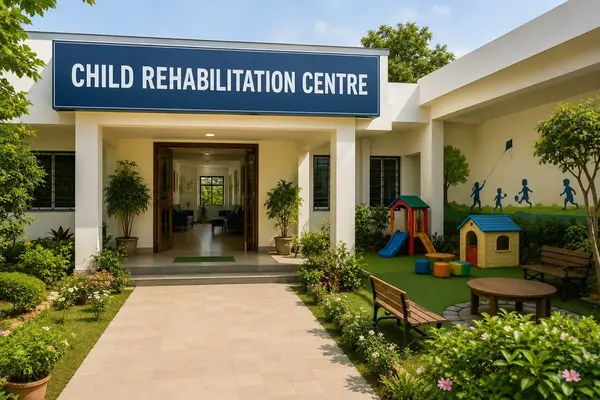
Despite the growing magnitude of the problem, Assam does not have a single government-run, child-specific rehabilitation centre dedicated to addressing substance abuse among minors. Existing facilities remain grossly inadequate and largely designed for adults. The Integrated Rehabilitation Centre for Addicts (IRCA) located in Hengrabari, Guwahati, operates with limited capacity and does not admit children.
As a result, rescued minors are often placed in shelter homes or Child Care Institutions (CCIs) under the Juvenile Justice system. While these institutions play a crucial role in providing immediate care, protection, and a safe environment, they are not equipped to address the complex needs of children suffering from substance dependency. Most CCIs lack essential medical detoxification facilities, trained addiction counsellors, child psychiatrists, and structured rehabilitation programs tailored specifically for minors. In such settings, substance-dependent children are accommodated alongside non-addicted children, which creates additional challenges. The presence of drug-dependent juveniles can inadvertently expose other children to substance use behaviours, increase the risk of negative peer influence, and lead to behavioural disruptions within the institution. Consequently, children receive primarily custodial care focused on immediate safety and institutional discipline, rather than comprehensive treatment that addresses the root causes of addiction. This not only hampers the recovery of affected children but also compromises the overall well-being and protective environment of the CCI.
This systemic gap leads to a high rate of relapse. Without proper rehabilitation, children frequently return to substance use shortly after rescue. Studies and field insights suggest relapse rates of up to 70–80% among untreated minors. Many are drawn back into the same exploitative environments, perpetuating a cycle that becomes increasingly difficult to break over time.
Economic barriers further restrict access to treatment. Private rehabilitation centres in Guwahati do offer pediatric services, but their costs ranging between Rs 20,000 and Rs 50,000 per month make them inaccessible for economically disadvantaged families. For children coming from street-based or marginalised backgrounds, such options are simply not viable.
Although legal and policy frameworks exist, their implementation remains inadequate. The Juvenile Justice (Care and Protection of Children) Act, 2015 mandates rehabilitation and reintegration for children in need of care and protection. Similarly, national initiatives such as the National Action Plan for Drug Demand Reduction (NAPDDR) are designed to support de-addiction services. However, these frameworks have not translated into effective, child-focused interventions in Assam.
Budgetary allocation is another significant concern. While the state allocates substantial funds for child welfare, there is no dedicated provision for pediatric drug rehabilitation. Funds under national schemes are often diverted toward adult-centric programs, leaving children underserved. Administrative delays, bureaucratic inefficiencies, and lack of coordination between departments further hinder progress.
The easy availability of drugs compounds the issue. Despite regulations, substances like codeine syrups and SP capsules continue to circulate through unregulated channels. Weak enforcement allows these drugs to be accessed easily, feeding into the cycle of addiction and exploitation among vulnerable children.
Geographical disparities add another layer of complexity. Rural districts such as Morigaon, Dhemaji, Goalpara, Cachar, Dibrugarh and Kokrajhar lack even basic de-addiction facilities for juvenile, forcing affected individuals to travel long distances to Guwahati. This often leads to discontinuation of treatment and increases the likelihood of relapse.
The broader social consequences of this crisis are profound. Substance-dependent adolescents are more likely to engage in petty crimes, trafficking networks, and hazardous labour. Law enforcement reports indicate a growing link between juvenile delinquency and drug dependency. Infants exposed to narcotics face lifelong developmental challenges, placing long-term strain on families and healthcare systems.
Civil society organisations, healthcare professionals, and child rights advocates have consistently called for urgent intervention. Recommendations include the establishment of district-level child-specific rehabilitation centres, deployment of mobile detoxification units, and integration of addiction treatment within the existing child protection framework.
Strengthening pharmaceutical regulation is equally critical. Monitoring mechanisms must be enhanced to control the sale of prescription drugs, and strict penalties should be imposed for violations. Preventive measures, including awareness campaigns in schools and communities, can help reduce vulnerability to substance abuse.
Capacity building must also be prioritised. Training programs for counsellors, social workers, and healthcare providers are essential to ensure that children receive specialised care tailored to their needs. Collaboration with national institutions can help develop evidence-based rehabilitation models suited to the region.
Monitoring and accountability mechanisms require urgent strengthening. Child Welfare Committees (CWCs) and Juvenile Justice Boards (JJBs) must conduct regular inspections and ensure that rescued children receive appropriate rehabilitation services. Financial transparency and audits can help prevent misuse of funds and ensure effective utilisation of resources.
Ultimately, the question remains: where do these children go after rescue?
At present, the answer is deeply troubling. They often return to the streets, to addiction, and to exploitation because the system meant to protect them lacks the capacity to rehabilitate them.
This is not just a policy gap; it is a moral failing.
The children seen on Assam’s streets are not beyond help. They are victims of circumstance, shaped by poverty, trafficking, and systemic neglect. With timely intervention, structured rehabilitation, and sustained support, recovery is possible. However, this requires a shift from rescue-centric approaches to long-term rehabilitation strategies.
The issue raised by GPlus must now translate into concrete action. Establishing child-specific rehabilitation centres, ensuring targeted budget allocation, strengthening enforcement mechanisms, and building institutional capacity are essential steps forward.
Assam stands at a critical juncture. The decisions made today will determine whether these children are given an opportunity to reclaim their futures or remain trapped in cycles of addiction and neglect.
The question has already been asked. The responsibility to answer it lies with all stakeholder’s government institutions, civil society, and citizens alike.
Because if action is delayed any further, the cost will not just be reflected in statistics it will be measured in lost childhoods and compromised futures.
(All views and opinions expressed in this article are author’s own)


