


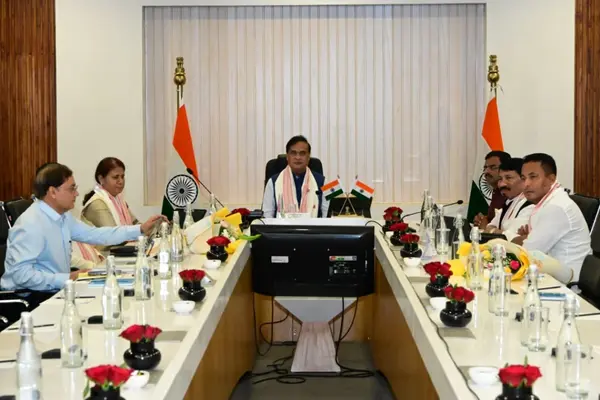
The decision of the Assam cabinet under Chief Minister Himanta Biswa Sarma to approve the draft framework for a Uniform Civil Code (UCC) in its very first cabinet meeting after returning to power is not merely an administrative move; it is a declaration of political intent. By placing the UCC at the centre of its governance agenda, the BJP-led government has signalled that ideological consolidation will remain as important as developmental politics in Assam. The move comes at a time when the debate around identity, migration, religion, and indigenous rights already dominates the state’s political landscape. Once passed in the Assembly, the UCC is expected to reshape Assam socially, politically, and legally in ways that may bring both reform and resistance. Supporters view it as a long-overdue correction aimed at creating equality before law, while critics fear it could deepen communal anxieties and disturb Assam’s fragile social balance. The coming months will therefore not only test the legislative strength of the government but also the social resilience of a state known for its diversity and historical sensitivities.
ALSO READ: Editorial | Assam’s Massive NDA Mandate Comes With Accountability Challenge
On the positive side, the UCC could bring major structural reforms in personal laws relating to marriage, divorce, inheritance, adoption, and maintenance. Proponents argue that a single legal framework for all citizens would strengthen constitutional principles of equality and justice. In Assam, where debates over polygamy, child marriage, women’s inheritance rights, and legal ambiguity across communities have often surfaced, the UCC could create a more streamlined and uniform system. Women, particularly from socially conservative backgrounds, may benefit from stronger legal protection and equal rights. The BJP government is expected to project the UCC as a progressive measure aimed at empowering women and modernising society. It could also reduce the complexity created by multiple personal law systems operating simultaneously. Politically, the move will likely consolidate the BJP’s nationalist support base and reinforce its image as a government willing to take “bold decisions.” For many middle-class urban voters, especially younger generations seeking legal uniformity, the UCC may appear as a symbol of a more modern and integrated India. In Assam specifically, the government may also attempt to argue that the law would help reduce practices seen as socially regressive while promoting a shared civic identity over religious divisions.
Yet the negative implications could be equally profound, especially in a state like Assam where identity politics is deeply layered and emotionally charged. The biggest challenge for the government will be convincing minorities and tribal communities that the UCC is not an attempt at cultural assimilation. Assam is not a socially homogenous state; it is home to numerous indigenous tribes, linguistic groups, and religious communities, many of whom possess distinct customary practices and traditional systems. Tribal organisations may fear that a common code could eventually erode customary rights and weaken indigenous autonomy. Among Muslims, particularly Bengali-speaking Muslims already facing intense political scrutiny over citizenship and demographic debates, the UCC could be interpreted as another attempt to politically corner the community. This perception alone may increase social polarisation. Opposition parties are likely to portray the legislation as a majoritarian project disguised as reform. Even if the government exempts tribal customs or introduces safeguards, distrust may continue because the UCC debate nationally has long been associated with ideological confrontation rather than consensus-building. Assam has witnessed periods of unrest over identity-related issues in the past, and any policy perceived as threatening cultural distinctiveness carries the risk of protests, agitation, and social tension.
The political consequences after the bill is passed may therefore extend far beyond legal reform. The BJP could gain substantially among supporters who view the UCC as fulfilment of a core ideological promise, much like the revocation of Article 370 or the Ram Mandir movement at the national level. However, the state government must also recognise that legislation alone cannot guarantee social acceptance. The success or failure of the UCC in Assam will ultimately depend on implementation, transparency, and dialogue. If the government genuinely consults civil society, tribal bodies, women’s groups, and minority organisations before finalising the law, it may soften resistance and create broader legitimacy. But if the process appears unilateral or politically celebratory, the law could sharpen divisions rather than create unity. Assam today stands at a critical crossroads where governance increasingly intersects with identity politics. The UCC debate reflects a larger national transformation where questions of constitutional equality are colliding with fears of cultural erosion. Whether Assam emerges stronger from this transition or more divided will depend not only on the content of the legislation but also on the political maturity with which it is implemented.


