


GUWAHATI: The Union government has moved a step closer towards introducing a Water Metro system in Guwahati, placing the Assam capital in the first phase of a proposed nationwide rollout that aims to bring water-based public transport to 18 cities across India. The announcement came after Union Minister for Ports, Shipping and Waterways Sarbananda Sonowal chaired a high-level review meeting in New Delhi on Sunday, where the Centre also circulated the Draft National Water Metro Policy, 2026 for inter-ministerial consultations.
ALSO READ: Gauhati HC Reserves Order on Shekharjyoti Goswami’s Bail Plea Till May 28
While the Centre has projected the initiative as a modern and sustainable transport alternative, questions remain over the feasibility, environmental implications and long-term viability of introducing such a system in Guwahati, a city already grappling with severe urban flooding, traffic chaos and unplanned expansion. Along with Guwahati, cities like Srinagar, Patna, Varanasi, Ayodhya and Prayagraj have been selected for Phase I, while Assam’s Tezpur and Dibrugarh are proposed for Phase II.
Officials said the proposed model draws heavily from the experience of the Kochi Water Metro, which has often been showcased by the Centre as a successful experiment in integrating waterways with urban mobility. The Inland Waterways Authority of India (IWAI) had earlier commissioned Kochi Metro Rail Limited to conduct feasibility studies in 18 cities, including Guwahati. According to the Ministry, draft feasibility reports for Guwahati and four other cities have already been accepted.
Addressing the review meeting, Sonowal argued that Water Metro systems are less capital-intensive compared to conventional transport infrastructure because they utilise existing waterways and require relatively limited civil construction. He claimed that electric and hybrid ferries would reduce operational costs while offering an environmentally cleaner alternative to road transport.
“The proposed Water Metro systems are significantly less capital intensive as they utilise existing waterways with minimal civil infrastructure. With faster construction timelines, lower land requirements, and reduced operational costs, the system offers a viable and eco-friendly alternative to conventional urban transport,” Sonowal said.
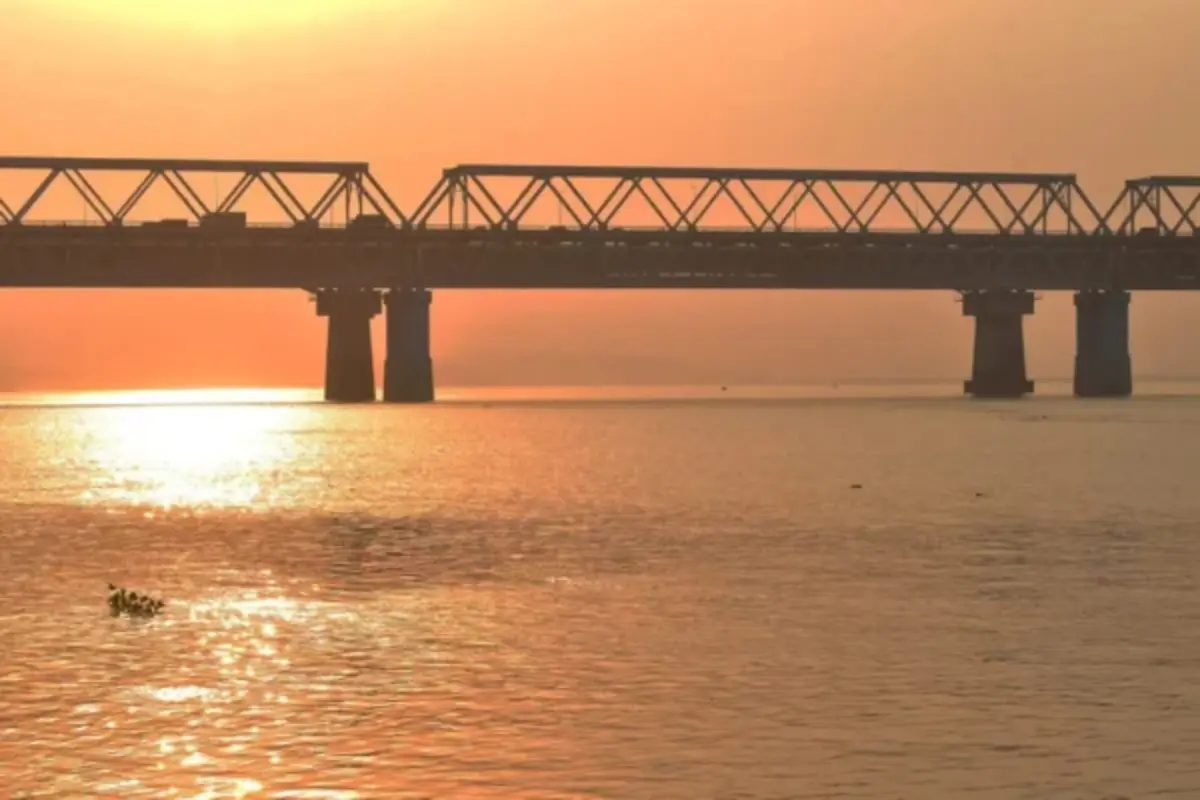
However, urban planners and environmental observers have repeatedly pointed out that the Brahmaputra presents challenges very different from the backwaters of Kerala. The river’s unpredictable currents, seasonal water-level fluctuations, heavy siltation and erosion-prone banks could complicate operations and increase maintenance costs. Experts also note that integrating ferry terminals with Guwahati’s already strained road network may prove difficult unless accompanied by major urban planning reforms.
The proposed policy states that Water Metro projects will be prioritised in cities with navigable waterways and populations exceeding one million. Yet, the Centre has also kept room for relaxation of these criteria in regions where such systems could reduce congestion, improve connectivity to remote areas or enhance resilience during floods and disasters. In Guwahati’s case, officials believe the Brahmaputra could potentially emerge as an alternative transport corridor as road congestion continues to worsen on both sides of the city.
Still, scepticism persists over whether the project addresses the city’s immediate transport priorities. Guwahati continues to face persistent drainage failures, deteriorating roads, overcrowded public buses and unfinished infrastructure works. Critics argue that unless these core urban issues are addressed first, a high-profile Water Metro project risks becoming another symbolic infrastructure exercise rather than a practical mobility solution for ordinary residents.
The Draft National Water Metro Policy, 2026 also lays emphasis on standardisation of vessels, terminals, charging infrastructure and safety systems, while encouraging the use of green technologies and indigenous manufacturing. Multiple funding models are being considered, including Centre-State partnerships, fully state-funded projects and Public-Private Partnerships (PPP). Yet, neither the Centre nor the Assam government has disclosed estimated costs, timelines or proposed routes for the Guwahati project so far.
Sonowal also stressed that terminal infrastructure should reflect India’s maritime heritage and local architectural identity. He called for “landscape assessments” and the use of local materials to preserve regional character, while also emphasising public participation and awareness-building around waterways.
For now, the project remains at the planning and consultation stage. But with feasibility reports accepted and policy discussions underway, Guwahati appears set to become one of the first testing grounds for the Centre’s ambitious attempt to reshape urban mobility through inland waterways — a vision that supporters call futuristic, but critics say will ultimately be judged by whether it can survive the realities of the Brahmaputra.


