


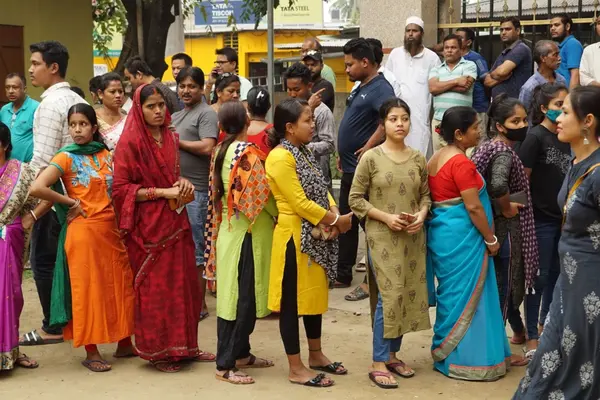
In Assam’s lively political scene, women are visible everywhere except where decisions are made. They lead rallies, run welfare drives, and turn out to vote in large numbers. Yet when it comes to contesting elections, holding legislative seats, or leading political parties, their presence is tiny. This contradiction, active participation without real representation is stark in Assam and has real consequences for governance and democracy.
ALSO READ: Opinion | When Merit Suffers: The Price of Negligence in the NEET Paper Leak Scandal
The most recent state elections made the imbalance painfully clear. Out of 126 seats in the Assam Legislative Assembly, seven women were elected, which is well below what one would expect in a state where women form almost half the electorate. Women voters in Assam turn out in numbers comparable to men, and in some places they even vote more enthusiastically. Still, parties filled far fewer women candidates than men, and far fewer women end up in the Assembly. This gap between voter presence and office-holding is a fundamental democratic problem: those who help decide electoral outcomes are not proportionately present in the forums where laws and policies are made.
The structural Roots of the Gap
There are several linked reasons. Political parties often say they must nominate the most “winnable” candidates and use that as a reason to give only a handful of tickets to women. Over time, this becomes a self-fulfilling prophecy: if parties rarely nominate women in winnable seats, fewer women get elected, and parties then point to the low number of women legislators as proof that women cannot win. This cycle makes it hard for new women leaders to emerge.
Cultural and social barriers add to the problem. In many communities, politics is still seen as a man’s domain. Women who enter politics face social judgment and safety concerns, and they frequently shoulder the bulk of household responsibilities, making it harder to campaign, travel, and spend long hours on public work. Media coverage and party practices sometimes treat women as the face of a campaign while excluding them from real decision-making; this kind of tokenism offers visibility without genuine power. As Political Scientist Niraja Gopal Jayal notes,” the under representation of Women is not due to lack of capability, but lack of opportunity.”
The grassroots success story
There is a brighter side to the story at the local level. The reservation of seats for women in panchayats has brought many women into local governance. In Assam and across India, the constitutional amendments that reserve seats for women in local bodies led to over a million women entering public office at the grassroots. In districts such as Majuli and Dibrugarh, women panchayat leaders have led sanitation drives, improved drinking water supplies, formed self-help groups, and pushed for better primary health and education services. These examples show that when women are given the opportunity to govern, they deliver practical improvements that affect everyday life.
Why local gains do not reach the Assembly
Despite these successes, the pipeline from local councils to state legislatures remains weak. Many women who gain experience and credibility in panchayats are not given the party support, funds, or ticket slots to contest state assembly elections. Parties may prefer male candidates who are perceived as more “electable,” or they may prioritise family political dynasties and incumbents over fresh women leaders. As a result, the effective leadership developed at the grassroots often remains trapped at that level.
The stalled national fix
A clear national solution regularly discussed is the Women’s Reservation Bill, which proposes reserving one-third of seats in Parliament and state assemblies for women. The bill has been debated for decades and enjoys broad public support in principle, but it has been stalled by political disagreements and concerns about implementation. Critics argue about tokenism and whether reservations would really empower ordinary women as opposed to elite or dynastic candidates; supporters say reservations are the only realistic way to break long-standing cycles of exclusion. Meanwhile, because the bill remains stuck, the burden falls on political parties and state governments to take voluntary steps to increase women’s candidacy.
How to bridge the gap?
There are several practical steps that could reduce the gender gap in Assam politics: Political parties should adopt clear, time-bound targets for nominating women to winnable seats and back those candidates with training, funding, and campaigning resources. Public, measurable targets make it harder for parties to fall back on vague promises.
Parties can set internal quotas or candidate pools to ensure more women move from local bodies into state-level contests. Mentorship programmes linking experienced women panchayat leaders with aspiring state candidates would strengthen the pipeline of women with governance experience.
Civil society and media should highlight women’s performance and policy ideas, not just their symbolic presence, to change public perceptions about women’s leadership abilities.
The government and election bodies should improve candidate support systems, including safe travel arrangements, security during campaigning, and childcare support at public events, so that women with family responsibilities can participate more evenly.
Training in campaign management, fundraising, and media handling would help more women contest successfully and sustain political careers.
Why this matters for governance?
Increasing women’s representation is not only about fairness; it is about improving governance. Evidence from India and other countries shows that women legislators often prioritise issues such as education, health, sanitation, and social welfare, areas that directly affect poor and vulnerable groups. Greater women’s representation can also change the tone of politics, making it more responsive to community needs and less tolerant of corruption and violence.
A changing but fragile landscape
There are early signs of change. Some parties have begun to nominate more women in recent elections, and a few women have won high-profile seats. But the overall numbers remain low. The recent election outcome, just six to seven women in a 126-member Assembly should be a wake-up call that visibility at rallies and in voter turnout does not automatically translate into seats of power.
A call for action
If Assam is to live up to democratic ideals, the state must move beyond symbolic inclusion and create real pathways for women into legislative halls, ministerial offices, and party leadership roles. That requires action from parties, the state government, civil society, and the media. When women have a stronger voice in law-making and policy decisions, the benefits will reach families and communities across Assam.
Women in Assam already show they will vote, organise, and lead at the grassroots. Turning that energy into representation in the Assembly is a matter of political will and practical reform and it is a change that the state can no longer afford to delay.
(All views and opinions expressed in this article are author’s own)


