


Projects worth crores in Guwahati raise questions over revenue, maintenance and cost recovery
Guwahati’s urban infrastructure challenges have repeatedly raised questions over the performance of the Guwahati Metropolitan Development Authority (GMDA), particularly regarding projects designed to generate revenue through user charges.
ALSO READ: Excessive Honking Continues Despite Traffic Rules in Guwahati
While GMDA was established as a planning and development authority rather than a profit-making organisation, some of its projects, including the Brahmaputra ropeway and automated parking facilities, were designed with revenue models linked to fares or usage fees. However, available figures indicate that these projects have struggled to recover their construction costs.
Established in 1992 under the Guwahati Metropolitan Development Authority Act, 1985, GMDA is responsible for planning and developing the Guwahati metropolitan area. Its functions include urban planning, granting development permissions, infrastructure creation, drainage improvement, conservation of water bodies and development of public spaces.
Unlike commercial organisations, urban development authorities generally undertake projects aimed at public service delivery and long-term city development rather than direct financial returns. However, projects involving user charges are often expected to generate revenue to support operations, maintenance and sustainability.
Among GMDA’s major revenue-linked projects, the Brahmaputra Ropeway remains one of the most prominent.
The ropeway connects Kachari Ghat in Panbazar with North Guwahati and was constructed at a cost of ₹56.08 crore. The project was handed over to GMDA in 2006 but faced multiple delays before beginning commercial operations in August 2020.
The delay was attributed to several issues, including objections from the Archaeological Survey of India and prolonged suspension of construction activities.
After becoming operational, the ropeway faced further challenges due to the COVID-19 pandemic, reduced passenger movement and changes in fares.
In May 2022, the ropeway recorded collections of ₹21.5 lakh, which was reported as one of its first significant monthly revenue figures after commercial operations began.
If such collections were maintained consistently, the annual revenue would be around Rs 2.5 crore. However, this calculation does not include operational and maintenance expenses, including payments to Usha Breco Limited, which operates and maintains the ropeway for GMDA.
While the ropeway has become a tourist attraction and provides river connectivity between Guwahati and North Guwahati, its revenue generation has raised questions over the time required to recover the initial construction cost.
The project’s long delay before becoming operational also reduced the period available for revenue generation, adding to concerns over its financial performance.
GMDA’s automated parking facilities have also faced questions over their financial viability.
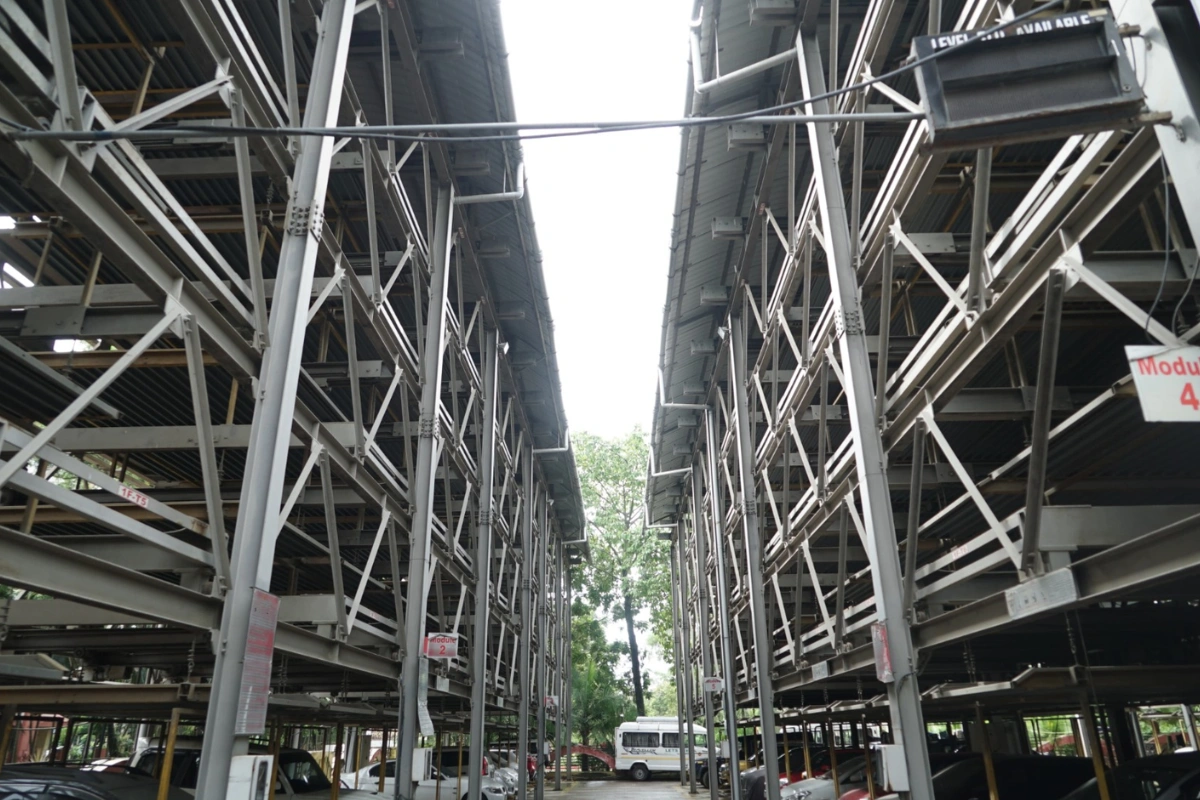
The authority constructed an automated multi-level parking facility near the State Zoo on R.G. Baruah Road at a cost of ₹14.38 crore. The facility was designed to accommodate more than 300 vehicles across six levels through an automated parking system.
However, the facility has struggled to attract regular users since its opening. Reports have highlighted low utilisation rates, while GMDA had earlier attributed the lack of demand to motorists being reluctant to use paid parking facilities.
Another automated parking facility was developed near Mahendra Mohan Choudhury Hospital in Panbazar. The project, costing around ₹11 crore, was funded under a central government scheme and has a capacity of around 240 vehicles.
GMDA has not publicly released detailed year-wise revenue figures for either parking facility, making it difficult to determine whether the projects have recovered their construction costs through parking charges.
Apart from parking facilities, GMDA’s parks and public spaces also underwent changes in their revenue model.
In November 2025, the then Urban Affairs Minister Jayanta Malla Baruah announced that all parks and open spaces in Guwahati, including the ropeway, would allow free entry from December 1, 2025.
Under the arrangement, visitors were required only to provide their name and phone number to receive entry passes.
The free-entry system continued for around seven months before GMDA revised the policy and restored paid entry on July 5, 2026.
Under the revised system, visitors can access parks free of cost between 6 am and 10 am for walking and jogging. Exemptions remain for children below nine years, senior citizens above 75 years and specially abled visitors.
Outside the free period, GMDA introduced entry charges at different locations.
Entry fees include Rs 20 at Jorpukhuri Park in Uzan Bazar, ₹50 at Nehru Park, ₹60 at the Botanical Garden in Fancy Bazar and ₹150 at the Mahabahu Brahmaputra River Heritage Centre in Panbazar.
The ropeway fare was also revised to ₹250 for a one-way journey, more than double the previous fare of around ₹100 before the free-entry period began.
GMDA stated that the revised charges were introduced to support the maintenance and management of these facilities.
However, the absence of publicly available detailed revenue and expenditure records for several user-charge-based projects has made it difficult to assess their financial performance.
Publishing regular revenue and expenditure details of such projects could provide a clearer picture of whether they are meeting operational requirements and how public investments are being utilised.
While revenue-linked projects have faced questions over financial performance, GMDA’s larger role remains focused on urban development and public infrastructure.
Guwahati’s recurring waterlogging issues have placed the city’s drainage infrastructure under scrutiny.
GMDA announced a Drainage Master Plan in early 2024 to prepare a scientific framework for improving the city’s drainage system. Officials had initially indicated that the study would be completed within nine months.
However, by the end of 2024, the plan was still awaiting approval from the state government, with no publicly announced timeline for implementation.
The Silsako Water Rejuvenation Project is another major initiative linked to Guwahati’s flood management efforts.
The project includes measures to restore the water-holding capacity of Silsako Beel, including a proposed 1.6-kilometre underground channel connecting the Bahini river with the wetland.
Preliminary work began in 2024, but later reports indicated that funds released by the state government had been utilised while the detailed project report was still awaiting approval from the concerned ministry.
Environmental concerns have also been raised over delays in the restoration of Silsako Beel, which is considered an important wetland ecosystem and habitat for migratory birds and native species.
GMDA’s efforts to restore the wetland have also brought the authority under scrutiny.
The ongoing eviction drive around Silsako Beel has involved the removal of residential, commercial and institutional structures identified by authorities as encroachments.
State authorities have defended the eviction drive, stating that it was carried out to protect the wetland and was supported by directions from the Gauhati High Court regarding conservation of Silsako Beel.
Environmental groups have supported restoration efforts due to the wetland’s role in flood management and ecological conservation. However, affected residents and institutions have raised concerns over the eviction process and rehabilitation measures.
Guwahati’s flood management challenges have also resulted in several large infrastructure proposals.
A GIS-based storm water drainage and flood management project worth Rs 1,459 crore was announced by Chief Minister Himanta Biswa Sarma. The project includes an allocation of around ₹958 crore for the Bharalu basin and Rs 501 crore for the Bahini basin.
Separately, the Assam Cabinet approved a ₹2,205 crore flood control project funded through the Asian Development Bank.
These announcements came amid continued concerns over the city’s drainage capacity and recurring waterlogging during heavy rainfall.
A GMDA official said the authority’s projects should not be judged only on profit generation, as its primary objective is public welfare and urban development.
“We are not running the operation to seek only profit. Our projects are for public welfare and to make Guwahati a better place for residents and tourists,” the official said.
The official added that GMDA’s projects have contributed to the city’s development and beautification.
Projects such as drainage systems, wetland restoration and public infrastructure are generally undertaken for public service rather than direct financial returns. However, projects such as ropeways and parking facilities involve user charges and were designed to generate revenue to support their operation and maintenance.
GMDA’s revenue-linked projects continue to face questions over their financial performance. The Brahmaputra Ropeway, despite becoming operational after years of delay, has recorded revenue figures that remain limited compared to its construction cost. Similarly, automated parking facilities have struggled to attract sufficient users.
The issue is not whether GMDA should operate like a private company, but whether projects involving public funds are delivering the intended outcomes and whether their costs, usage and maintenance requirements are being openly tracked.
Greater transparency in revenue and expenditure details of such projects could help assess their financial performance and long-term sustainability.


