



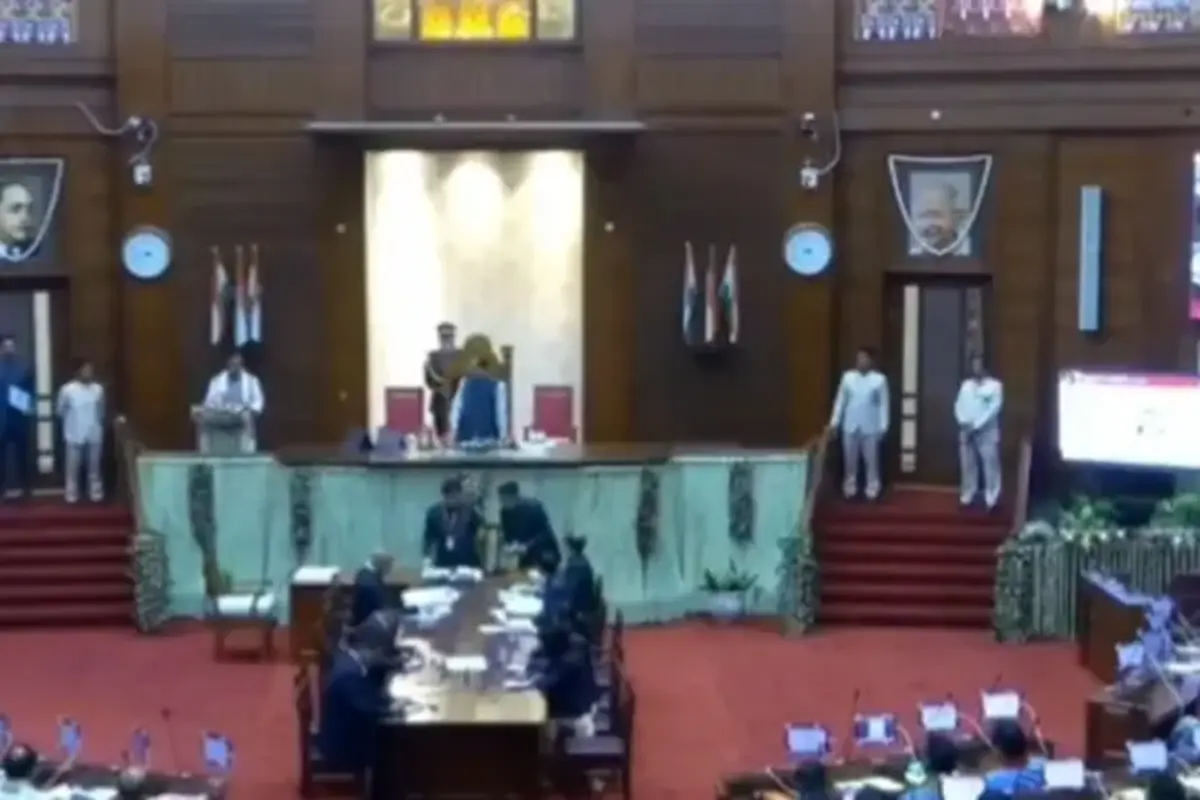
GUWAHATI: The Assam Legislative Assembly on Monday, May 25, unanimously passed a resolution supporting 33 per cent reservation for women in Parliament and all state legislative assemblies, to be implemented after the completion of the delimitation process.
ALSO READ: Assam’s Pension Burden Rises From 15.9% To 19.4% during 2021-25
The resolution was moved by Assam’s Minister for Women and Child Welfare, Ajanta Neog, during the third day of the first session of the newly constituted 16th Assam Legislative Assembly.
The House collectively endorsed the proposal, stating that one-third reservation for women in legislatures should be implemented immediately after delimitation in order to strengthen women’s empowerment and ensure greater participation of women in political decision-making and governance.
Speaking in the Assembly, Neog said that although women hold a respected place in Indian society, stronger institutional and political mechanisms are still required to ensure meaningful empowerment and equal representation.
She observed that women continue to remain underrepresented in politics, not only in India but across the world, due to persistent social, educational, and structural barriers that limit their participation in leadership and policymaking.
Referring to the women’s reservation legislation introduced by the Centre, the minister said the move would play a transformative role in improving women’s representation in politics and public life across the country.
Neog urged all members of the Assembly to extend unanimous support to the resolution, noting that several NDA-ruled states had already adopted similar resolutions in favour of women’s reservation in legislatures.
Highlighting Assam’s political landscape, the minister said the state had recently elected its fifth woman MLA, calling it a positive development towards increasing women’s participation in governance and public affairs.
Despite gradual progress, women continue to have limited representation in the 126-member Assam Assembly, with repeated calls being made for stronger affirmative measures to ensure greater inclusion of women in legislative bodies.


