



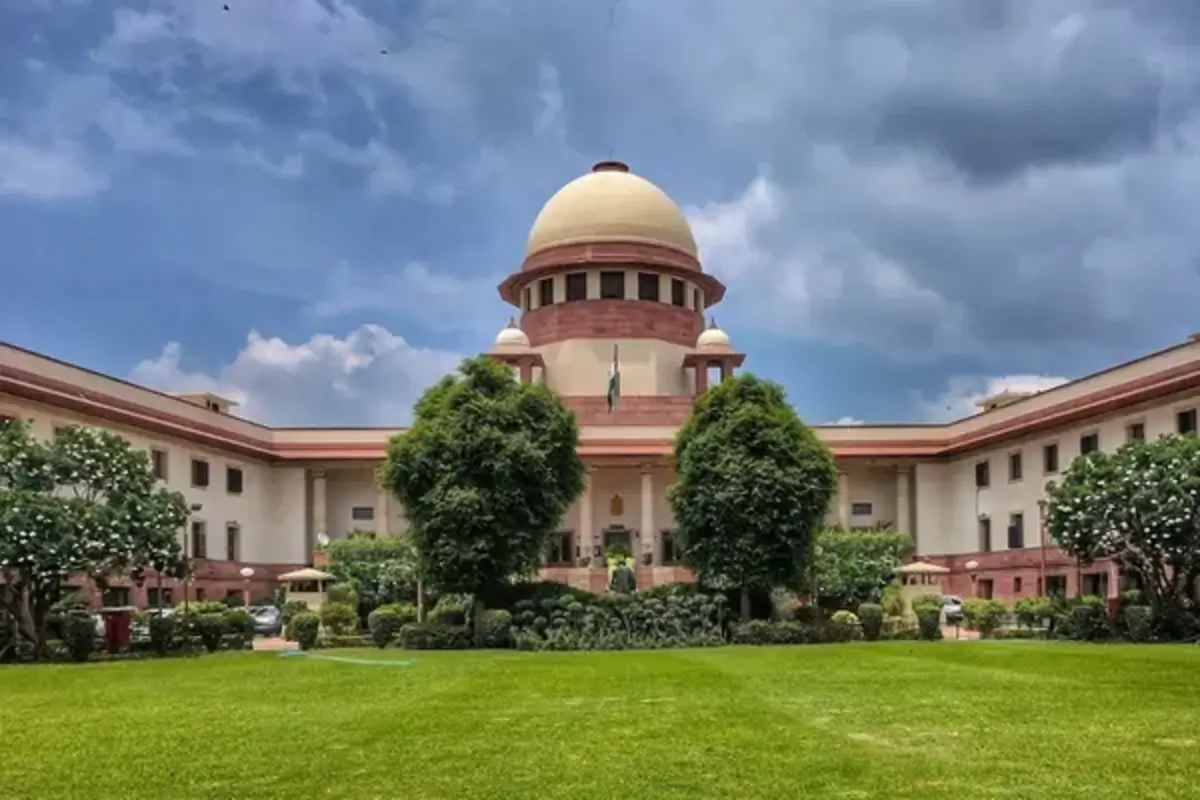
GUWAHATI: The Supreme Court of India on Thursday, April 30, urged the government to take a relook at existing abortion laws while stating that pregnancies resulting from rape should not be bound by rigid gestational limits.
ALSO READ: Porn Clips, Music Disrupt Delhi High Court Virtual Hearing, Cyber Probe Launched
A bench comprising Chief Justice Surya Kant and Justice Joymalya Bagchi was hearing a curative plea filed by All India Institute of Medical Sciences seeking to overturn an earlier order permitting a 15-year-old rape survivor to terminate her 30-week pregnancy.
Questioning the Centre’s stance, the bench stressed that “when there is a pregnancy due to rape, there should not be time limit,” adding that “law needs to be organic and in sync with evolving time.”
Calling it a case of child rape, the court underscored the lasting psychological impact on the survivor. “Nothing can compensate the agony she suffered,” the Chief Justice said, cautioning against forcing the minor to carry the pregnancy to term. The bench added that denying termination could leave the survivor with “a lifelong scar and trauma.”
The court said that the final decision must rest with the survivor and her family, with medical professionals playing a supportive role. “We respect individual choices and so should you,” Justice Bagchi remarked. “Let us not make this a fight between the state and its citizens.”
The bench also directed AIIMS to provide counselling to the minor and her parents, including psychiatric support, so they can take an informed call. “Show data to the parents… if they choose to keep it, so be it. But if they feel the child’s mental health is at risk, they will decide,” the court said.
During the hearing, Additional Solicitor General Aishwarya Bhati, appearing for AIIMS, argued that termination at this stage was medically unfeasible. She warned that the foetus would likely be born alive with severe deformities and that the minor could face lifelong health complications. “It has been 30 weeks now. It is a viable life,” she submitted, suggesting that the child could be delivered and put up for adoption.
However, the court pushed back strongly. “Unwanted pregnancy cannot be thrust upon a person. Imagine—she is a child who should be studying, yet we want to make her a mother,” the bench said, highlighting the emotional and physical toll on the survivor.
The Chief Justice observed, “If it has become a fight between the child and the foetus, then the child should be allowed to live with dignity. Law has to be ruthless if justice so demands.”
The case builds on an earlier order dated April 24, when a bench of Justices B V Nagarathna and Ujjal Bhuyan permitted the termination, ruling that forcing the minor to continue the pregnancy would violate her fundamental rights. The court had then noted her severe psychological distress and observed that “reproductive autonomy must be of the highest importance.”
Opposing the termination, Solicitor General Tushar Mehta cited medical risks associated with late-stage procedures and pointed to statutory limits under existing law. He argued that the pregnancy had crossed the 24-week threshold, making termination legally and medically complex.
For the survivor, however, the legal battle reflects a deeper struggle. As her counsel pointed out earlier, “Every single day is very traumatic,” with the pregnancy already disrupting her education and well-being.


