
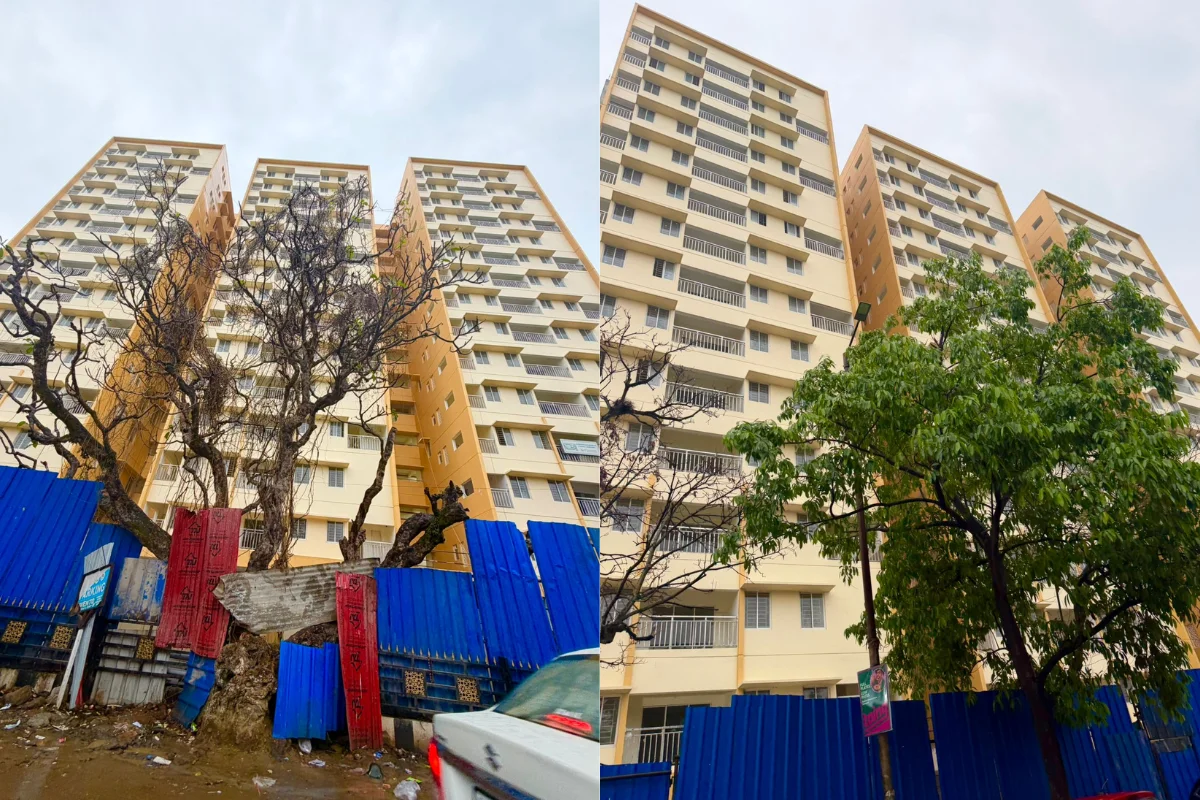


GUWAHATI: The Directorate of Enforcement (ED), Guwahati Zonal Office, has provisionally attached movable and immovable properties worth ₹5.54 crore in connection with a money laundering investigation linked to M/s Jeevan Suraksha Group of Companies and its Directors.
ALSO READ: Woman Gives Birth At Guwahati Railway Station Platform, Rescued Along With Newborn And Elder Daughter
The attached assets include credit balances of ₹1.42 crore (approx.) lying in 48 bank accounts and 22 immovable properties valued at ₹4.11 (approx.) crore located in Assam, Meghalaya and West Bengal.
The central agency initiated the investigation under various sections of the Indian Penal Code (IPC), 1860, and the Prize Chits and Money Circulation Schemes (Banning) Act, 1978.
According to ED, the Jeevan Suraksha Group, operating mainly through M/s Jeevan Suraksha Real Estate Ltd., M/s Jeevan Suraksha Associate Marketing Pvt. Ltd., M/s Jeevan Suraksha Energy and Industries Ltd. along with its sister concerns, allegedly ran a Ponzi/money circulation scheme through a “pyramidal network” of agents and around 422 branches across the northeastern states.
“Under camouflaged schemes such as recurring and fixed deposits, product and plot bookings, monthly income schemes and redeemable preference shares, the Group induced approximately 688,192 investors to part with their money on the promise of abnormally high returns, without holding any licence or authorisation to accept such deposits,” ED said in a statement on Friday, July 10.
The agency alleged that the Group collected around ₹403.63 crore from investors and repaid only about ₹132.72 crore, largely to maintain the appearance of legitimacy and attract fresh deposits, generating alleged proceeds of crime of approximately ₹270.91 crore.
ED said no genuine business or investment activity backed the collections. The agency further alleged that funds received from new investors were used to pay earlier investors until the branches were shut down and the promoters allegedly absconded.
The investigation also revealed that the alleged proceeds of crime were diverted from company accounts to the personal accounts of Directors and their family members, layered through cash withdrawals, insurance policies, fixed deposits and inter-entity transfers, and later invested in immovable properties acquired in the names of companies, Directors, relatives and associates, ED said.


