



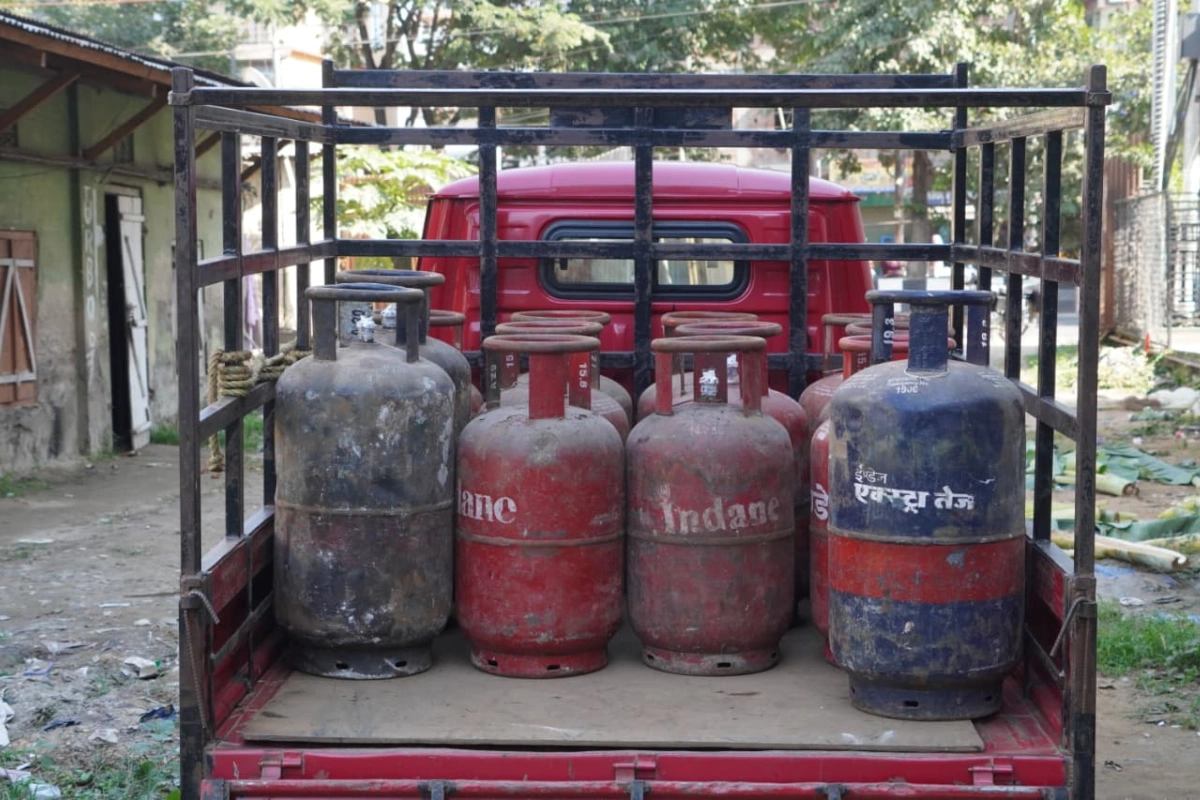
Cylinder price rise won’t burn pockets of out-of-home diners; eateries rule out further hike
Restaurateurs and fast food shops in Guwahati revised their prices recently after global energy prices shot up following the outbreak of conflict in West Asia, and are unlikely to raise them further. For food lovers in the city, there is relative relief despite the rising cost of essential commodities, as most eateries have ruled out any immediate menu revision.
ALSO READ: Pothole-Ridden Roads Add to Guwahati’s Monsoon Misery
While the cost of cooking has gone up significantly for business owners, most eateries and fast food joints in the city have indicated that they will not pass the burden onto customers again for now.
GPlus spoke with several eateries in Guwahati to understand whether there is any possibility of further price hikes. State-owned Oil Marketing Companies (OMCs) have raised the prices of 19-kg commercial LPG cylinders by Rs 994, effective May 1, 2026.
This hike, driven by rising global energy prices, has pushed the new rate in Guwahati to Rs 3,293, up significantly from Rs 2,299.
The latest hike follows revisions made on March 1 and April 1, with total cumulative increases over three months reportedly crossing Rs 1,300 in some regions.
For restaurants and food businesses that rely heavily on commercial LPG cylinders for cooking, the increase has sharply raised operational costs. Commercial kitchens often function for 12 to 15 hours a day, making fuel one of the key recurring expenses for eateries.
During this period, many eateries raised prices of cooked food items, while some also explored alternatives such as electric induction cooktops and air fryers.
Speaking to GPlus, several managers and owners of popular food outlets explained that they have already reached a “price ceiling” and believe another increase could negatively affect customer footfall.
The manager of a popular pan-India biryani chain, Biryani By Kilo, located in the Lachit Nagar area, said the brand had already adjusted its pricing structure recently to account for the rising cost of fuel.
“We increased our prices last month by about Rs 30 per kilogram of biryani,” the manager stated. “At this point, I don’t think we are going to raise it further. We have to keep consumer interest in mind. If we keep changing the menu card every month, it creates a bad impression.”
To combat rising gas bills, several outlets are now looking at technological alternatives instead of hiking prices again. Some kitchens are increasingly switching to electric induction cooktops or air fryers to reduce their dependence on LPG cylinders.
By diversifying energy sources, eateries hope to absorb the impact of the latest gas price hike without making customers pay more.
A recurring theme among Guwahati’s eateries is that the “menu revision” has already happened.
Speaking to GPlus, Mayank Dhanuka, owner of Three Meals, a take-away eatery on GS Road, shared a similar sentiment.
When asked whether the latest LPG hike would lead to costlier food at his outlet, he smiled and said, “We have already revised our menu recently. We cannot do it again so soon.”
Similarly, Saful Haque, manager of Eggivorous Cafe, which specialises in a variety of fast food items, confirmed that their prices would remain steady. He explained that the initial shock of the West Asian conflict had already forced them to make adjustments earlier in the year.
“We aren’t hiking again,” Haque said firmly.
He pointed to his menu card to show that the changes made previously were reasonable. For instance, a bowl of Hakka noodles that previously cost Rs 110 was increased to Rs 130 a few days ago.
According to him, the Rs 20 increase is enough to cover the current rise in gas prices for the time being. He also noted that customers are already sensitive to rising food prices and another immediate revision may discourage people from eating out frequently.
The situation appears slightly different for multinational and national food chains operating in the city. These outlets often have a “buffer” that small local shops do not.
At a well-known food outlet on GS Road, the manager remained tight-lipped about future pricing but confirmed that no changes had been made since the May 1 gas price announcement.
“Ours is a national food chain. Decisions regarding menu pricing are not made at the local level; everything is decided centrally in the head office,” the manager explained.
Similarly, a salesperson at a multinational dine-in chain confirmed that their menu cards had remained untouched during the recent period of volatility.
Such larger entities often have long-term contracts for supplies, which helps them stay insulated from daily market fluctuations for short periods.
Interestingly, one of the city’s more established fine-dining restaurants does not link food prices directly to cylinder rates.
Speaking to GPlus, Ariful Hoque, manager of the multi-city fine-dining landmark Aminia, explained that they follow a different approach.
“Our menu card revision is not based on the fluctuating price of a gas cylinder,” Hoque said.
Instead, the restaurant conducts an annual review of overall operational costs while revising the menu. He showed the current menu and noted that their most recent hike was a modest 5-6 per cent.
“This increase was part of our yearly exercise and had nothing to do with the specific LPG rates of the month,” he added.
While bigger brands appear to be holding steady, the situation is more difficult for smaller and struggling businesses.
GPlus also spoke with the manager of Bigg Bites, a local food vendor. Despite rising costs, they have not raised prices, but not necessarily as a business strategy.
“Our business is not running very well lately,” the manager said, looking at the empty seats in the eatery. “We are also facing a shortage of staff and don’t have enough cooks. We cannot raise prices.”
In a neighbourhood where other cafes were buzzing with customers, Bigg Bites stood as a reminder that while the “price of a plate” may remain unchanged, the “cost of staying in business” is becoming increasingly burdensome for smaller players in Guwahati’s food industry.
An official at a state-owned oil marketing company, on the condition of anonymity, said, “We have maintained the availability of cylinders in the Guwahati area. In some cases, there may be a delay of one or two days for both domestic and commercial LPG cylinders. We haven’t witnessed any change in demand by far and a clear picture will only emerge after 10-odd days.”
The official said they have been able to cater to whatever demand the market is making.
“We haven’t seen any surge in demand, nor have we witnessed any decline,” the official added.
For now, eateries across Guwahati appear to be trying to absorb the pressure created by the steep rise in commercial LPG prices without burdening customers again. However, many in the restaurant business indicated that if global energy prices continue to rise and commercial cylinder rates increase further in the coming months, another menu revision may eventually become unavoidable.


