



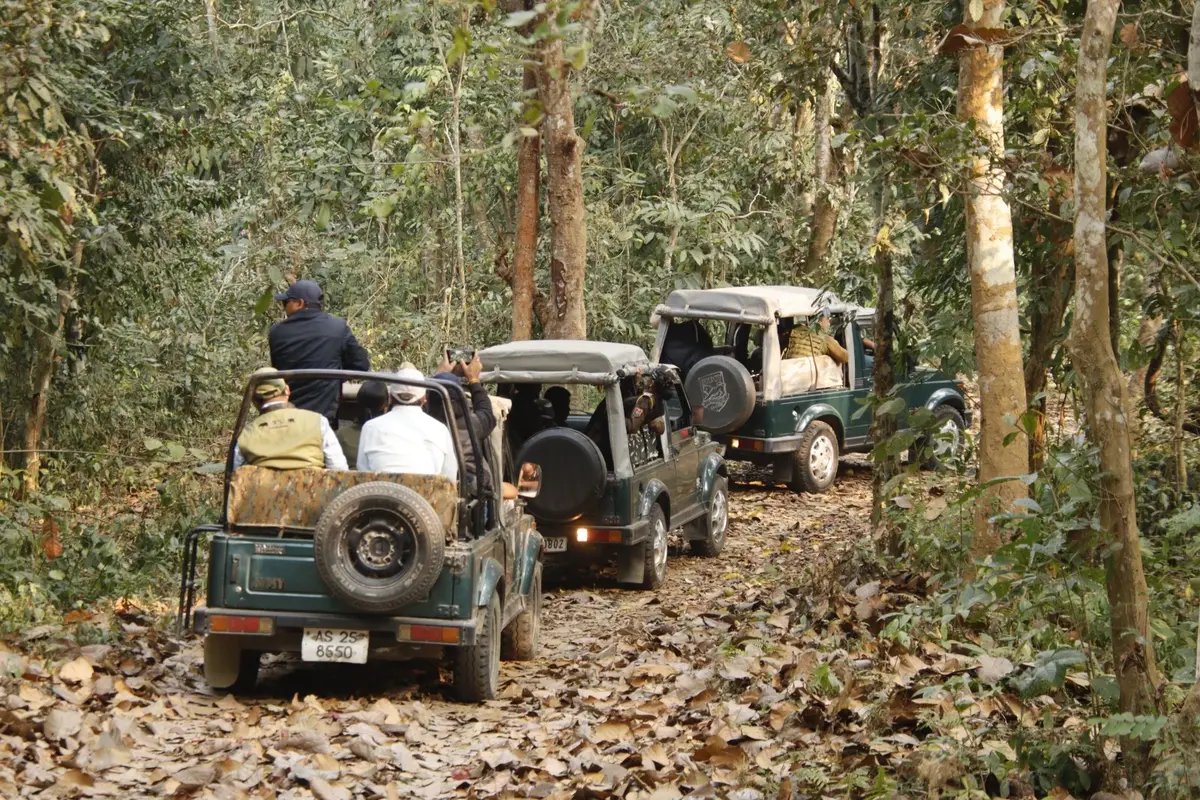
GUWAHATI: Kaziranga National Park and Tiger Reserve has recorded its highest-ever tourist footfall in the financial year 2025–26, underlining its growing appeal as one of India’s finest wildlife destinations. According to official data, the park welcomed a total of 4,68,147 visitors up to March 31, 2026, including 30,474 foreign tourists—marking a significant rise in both domestic and international visitors.
ALSO READ: Gaurav Gogoi Accepts Poll Defeat, Vows Responsible Opposition Role in Assam
The latest figures highlight a steady and impressive growth trajectory over the past decade. Tourist numbers have nearly quadrupled since 2016–17, when the park recorded just over 1.55 lakh visitors. Notably, the inflow of foreign tourists has also seen a notable rise, currently accounting for approximately 4.5 percent of total visitors.
The upward trend has continued into the new financial year as well. In April 2026 alone, Kaziranga received 49,322 tourists, including 2,116 international visitors.
Kaziranga’s rising global stature has been bolstered by high-profile visits in recent years. Narendra Modi became the first Prime Minister to visit the park in March 2024, while External Affairs Minister S. Jaishankar visited along with a delegation of foreign envoys in 2025. The park has also hosted Bhutan’s King and other international dignitaries, further enhancing its global status.
Under the leadership of Chief Minister Himanta Biswa Sarma, Assam has actively promoted Kaziranga as a world-class tourism destination. The park has even earned recognition in global travel listings, including mentions among must-visit destinations.
Spread across three divisions—Eastern Assam Wildlife Division, Bishwanath Wildlife Division, and Nagaon Wildlife Division—Kaziranga is renowned for its rich biodiversity, especially the iconic one-horned rhinoceros.
New initiatives such as bird safaris in Panbari, cycling trails in Kohora, jeep and boat safaris in Biswanath, and trekking experiences in Silimkhowa have provided additional options to enhance visitor experience. These activities, combined with eco-shops run by local communities, have strengthened the park’s appeal while promoting sustainable tourism.
The tourism boom has also translated into economic benefits for local communities. Hotels, restaurants, and small businesses around Kaziranga have reported increased activity, with the surge in visitors creating new employment and business opportunities.


