


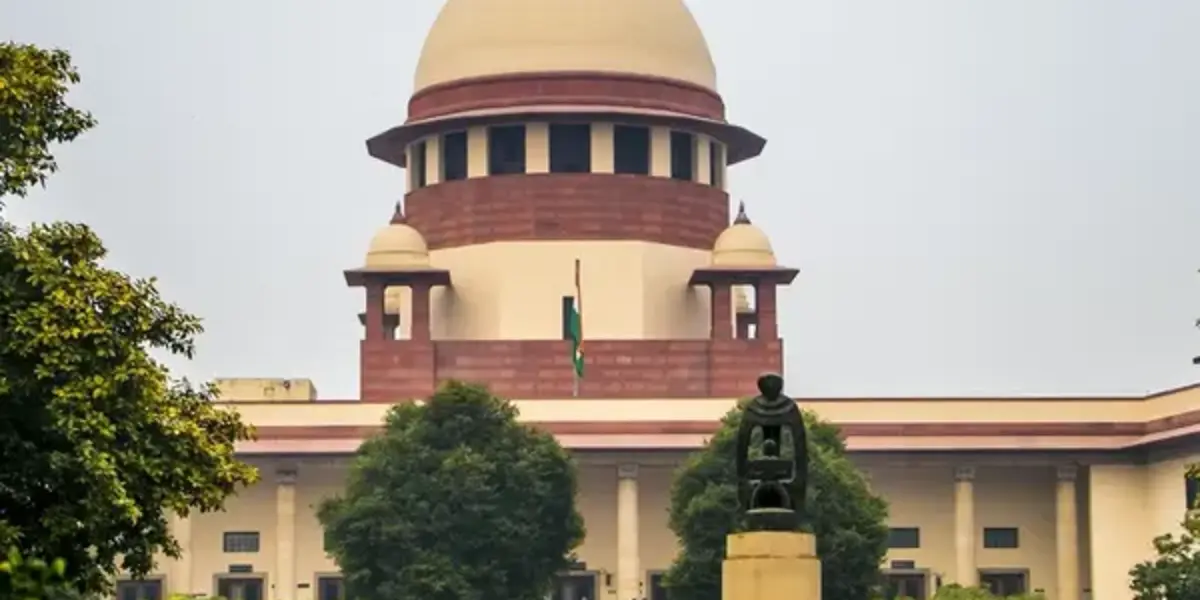
GUWAHATI: The Supreme Court on Monday, May 18, granted bail to an accused in a narco-terror case investigated by the National Investigation Agency (NIA) and raised concerns over prolonged incarceration under the Unlawful Activities (Prevention) Act (UAPA) without speedy trial.
ALSO READ: Trade Body Seeks Fewer IPL Venues, Reduced Team Flights and Closed-Door Matches Amid Fuel Concerns
A bench comprising Justices B V Nagarathna and Ujjal Bhuyan granted bail to Syed Iftikhar Andrabi, who has been in custody for more than six years in a case related to alleged terror funding through narcotics supply.
During the hearing, the bench referred to the Supreme Court’s 2021 judgment in the Union of India vs K A Najeeb case, which held that violation of the fundamental right to a speedy trial can be grounds for granting bail even under stringent laws such as the UAPA.
The Court also expressed reservations over decisions by other benches that denied bail in similar UAPA cases, including the January 2026 ruling refusing bail to Umar Khalid and Sharjeel Imam in the Delhi riots larger conspiracy case.
The bench further criticised a 2024 judgment in the Gurwinder Singh v. Union of India case for not adequately applying the principles laid down in the K A Najeeb verdict regarding delays in trial.
Emphasising constitutional protections, the Court observed that “bail is the rule and jail is the exception,” stating that the principle flows from Articles 21 and 22 of the Constitution and that the presumption of innocence remains central to a society governed by the rule of law.
The K A Najeeb judgment is regarded as a landmark ruling on bail under the UAPA, particularly in cases involving prolonged detention and delays in trial proceedings.


