



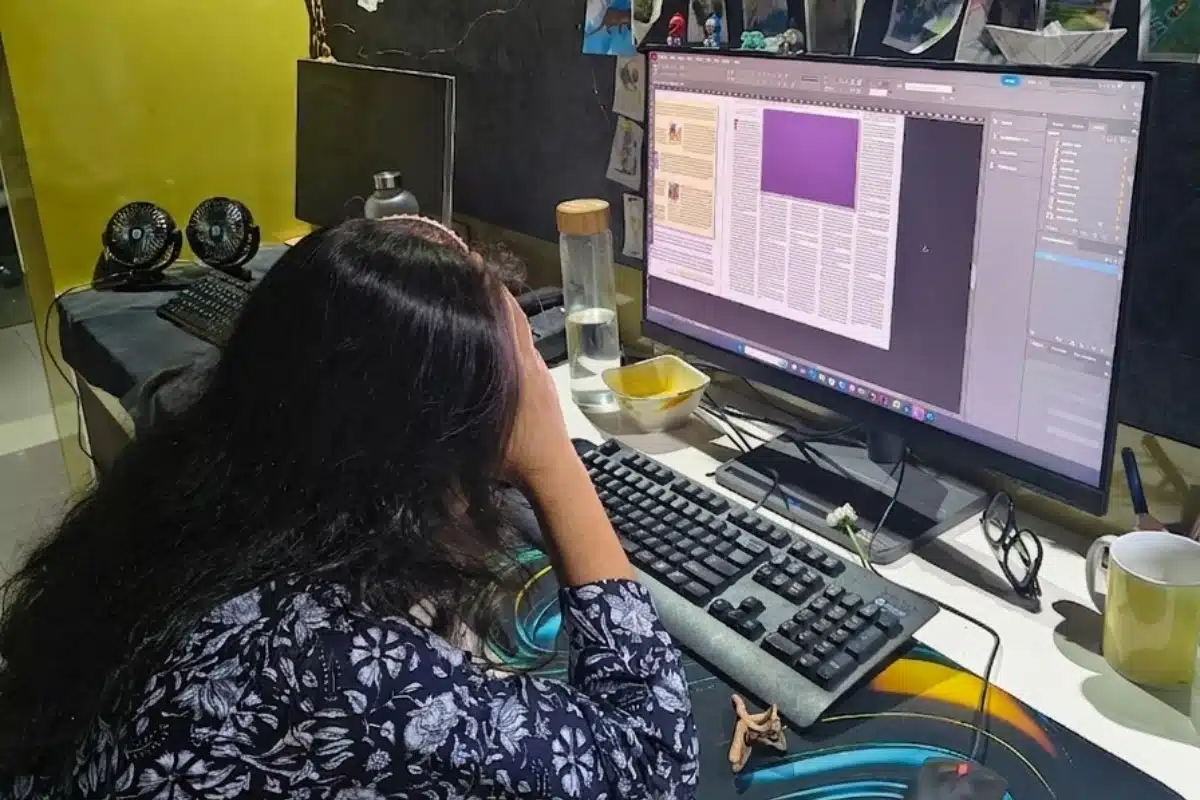
Behind Guwahati’s growing corporate landscape lies a disturbing reality of mental harassment, intimidation, and silent suffering at work
Every morning, thousands of employees across Guwahati step into offices, schools, hospitals, banks, and private firms hoping to build a better future. For many, the workplace is more than just a source of income. It is where friendships are formed, ambitions grow, and identities are shaped. Yet behind the routine of meetings, deadlines, and polite conversations, many workers in the city are silently enduring harassment, humiliation, intimidation, and mental distress.
ALSO READ: Guwahati Sees Surge in Illegal IPL Betting Through Online Networks
While a few cases reach police stations or courts, many more remain buried inside office walls. Fear of losing jobs, pressure from management, political influence, lack of trust in complaint systems, and social stigma are forcing many employees especially women to remain silent.
The recent case involving Gauhati Medical College and Hospital (GMCH) Principal Dr. Achyut Baishya has once again brought workplace harassment into public discussion. But conversations with several employees across Guwahati reveal that the issue runs much deeper than one institution or one complaint.
The Gauhati High Court recently granted interim relief to Dr. Baishya by staying a notice issued by a Local Committee formed under the Sexual Harassment of Women at Workplace (Prevention, Prohibition and Redressal) Act, commonly known as the POSH Act.
A senior woman doctor, who earlier served as Head of Clinical Psychology and currently works as an Associate Professor, had filed a complaint on February 6, 2026. In her complaint, she alleged workplace harassment, intimidation, and inappropriate remarks made over a period extending from November 2022 to July 2025. She also claimed she was repeatedly pressured to meet the principal alone in his office.
Following the complaint, an FIR was registered and the Assam government formed a two-member inquiry committee. However, Dr. Baishya challenged the proceedings before the Gauhati High Court, arguing that the inquiry by the Local Committee was legally not maintainable because GMCH already had an Internal Complaints Committee (ICC). His legal team also argued that the allegations fell beyond the limitation period prescribed under Section 9 of the POSH Act.
The High Court then stayed the notice that had directed him to appear before the Local Committee for inquiry.
Though the matter is currently sub judice, the case has once again highlighted a question many employees in Guwahati have quietly asked for years: how many workplace harassment cases never get reported at all?
Conversations with workers from different sectors suggest the number may be significant.
Speaking to GPlus on condition of anonymity, a private employee from Lachit Nagar described how repeated harassment by a senior colleague slowly affected her mental health and confidence.
“One of my seniors has been harassing me for a year. I complained to our HR department, but they did not take it seriously. I cannot afford to lose my job here,” she said.
Her voice reflected a fear shared by many workers in the city, fear that speaking up may cost them their livelihood.
Another former employee from a private school in North Guwahati described her workplace as deeply toxic.
“That workplace was the worst place I have ever worked in. The owner and the seniors mistreated and harassed almost everyone. Many employees left because of the environment,” she alleged.
She further claimed that employees avoided filing police complaints because the institution was allegedly linked to a political figure.
“We believed nothing would happen even if we complained,” she said.
A bank employee from Bhangagarh also shared her experience of emotional harassment and verbal humiliation inside the workplace.
“Sometimes harassment is not physical. There are insults, shouting, public humiliation, unnecessary targeting, and threats regarding performance. Slowly, it affects your confidence and mental peace. But people continue because they have families to support,” she said.
Experts say this form of emotional and psychological harassment often goes unnoticed because it is difficult to prove and is normalised in many workplaces.
According to a study by workplace compliance training organisation Traliant, nearly 32 percent of women felt that their organisations mishandled or inadequately addressed their complaints after reporting harassment.
The findings reflect a wider institutional problem where employees lose faith in workplace grievance systems.
In Guwahati, several workers told GPlus that Internal Complaints Committees either exist only on paper or function under pressure from management.
Under the POSH Act, every workplace with more than 10 employees is legally required to constitute an Internal Complaints Committee to address complaints of sexual harassment. The law was introduced in 2013 following nationwide outrage after the Delhi gangrape case and recommendations made by the Vishaka Guidelines earlier framed by the Supreme Court.
However, activists and labour rights observers say implementation remains weak, especially in smaller private firms, educational institutions, and informal sectors.
Many employees are either unaware of their rights or hesitate to complain because senior management often controls inquiry mechanisms.
A Guwahati-based lawyer dealing with labour and harassment cases said that employees frequently approach legal professionals only after resigning from their jobs.
“Most victims fear retaliation. Some are transferred, isolated at work, denied promotions, or forced to resign after filing complaints. There is also social pressure. Many women are worried about being blamed instead of being heard,” the lawyer said.
The issue becomes more complicated when workplaces are linked to influential individuals or organisations. Several employees admitted they believed filing complaints would be pointless because of political or financial influence.
Some workers also pointed to the absence of proper awareness sessions regarding workplace harassment laws.
“In our office, nobody even explained what the POSH Act is. Most employees do not know whom to approach if something happens,” said an employee working in a private marketing firm in Guwahati.
Even male employees facing bullying or emotional harassment often remain silent due to social stigma.
“There is pressure to stay strong and tolerate everything. People think complaining makes you weak,” said a sales executive from Beltola.
Police officials acknowledge that only a limited number of workplace harassment cases officially reach law enforcement agencies every year.
Talking to GPlus, a senior official from the Guwahati Police Department said, “We register a few cases every year regarding workplace harassment. Sometimes there is insufficient evidence, but whenever evidence is available, we definitely take action and make arrests if necessary. Anyone who feels unsafe in their workplace can approach us.”
However, police officials also admit that collecting evidence in such cases can be challenging, especially when incidents involve verbal misconduct, emotional intimidation, or behaviour occurring privately within office spaces.
Employees in startups and smaller businesses may face even greater difficulties because many such organisations lack formal HR systems.
A former employee of a small private firm in Zoo Road said she resigned without filing any complaint despite facing repeated inappropriate comments from a senior.
“I knew there was no proper system. If I complained, everyone would know and I would probably be asked to leave,” she said.
As Guwahati grows as a commercial and educational hub, workplace culture is rapidly changing. Corporate offices, healthcare institutions, schools, banks, and startups are employing more young professionals than ever before. But along with growth comes the responsibility to ensure safer and healthier working environments.
The ongoing GMCH case has once again placed workplace harassment under public scrutiny. Yet beyond legal arguments and courtroom proceedings lies a much larger reality many workers in the city continue to endure toxic environments in silence.
For them, the issue is not just about legal procedures or official committees. It is about dignity, security, mental peace, and the basic right to work without fear.
Until employees begin to trust that their complaints will be heard fairly and without retaliation, many cases may never leave office corridors.


