


Assam tightens spending as fears grow over a looming economic storm driven by global fuel shocks and rising inflation
Prime Minister Narendra Modi’s appeal to Indians to cut down on expenses, conserve fuel and prepare for uncertain global conditions has triggered an unprecedented wave of austerity measures across the country. What initially appeared to be a symbolic call for restraint has now evolved into a serious administrative and economic exercise. Assam, one of the first states to formally respond to the Prime Minister’s message, has rolled out sweeping cost-cutting measures ranging from fuel restrictions to foreign travel bans for government officials. Behind the announcements, however, lies a deeper concern, India is bracing for economic turbulence triggered by global geopolitical instability, soaring fuel prices and growing pressure on foreign exchange reserves.
ALSO READ: Why Vapes Are Still Easily Available in Guwahati Despite India’s Ban
The anxiety within governments became visible after Modi publicly warned that the ongoing crisis in West Asia could become “bigger than the Covid pandemic” in economic terms. The Prime Minister urged citizens to reduce unnecessary fuel consumption, avoid excessive spending, use public transport and cut dependence on imported goods. Soon after, reports emerged that even the Prime Minister’s convoy was reduced by nearly 50 per cent to send a message of austerity from the top. The message was unmistakable: India expects economic pressure in the coming months, largely due to volatility in global crude oil markets and disruptions linked to the Iran conflict and the Strait of Hormuz shipping route. India imports nearly 85 per cent of its crude oil requirement, making the country extremely vulnerable to international energy shocks. Every increase in global oil prices directly affects fuel inflation, transport costs, food prices and government expenditure.
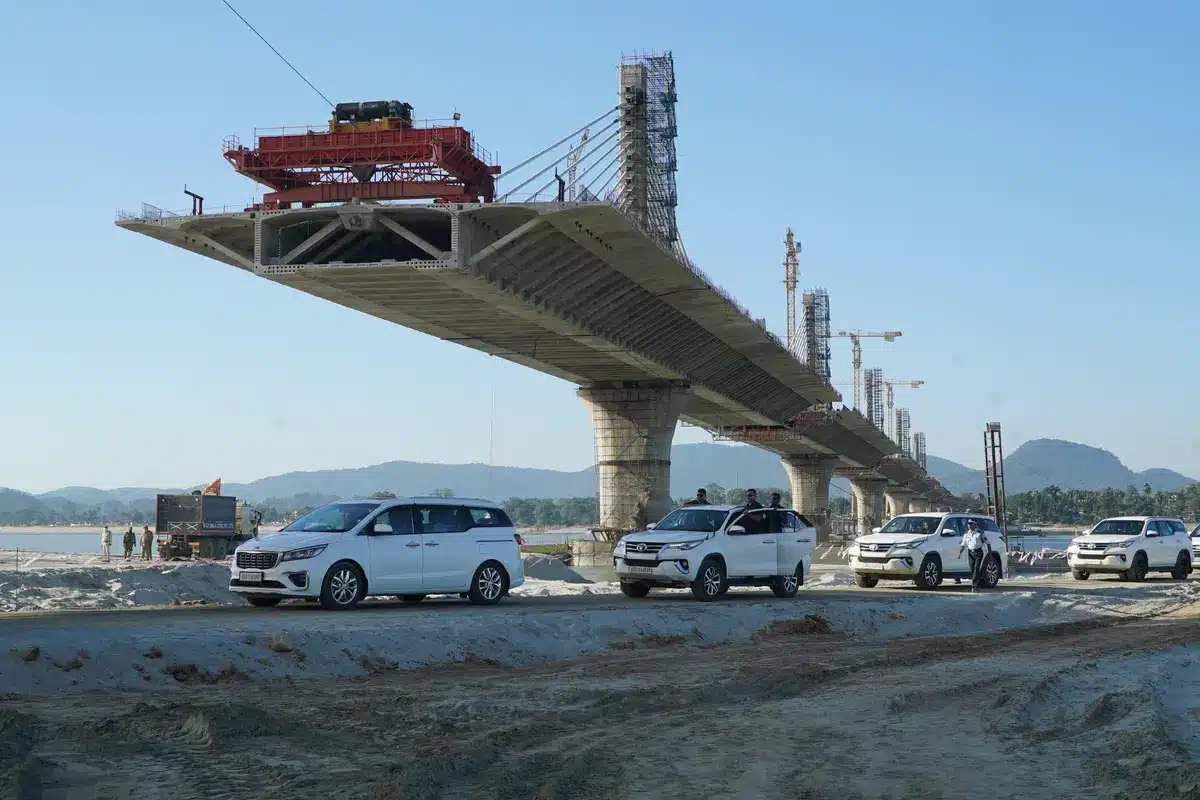
Assam has moved quickly to align itself with the Centre’s austerity doctrine. In the very first cabinet meeting after returning to power for a second consecutive term, Chief Minister Himanta Biswa Sarma announced a six-month austerity programme aimed at reducing government expenditure and conserving fuel. The Assam government has decided to reduce fuel expenses by 20 per cent compared to the previous financial year. Convoys of the governor, chief minister, ministers and senior bureaucrats will be downsized. Foreign travel by government officials has been banned for six months except in medical emergencies. The state has also frozen new vehicle purchases and mandated that any hired vehicles must be electric vehicles rather than petrol or diesel-run cars. Workshops, seminars and physical meetings are being discouraged in favour of virtual conferences.
The speed with which Assam implemented the austerity measures reflects both political loyalty to the Centre and a recognition that the state’s finances remain structurally fragile despite years of aggressive infrastructure expansion. While the government projects confidence, Assam’s economy continues to rely heavily on central assistance and borrowings. Official data released earlier this year showed Assam received over ₹5.61 lakh crore through tax devolution and grants-in-aid from the Centre between 2014 and 2026. The state also received more than ₹17,000 crore in interest-free loans for capital expenditure under central schemes. The figures underline an uncomfortable reality, Assam’s development story is deeply dependent on New Delhi’s financial backing.
Economists and opposition leaders argue that the austerity measures reveal growing concern within governments over future fiscal pressure. Rising crude prices can significantly increase subsidy burdens, transportation costs and inflation. Assam, already dealing with expensive logistics due to its geography, is particularly vulnerable. Essential commodities transported from mainland India become costlier whenever fuel prices rise. If global tensions continue, the state may witness price escalation in food grains, medicines, construction materials and consumer goods. Transporters in Assam have already begun expressing concerns over diesel costs and operational viability.
Political observers note that the austerity push also carries a symbolic political dimension. The BJP-led governments want to project an image of discipline and preparedness at a time when public anger over inflation could intensify. By cutting convoys and official luxury, governments are trying to show that sacrifice must begin at the top. Yet critics say the measures may not be enough if deeper economic problems emerge. Congress leaders in several states have already mocked the austerity campaign, questioning why a government that frequently speaks about India becoming a “five trillion-dollar economy” is suddenly asking citizens to tighten their belts.
In Assam, however, the situation has additional layers. The state government has spent the last several years aggressively pushing mega infrastructure projects, welfare schemes, road expansion, urban redevelopment and administrative restructuring. Such expenditure-heavy governance requires strong and steady financial inflows. Any prolonged economic slowdown could affect project execution and delay payments. Contractors, suppliers and infrastructure agencies dependent on government payments may face stress if expenditure compression intensifies.
A senior Assam-based economist, speaking on condition of anonymity, remarked that “the austerity measures are not merely symbolic. Governments generally do not ban official travel or freeze vehicle purchases unless they anticipate sustained fiscal uncertainty. Assam is trying to preserve liquidity before the pressure worsens.” Another former bureaucrat observed that the state may soon prioritise only high-impact spending while delaying non-essential projects.
The government, however, maintains that Assam is better prepared than before. Officials point to improvements in tax collection, digital governance, infrastructure connectivity and investment inflows. They argue that Assam today has stronger economic fundamentals than it did a decade ago. The state leadership also believes that closer coordination with the Centre gives Assam a strategic advantage in navigating economic challenges.
Yet the larger concern remains Assam’s dependence on imported fuel and external supply chains. Unlike manufacturing-heavy states, Assam’s economy does not have a massive industrial cushion to absorb external shocks. Agriculture, tea, oil, tourism and government-driven infrastructure remain the key economic pillars. Tourism could slow down if aviation fuel prices rise sharply. Tea exports could face logistical challenges. Construction activity may become more expensive due to rising transportation and material costs.
There is also concern about the social impact of prolonged austerity. If inflation rises while employment generation slows, public frustration could intensify. Middle-class households in Assam are already struggling with high urban living costs, especially in Guwahati where rents, school fees and transportation expenses have increased significantly in recent years. A further spike in fuel and commodity prices could place enormous pressure on families.
Interestingly, Assam is not alone. Several states have begun implementing similar measures after Modi’s appeal. Maharashtra, Delhi and Tripura have announced steps to reduce official expenditure, encourage virtual meetings and conserve fuel. Tripura has even introduced rotational work-from-home arrangements for government employees to reduce fuel consumption and operational costs. The nationwide pattern indicates that governments across India are preparing for a potentially difficult economic phase.
The big question now is whether the austerity measures are temporary precautions or the beginning of a prolonged economic recalibration. Much depends on developments in global energy markets and geopolitical stability. If oil prices stabilise and supply chains remain uninterrupted, the current belt-tightening may remain limited to symbolic governance reforms. But if the West Asia crisis escalates further, India could face a difficult combination of inflation, rising import bills and pressure on public finances.
For Assam, the challenge will be balancing fiscal discipline with developmental ambitions. The state has built a political narrative around rapid infrastructure growth, investment promotion and administrative expansion. Sustaining that momentum during an economic squeeze will not be easy. The coming months may test not just Assam’s finances, but also the resilience of its governance model.
At the moment, the government is projecting confidence and discipline. But beneath the announcements of reduced convoys and virtual meetings lies a clear message: even governments are preparing for hard times ahead.


