



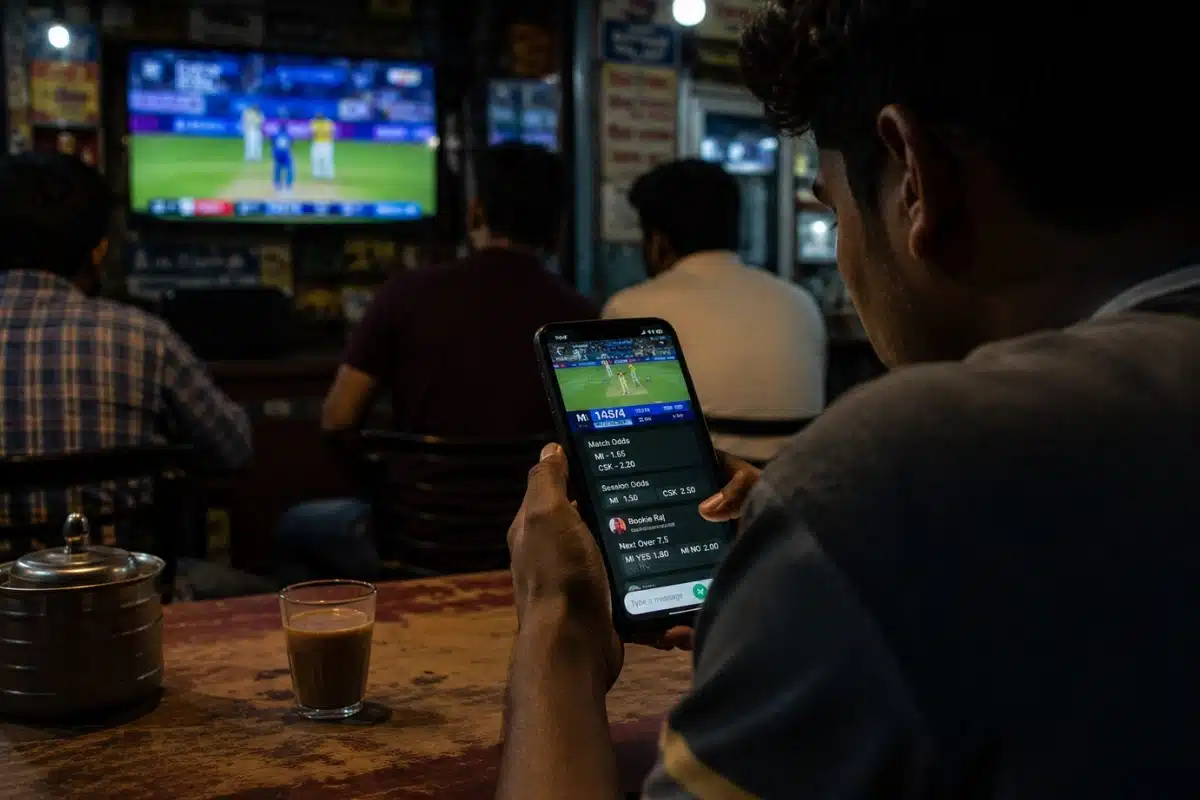
IPL excitement fuels a parallel underground economy of betting, debt and secrecy
As the excitement surrounding the Indian Premier League continues to grip Guwahati every evening, another parallel activity quietly flourishes behind closed doors, mobile screens and endless phone calls. Alongside the loud cheers for boundaries and wickets, betting networks across the city are once again becoming active, drawing in people from different age groups and financial backgrounds into a cycle of quick money, risk and silent losses.
ALSO READ: Potholes, Flooding and Wrong-Side Driving Plague Guwahati Highway Corridor
From roadside tea stalls to apartment balconies, from small shops to private gatherings, conversations during IPL season often extend beyond cricket itself. Discussions over player performances and match predictions increasingly turn into wagers, with many residents now treating betting as a routine part of the tournament experience.
While online platforms have made betting more accessible than ever before, traditional networks involving local bookies and phone-based operations continue to function in several pockets of the city. Residents familiar with the trend say the business has evolved over the years. What once relied heavily on cash transactions and physical meetings has now shifted largely to digital payments, encrypted messaging apps and online communication.
In many localities of Guwahati, betting no longer operates in secrecy in the conventional sense. It survives in a grey space where people are aware of its existence, yet very little openly comes forward about it. The system, according to sources, functions through trusted contacts and closed circles, making it difficult for outsiders to understand its scale.
Several individuals associated with the activity reportedly maintain detailed records of wins and losses throughout the IPL season. Rather than settling every bet immediately, some networks allow accounts to remain open for weeks, with balances adjusted towards the end of the tournament. For many participants, the arrangement creates a false sense of control and flexibility until losses begin to pile up.
What starts as small betting amounts during the opening matches often grows bigger as the season progresses. A resident familiar with the betting culture said many people initially join “just for fun” but gradually become emotionally and financially invested.
“People think they can recover losses in the next match. One win gives confidence and then they increase the amount. Slowly it becomes difficult to stop,” he said.
Unlike casinos or public gambling centres, IPL betting in Guwahati mostly operates quietly within ordinary social settings. Friends bet among themselves, office groups discuss odds, and local contacts connect individuals to bookies who manage larger betting pools. The use of digital payment applications and mobile communication has further blurred the lines between casual participation and organised betting activity.
For some, betting during IPL is seen as entertainment attached to cricket. For others, it becomes a desperate attempt to make quick money. In many cases, however, the consequences remain hidden behind closed doors.
Residents and observers say financial instability caused by betting is becoming a growing concern, particularly among young adults and individuals already dealing with economic pressure. While occasional winnings attract more participants, losses often leave lasting impacts on households.
Several people familiar with such situations say betting-related debt rarely becomes public immediately. Families may first notice unusual borrowing, missing savings, delayed payments or emotional stress before discovering the real cause. In some cases, individuals reportedly take loans or borrow money from friends hoping to recover earlier losses through further betting.
“The dangerous part is that it doesn’t look dangerous in the beginning. It starts with small amounts and then grows silently,” said another resident.
The rise of digital betting has also changed how easily people can access gambling opportunities. Earlier, participation required physical contact with bookies or gambling groups. Today, a smartphone and internet connection are often enough to enter the network.
A source from Guwahati Police acknowledged the challenge faced by authorities in controlling betting operations linked to the IPL. According to the source, the digital nature of modern betting has made enforcement increasingly complicated.
“The entire issue lies behind the usage of internet. Everything has become digital. Though physical transactions are carried out, not much intel can be gathered even if they are apprehended. For many it is a short-lived fun activity, hence complaints are rarely noticed. It’s all intertwined,” the source said.
The statement reflects a broader difficulty faced by law enforcement agencies across cities where betting activities have shifted online. Unlike traditional gambling dens, digital betting networks leave fewer visible traces and operate through multiple communication channels, making surveillance and tracking more difficult.
Authorities occasionally conduct raids and apprehend suspected bookies during the IPL season. However, residents believe such actions affect only a small portion of the larger network. Many feel the business continues smoothly because the operational structure keeps changing and adapting with technology.
Some observers also point out that public attitudes towards betting have changed over time. What was once considered socially unacceptable is now often viewed casually, especially among younger audiences exposed to online gaming, fantasy sports and aggressive advertising around cricket tournaments.
This normalisation has created confusion between legal fantasy gaming and illegal betting activities. While fantasy sports platforms operate openly with advertisements and sponsorships, illegal betting networks quietly take advantage of the same cricket frenzy by attracting users through personal contacts and informal systems.
In Guwahati, IPL evenings now carry a strange dual reality. On one side are cricket fans simply enjoying the sport with family and friends. On the other side are individuals anxiously tracking scores, not out of sporting passion alone but because money is attached to every run, wicket and over.
The emotional impact of betting can often be severe. Individuals become deeply invested in unpredictable outcomes, leading to stress, frustration and sometimes aggressive behaviour after losses. Families may remain unaware until financial strain begins affecting household stability.
Several residents say the social silence surrounding betting also contributes to the problem. Since many participants see it as temporary entertainment, concerns are rarely discussed openly. People often hide losses out of embarrassment or fear of judgement.
“There are many who regret getting involved but do not speak about it. Nobody wants to admit they lost money through betting,” said a resident from the Ghoramara.
The role of social influence is also significant. Many newcomers reportedly enter betting networks through friends, colleagues or acquaintances. Curiosity, peer pressure and the lure of quick profits often become entry points into the system.
At the same time, enforcement agencies continue facing practical limitations. Tracking digital money trails, monitoring online communication and gathering evidence against betting operations require specialised resources and sustained surveillance. Even when arrests are made, dismantling larger networks remains difficult because many participants operate temporarily and anonymously.
The betting economy surrounding cricket has also adapted itself to modern lifestyles. Transactions happen quickly, odds are updated instantly and communication moves through encrypted platforms. In such an environment, authorities often find themselves reacting to incidents rather than preventing them entirely.
Many believe awareness about the risks associated with betting remains inadequate. While people are constantly exposed to the glamour and excitement surrounding cricket, very little conversation happens about the consequences of gambling addiction, financial losses or emotional stress.
As another IPL season unfolds across Guwahati, betting networks continue to operate quietly beneath the excitement of the game. For some, it remains harmless entertainment. For others, it slowly becomes a trap hidden behind the thrill of victory and the hope of easy money.


