



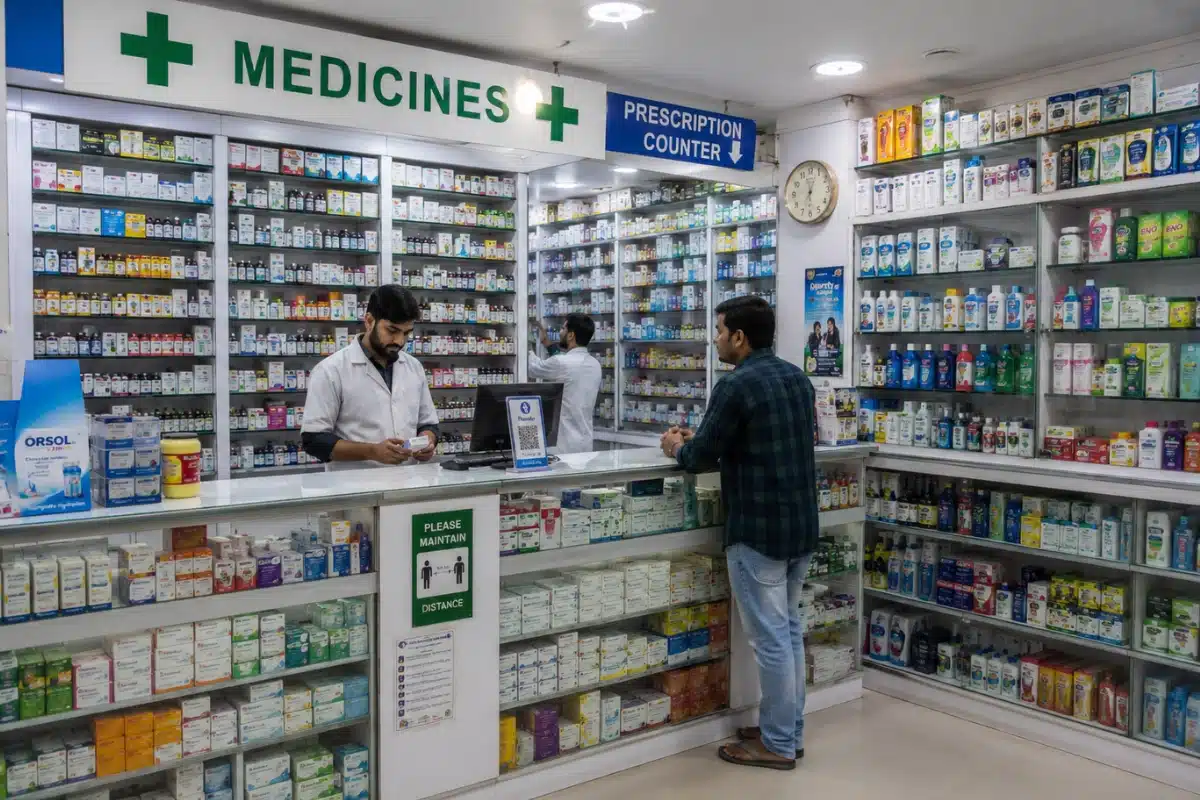
Medicine retailers across Assam back nationwide strike over e-pharmacies, pricing battles
The All India Organisation of Chemists and Druggists (AIOCD), the country’s largest body representing medicine retailers and distributors, has called for a nationwide one-day strike on May 20, 2026, in protest against what it describes as unchecked growth of illegal e-pharmacies, unfair pricing practices by large corporate entities and continued delay in policy decisions affecting the pharmaceutical trade.
ALSO READ: "Unacceptable Negligence": NTA Faces All-Round Condemnation Over NEET Cancellation
The proposed shutdown is expected to impact medicine shops and pharmaceutical distribution networks across several States, including Assam, where local chemist associations have extended support to the protest.
While emergency medical services are likely to continue functioning, the strike has already triggered discussions among patients, healthcare workers and medicine retailers regarding possible disruptions in the supply of medicines and the larger debate surrounding regulation of online pharmacies in India.
The issue gained attention in Assam after the Chemists and Druggists Association of Assam addressed the media on May 14 in Guwahati and announced its support for the strike. The association stated that the protest was not only linked to the interests of medicine traders but also to broader concerns involving patient safety and the future of the traditional medicine distribution system.
“The Chemists and Druggists Association of Assam fully supports the nationwide one-day shutdown call given by the All India Organisation of Chemists and Druggists on May 20, 2026. This protest is not merely about the business interests of medicine traders, but also about protecting public health and ensuring patient safety,” the association said.
According to the organisation, one of the major concerns is the rapid and largely unregulated expansion of online pharmacies or e-pharmacies. These platforms, which have become increasingly popular in recent years, allow customers to order medicines through mobile applications and websites, often at discounted prices and doorstep delivery services.
While many consumers have welcomed the convenience offered by online medicine platforms, traditional chemists argue that several such operations are functioning without adequate regulatory oversight. They claim that medicines are being supplied without proper verification of prescriptions and that repeated use of the same prescriptions has become common.
The AIOCD has particularly raised concerns over the sale of antibiotics and habit-forming medicines through digital platforms. According to the organisation, the absence of strict monitoring can contribute to misuse of medicines and increase the risk of antimicrobial resistance, which is already considered a growing public health challenge globally.
The organisation has also objected to what it calls “predatory pricing” by large corporate entities operating in the pharmaceutical sector. Local chemists allege that heavy discounts and pricing strategies adopted by large platforms are making it difficult for small and medium medicine retailers to survive.
In Assam, many small pharmacy owners say the competition has become increasingly uneven over the past few years. Unlike large companies backed by major investments and digital infrastructure, local medicine shops continue to operate on limited margins while maintaining physical stores, staff and compliance costs.
Several retailers believe the issue is not just about business losses but about the long-term impact on healthcare accessibility, especially in smaller towns and rural areas where local chemists often serve as the primary source of medicines and basic health guidance.
“If small medicine shops start shutting down, people in remote areas will suffer first because online services are not equally accessible everywhere,” said a pharmacy owner in Guwahati.
The debate surrounding online pharmacies in India has been ongoing for several years. During the COVID-19 pandemic, demand for digital healthcare services and home delivery of medicines increased sharply due to lockdowns and movement restrictions. To ease access during the emergency period, certain temporary relaxations and notifications were introduced.
However, traditional chemist bodies now argue that some of these temporary provisions continue to remain in place even after the pandemic period, allowing online platforms to expand without adequate checks. The AIOCD has demanded immediate withdrawal of certain notifications and stricter regulation of e-pharmacy operations.
The organisation has also urged the government to introduce what it describes as a “level playing field” so that local medicine retailers are not placed at a disadvantage compared to large corporations offering aggressive discounts.
At the same time, supporters of digital healthcare platforms argue that online pharmacies have improved access to medicines for many consumers, particularly elderly patients, people with mobility issues and those living in areas with limited physical pharmacy options. They also point out that competitive pricing has helped many customers reduce medicine expenses.
Public health experts believe the issue requires a balanced approach rather than a complete rejection of either system. While concerns regarding prescription misuse and regulation are valid, many also recognise the growing role of technology in healthcare delivery.
Experts say the challenge lies in ensuring that digital pharmacy platforms operate within clear legal and safety frameworks while protecting the interests of traditional retailers and patients alike.
The strike call by the AIOCD reflects a wider anxiety within the pharmaceutical retail sector about changing market patterns. India’s medicine retail business has traditionally been dominated by small and family-run pharmacies spread across cities, towns and villages. Many such businesses have operated for decades and depend entirely on medicine sales for livelihood.
According to trade bodies, lakhs of families across the country are directly or indirectly dependent on the pharmaceutical retail sector. In Assam too, thousands of small medicine shops form an important part of the healthcare supply chain.
The Chemists and Druggists Association of Assam stated that unless corrective measures are introduced, the survival of local medicine retailers may come under serious threat. The association also warned that weakening traditional supply chains could eventually affect affordability and accessibility of medicines in several regions.
The strike has also brought attention to the issue of regulation and enforcement in India’s healthcare market. Questions continue to be raised regarding how prescription medicines are verified online, how customer data is handled, and whether all digital platforms are following uniform standards.
Authorities have previously conducted inspections and taken action against certain online medicine operators found violating norms. However, with rapid growth in digital commerce and healthcare technology, monitoring the sector remains a complex challenge.
In Guwahati and other parts of Assam, reactions to the strike announcement have been mixed. While many medicine shop owners have expressed support for the protest, some residents are concerned about the possibility of temporary inconvenience if pharmacies remain shut for a day.
Healthcare experts believe that although the strike is limited to one day, it highlights deeper concerns regarding India’s evolving healthcare ecosystem. The rise of digital healthcare platforms, changing consumer behaviour and increasing corporate participation in medicine retail are reshaping a sector that was traditionally local and community-based.
For many small chemists, the fear is not only about competition but also about relevance in a rapidly digitising market. Several pharmacy owners admit that while technology cannot be ignored, they feel the transition is happening without adequate safeguards for smaller businesses.
At the same time, many consumers continue to rely heavily on neighbourhood pharmacies because of trust, familiarity and immediate access. In several localities, chemists are often the first point of contact for basic medical guidance before people approach doctors or hospitals.
This relationship between local pharmacies and communities remains particularly important in smaller towns and semi-urban areas of Assam, where healthcare infrastructure is still developing.
As May 20 approaches, attention is likely to remain focused on how widespread the shutdown will be and whether the protest leads to any formal response from the government. The AIOCD has stated that if concrete action is not taken on its demands, further agitation may follow in the future.
While the government faces the challenge of balancing innovation with regulation, local chemists across Assam and the country continue to seek reassurance that their role in the healthcare system will not gradually disappear amid the rapid expansion of digital commerce patient safety concerns.


